
Guidance rests on the second half
Everplay group plc has reiterated its 2026 outlook following trading in the six months to 30 June that was in line with the board’s expectations. The update does not disclose first-half revenue or profit, but it confirms that management still expects the full year to meet company-compiled market consensus of £175.3 million in revenue and £50.7 million in adjusted EBITDA.
That guidance implies a meaningful step forward from 2025, when Everplay reported £166.0 million of revenue and £48.5 million of adjusted EBITDA. It also underlines the timing issue at the centre of the company’s year: the biggest releases are scheduled for the second half, rather than having contributed materially to the period just completed.
For a publisher with a broad catalogue, a guidance reaffirmation is useful but not conclusive. It signals that management believes the existing catalogue, recent launches and summer promotional activity have provided an adequate base. Yet the financial outcome will now be shaped more directly by launch execution, player reception and the commercial conversion of wishlists and pre-orders during the remainder of 2026.
Hell Let Loose: Vietnam is the pivotal launch
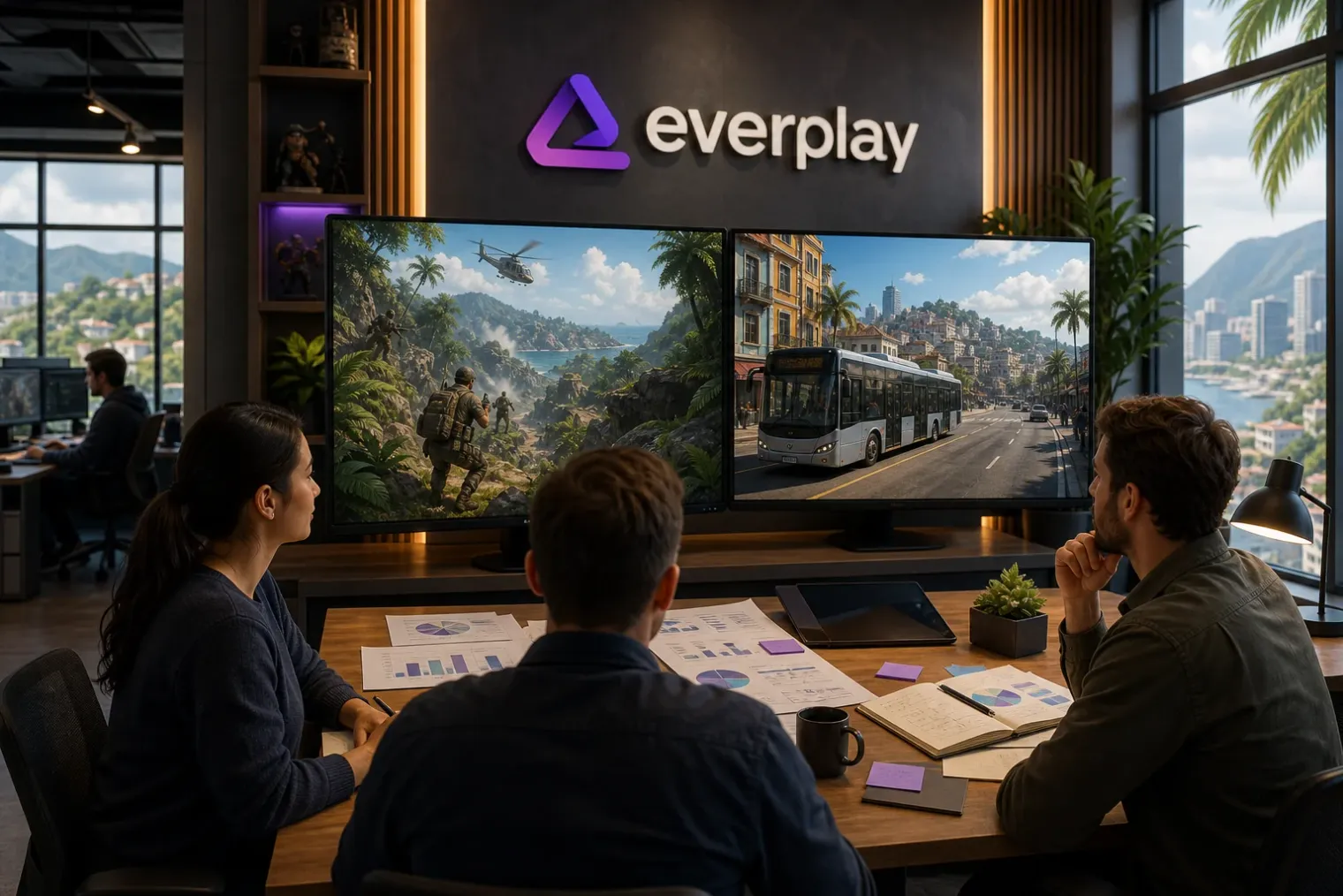
The most important near-term release is Hell Let Loose: Vietnam, due for full launch on 13 August 2026. The title was previously expected in June, meaning its commercial contribution has shifted deeper into the year. Everplay said a recent cross-platform playtest generated encouraging wishlist and pre-order figures, while the game’s official channels said the extra development time was intended to improve performance, stability and gameplay quality.
The delay is significant in two ways. First, it compresses the period in which the title can contribute to 2026 results. Second, it raises the importance of launch quality. Large multiplayer games depend on technical reliability, community confidence and early player retention; a stronger launch can support premium sales and a longer content lifecycle, whereas an uneven debut can limit momentum quickly.
Hell Let Loose is particularly relevant to Everplay because it is owned intellectual property. The group’s strategy is to increase the contribution from first-party franchises, which generally give a publisher greater control over long-term content plans and a larger share of the economics than third-party publishing arrangements. Everplay acquired the Hell Let Loose IP in 2022, and the Vietnam instalment represents a test of whether the franchise can expand beyond its Second World War setting without weakening its established audience proposition.
Simulation provides a second pillar
The second major first-party release is Bus Simulator 27 from Everplay’s astragon division. Astragon has described the title as a 2026 release for PC and current-generation consoles, with a fictional southern European-inspired setting, intercity routes and technology built in Unreal Engine 5.
Its strategic role differs from that of Hell Let Loose: Vietnam. Bus Simulator targets the working-simulation audience in which astragon has built long-running brands including Construction Simulator, Police Simulator and Bus Simulator. These series are designed for continuing engagement through updates, downloadable content and licence partnerships, potentially creating a steadier commercial tail than a single launch window.
That makes the paired release schedule important. Hell Let Loose: Vietnam offers an opportunity for a major franchise event in the Team17 division, while Bus Simulator 27 supports Everplay’s specialised simulation portfolio. If both land well, the group benefits from product diversity across genres and player communities rather than relying on one audience segment.
Third-party titles broaden the pipeline, but add uncertainty
Everplay’s second-half plan also includes third-party games, notably WARDOGS in Early Access and Silver Pines. Team17 has said it is partnering with BULKHEAD on WARDOGS, a large-scale tactical first-person shooter planned for Steam Early Access during 2026.
Third-party publishing remains central to the company’s model. It enables Everplay to bring new games to market without owning every underlying property, while applying its marketing, distribution and lifecycle-management capabilities. However, those titles can carry different economics and more variable schedules than internally controlled first-party franchises.
WARDOGS also illustrates the distinction between an Early Access debut and a conventional full release. An Early Access launch can establish a player base and start revenue generation, but it typically requires ongoing development and community management before a final version. Its contribution to 2026 therefore depends not only on initial interest but on the pace and quality of post-launch support.
Back catalogue offers a buffer, not a substitute
The group said first-half performance was supported by new releases, resilient key franchises, contributions from 2025 releases and summer sales. This is consistent with Everplay’s longer-term model: the company says its back catalogue represented 76% of group sales on average from 2019 to 2025, while first-party IP accounted for 34% of sales in 2025.
A large catalogue reduces reliance on any single game, especially during periods with uneven release timing. It also gives Everplay opportunities to refresh demand through promotions, updates and paid content. But the same mix means that established titles must continue to perform while the company funds new releases; catalogue revenue can provide resilience, but it cannot entirely offset a disappointing flagship launch if expectations have been built around a second-half slate.
What to watch next
Everplay expects to report interim results in September. Those figures should provide the first numerical view of 2026 trading and clarify the relative contributions of its Team17, astragon and StoryToys divisions.
Before then, the market’s attention will be on the August launch of Hell Let Loose: Vietnam, the release timing for Bus Simulator 27, and the progression of WARDOGS towards Early Access. The company has retained its guidance, but it has also made clear that 2026 is now a delivery story. The outlook will depend less on broad confidence in the pipeline and more on whether the major games arrive on schedule, meet player expectations and generate durable sales after launch.
Sources
- Trading Update — Investegate / RNS
- Investor Story — everplay group plc
- Our Story — everplay group plc
- Hell Let Loose: Vietnam | Release Date Update — Hell Let Loose / Team17
- Bus Simulator 27: Welcome to Sunny Felicia Bay – New Trailer Showcases the Game World — astragon Entertainment
- WARDOGS | Reveal Trailer — Team17


