
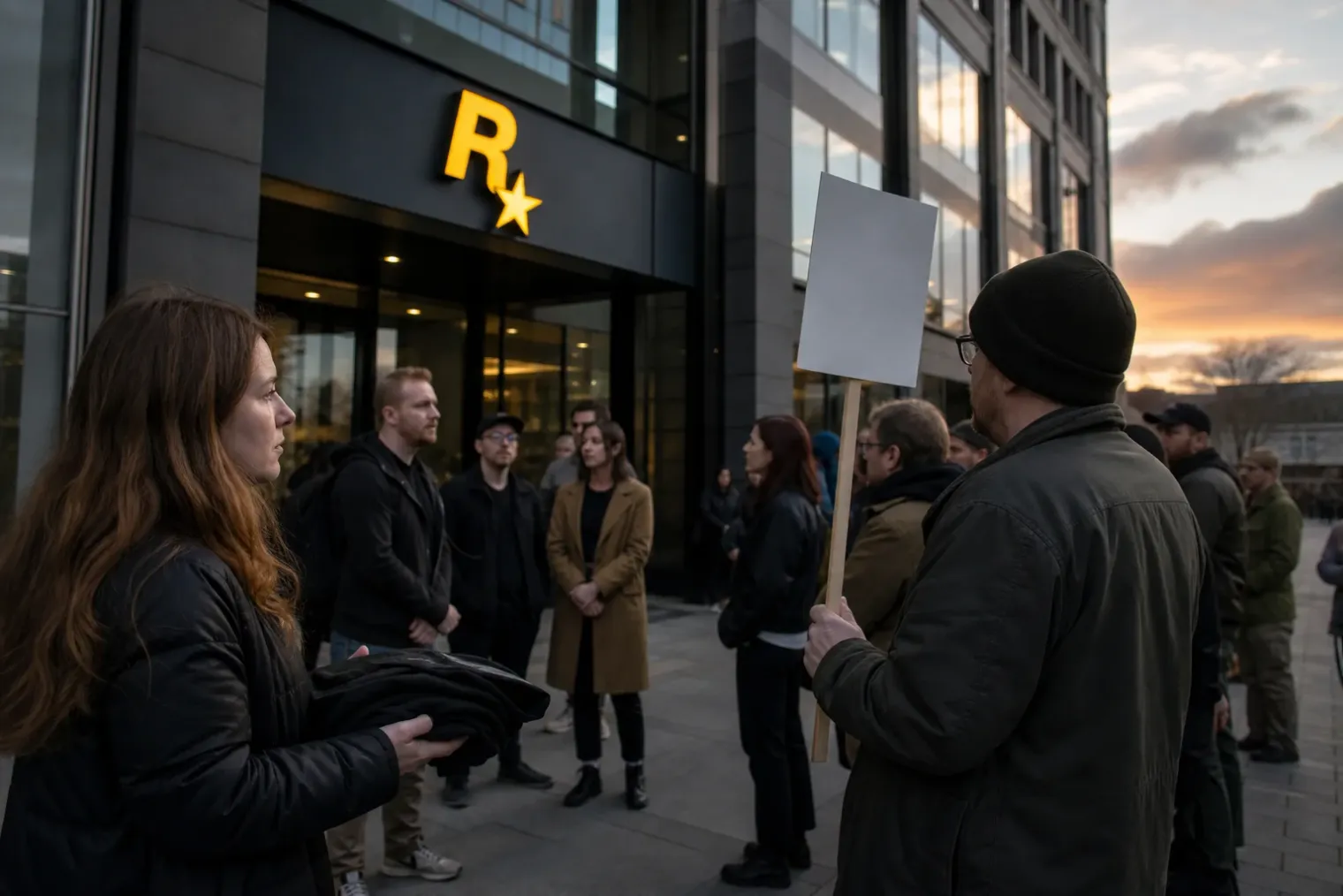
A different appeal to Grand Theft Auto fans
The workers dismissed by Rockstar Games during a dispute over union activity are asking fans not to boycott Grand Theft Auto VI. Instead, their campaign is promoting merchandise intended to help finance the legal challenge brought by the Independent Workers’ Union of Great Britain (IWGB).
The message is a notable adjustment in emphasis for a high-profile workplace dispute surrounding one of the games industry’s most anticipated releases. Boycotts are a familiar response to corporate controversies, particularly around large entertainment launches. But they can be difficult to organise, hard to measure and potentially counterproductive when the people seeking support do not regard reduced consumer spending as their preferred tactic.
By asking players to make a direct contribution to the legal effort, the former workers and their supporters are seeking to turn the extraordinary public attention around Grand Theft Auto VI into a more targeted resource. The approach separates support for developers’ workplace rights from an individual player’s decision over whether to purchase the game.
The dispute behind the fundraiser
Rockstar dismissed 31 UK-based employees in October 2025. The IWGB alleges that the dismissals were connected to protected trade-union activity and has brought legal claims including unfair dismissal and blacklisting allegations. The union says the affected employees were involved in organising efforts and discussions about workplace conditions.
Rockstar has rejected the accusation that it targeted union activity. It has said that the employees were dismissed after distributing and discussing confidential information, including details of forthcoming and unannounced games, in a public forum. The company has described the dismissals as necessary and has disputed the union’s account of events.
That conflict is yet to be resolved. An early application for interim relief, which could have kept former employees on pay or led to reinstatement before a full hearing, was unsuccessful in January 2026. That ruling did not decide the underlying claims. Later preliminary proceedings allowed the workers to continue pursuing their blacklisting allegations, with the full employment tribunal hearing scheduled to run from September 10 to October 15, 2026.
The legal timetable matters. It puts the case close to the planned November 19, 2026 release of Grand Theft Auto VI, ensuring that the dispute may remain visible during the game’s commercial launch period. Rockstar employees have also organised publicly through the IWGB’s Rockstar Game Workers Union, which has sought formal recognition from the company.
Why the campaign does not centre on a boycott
A boycott is designed to create commercial pressure by reducing demand. In this case, the workers’ appeal suggests a more pragmatic reading of the relationship between a mass-market game, its audience and a prolonged employment dispute.
Grand Theft Auto VI has a vast prospective audience, and a coordinated consumer action would require people to give up a release many have awaited for years. Even a visible online boycott may not materially change sales, especially if it lacks an agreed threshold, duration or negotiating demand. It can also pull attention towards a simple question of whether to buy the game, rather than towards the evidence and legal arguments at the centre of the workers’ case.
Direct fundraising has clearer objectives. It can help meet representation and organising costs while allowing supporters to demonstrate solidarity in a way that is visible but not contingent on the commercial success or failure of the game. In practical terms, it may be easier for a campaign to account for donations and merchandise sales than for sales it believes did not occur.
The strategy also avoids treating the game’s wider development workforce as interchangeable with management. A boycott aimed at Rockstar’s flagship release could be perceived as affecting colleagues who remain at the company, including workers who may themselves benefit from stronger collective representation. The union’s approach instead frames the issue as one of accountability for management decisions and support for those challenging them.
A test of fan activism
The campaign illustrates a broader change in how labour disputes in games reach the public. Fans are no longer only consumers or online spectators; they can amplify workers’ accounts, attend demonstrations, donate to legal funds and follow union-recognition efforts. That does not make them parties to an employment tribunal, but it can alter the public environment in which companies, workers and policymakers operate.
There are limits to that influence. Fans do not have access to the full evidence before the tribunal, and public support cannot determine whether dismissals were lawful. The central questions will be decided through employment law: why the dismissals occurred, what information was shared, how the company acted, and whether union activity was a principal reason for the terminations.
Still, the request not to boycott is significant because it sets out a narrower and more concrete role for supporters. Rather than asking audiences to turn a game release into a referendum on a dispute, it asks them to fund the people pursuing formal accountability.
For Rockstar, the case creates a reputational challenge alongside a major product launch. For the workers, the coming hearing is more consequential than any social-media campaign: it is the venue that can test their allegations, examine Rockstar’s defence and establish whether the dismissals breached employment protections.
The T-shirt appeal is therefore not simply a merchandising exercise. It is an attempt to sustain a legal and organising campaign through the final months before Grand Theft Auto VI arrives, while leaving fans free to decide for themselves whether they will play it.
Sources
- Rockstar workers say fans should not boycott Grand Theft Auto 6 and instead support union costs — Eurogamer
- MPs accuse Rockstar of obstructing legal process over alleged union-busting — Independent Workers’ Union of Great Britain
- Rockstar suffers legal blow in union-busting dispute as trial date set — Game Developer
- Grand Theft Auto workers seek union recognition after mass firings — The Guardian
- Grand Theft Auto VI is now set to launch November 19, 2026 — Rockstar Games


