
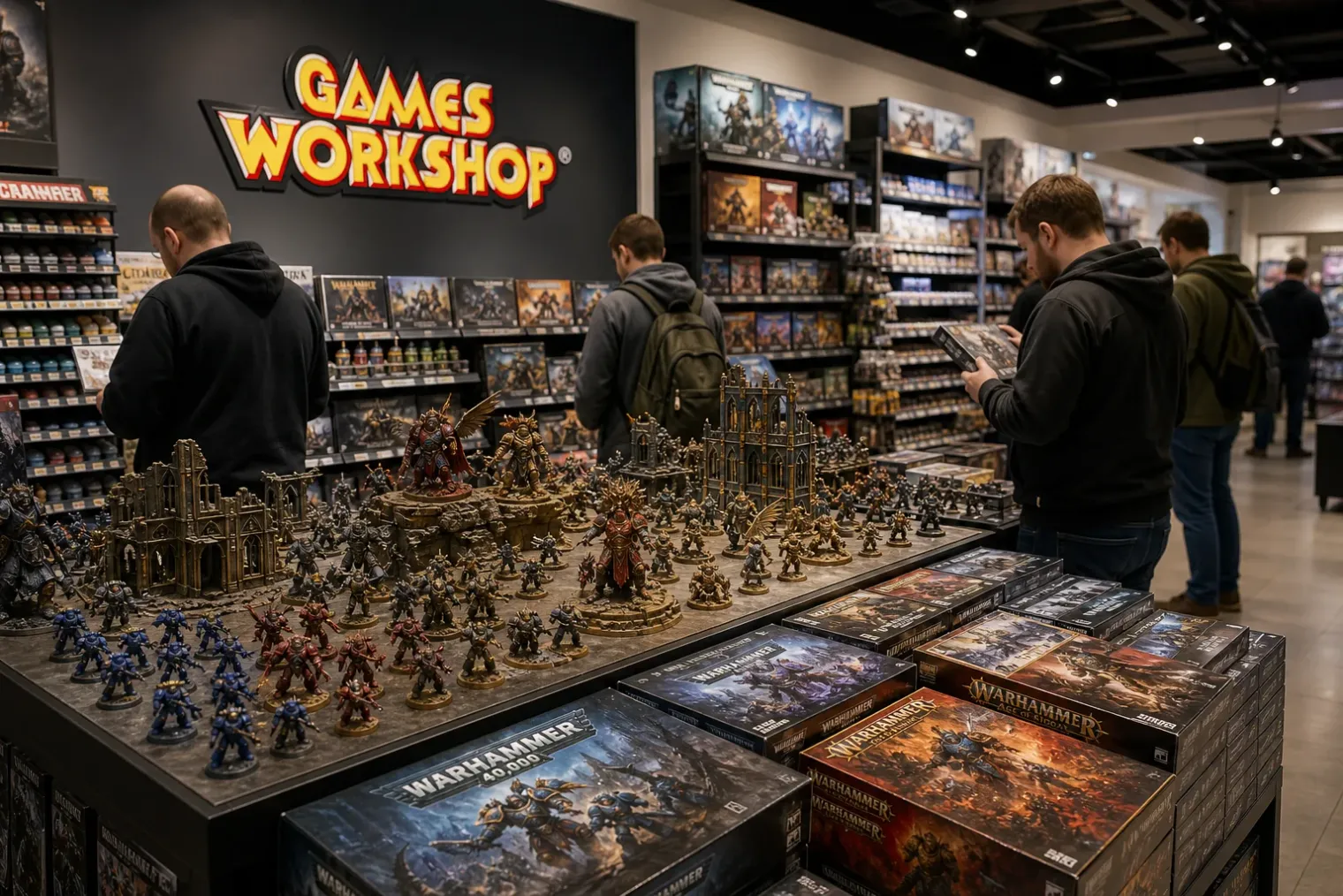
Record results were driven by the core hobby business
Games Workshop has reported record revenue and profit for the 52 weeks ended 31 May 2026, but the most important feature of the results is not the headline total. It is the widening gap between the dependable economics of selling Warhammer miniatures and the inherently uneven returns from licensing its intellectual property.
Group revenue rose 6.8% to £659.7 million and profit before tax increased 4.9% to £275.7 million. Both figures were records. However, total growth understated the performance of the company’s core business — the design, manufacture and sale of miniatures, books, paints and related hobby products. Core revenue rose 10.9% to £626.8 million, while core operating profit increased from £211.8 million to £245.1 million.
That outcome matters because Games Workshop’s long-term strategy is built around a vertically integrated tabletop operation, not around hit-driven entertainment licensing. The company designs its products and owns its Warhammer settings, manufactures much of its range in Nottingham, and sells through its own stores, webstore and independent retail partners. Licensing broadens the reach of those worlds, but the latest figures reinforce that it is supplementary to the physical hobby business rather than its financial foundation.
Core operating margin rose to 39.1%, from 37.5% a year earlier. This improvement came despite increased spending on staff, stores, software, customer events and intellectual-property protection. The company also continued to invest in manufacturing capacity and logistics, including its Factory 4 project in the UK.
Licensing falls from an extraordinary prior year
Licensing revenue dropped to £32.9 million from £52.5 million, a decline of roughly 37%. The company had already indicated that this was expected: the prior year benefited from the launch of Warhammer 40,000: Space Marine 2, an unusually successful release for a licensing portfolio in which income is tied to the performance and timing of partners’ products.
The comparison should therefore not be read simply as a weakening of Warhammer’s appeal in games. Games Workshop said Space Marine 2 and other titles continue to produce income after launch, including through downloadable content. Yet the results demonstrate the limits of relying on major releases to create a smooth annual earnings stream. A game can generate a sharp royalty surge in one financial year, then leave a difficult comparison in the next even if it remains commercially active.
Licensing operating profit fell in parallel, from £49.5 million to £29.9 million. The category remains highly profitable because Games Workshop does not fund the development of licensees’ games or own those products. But management explicitly notes that the commercial viability and delivery of licensed projects are largely outside its control. That makes licensing valuable upside, but less predictable than the core operation.
The composition of licensing income also highlights the gaming sector’s significance. PC and console licences accounted for 85% of royalty income in 2025/26. Cash received from licensees declined to £42.9 million from £57.0 million, while the group’s licensing receivables fell to £15.5 million from £24.3 million. The latter partly reflects contractual timing and payments on existing multi-year agreements rather than a simple measure of future demand.
A larger pipeline, but no guarantee of another hit
The licensing portfolio did not stand still during the year. Partners launched Warhammer 40,000: Dawn of War – Definitive Edition and Warhammer 40,000: Mechanicus 2. Games Workshop also disclosed four newly announced projects: Warhammer: Age of Sigmar: Deathmaster, Warhammer 40,000: Chaos Gate Deathwatch, Warhammer 40,000 Boltgun Boom and Total War: Warhammer 40,000.
That slate provides more opportunities for Warhammer to reach audiences beyond the tabletop community. It also suggests Games Workshop is pursuing a spread of settings, formats and partners rather than concentrating its gaming strategy on one franchise or studio. Total War: Warhammer 40,000 is particularly notable because it brings the company’s science-fiction setting to a strategy series already associated with Warhammer’s fantasy universe.
Still, announcements do not translate immediately into revenue. Development timelines, launch quality, publisher execution and player reception all determine whether a licence becomes a meaningful royalty contributor. The company also said that two licensees had given notice they would not continue their licences; £5.9 million in final contractual payments from those arrangements was included in cash receipts for the period. This is a reminder that a broad licensing catalogue can change as projects are completed, cancelled or reprioritised.
Distribution strength offsets licensing volatility
The resilience of the core business was evident across all three sales channels. Trade revenue — sales to independent retailers — increased 17.2% at actual exchange rates to £405.3 million and represented 65% of core revenue, up from 61% a year earlier. The number of ordering trade outlets rose by about 1,000 to approximately 9,100, excluding major chain outlets with smaller recruitment-focused ranges.
Retail revenue reached £131.4 million, while online revenue was £90.1 million. Games Workshop operated 598 stores at the end of the period, up from 570 a year earlier. Trade growth was especially important because it expands the availability of Warhammer without requiring the company to fund every physical location itself.
International expansion remained central to the result. North American trade revenue reached a record £170.9 million, while Asia grew 38.3% to £23.1 million. Management also reported rising engagement across its owned digital ecosystem, with approximately 890,000 active My Warhammer users and around 269,000 Warhammer+ subscribers at the period end.
The strategic reading
The 2025/26 results do not diminish the value of Warhammer licensing. They clarify its role. Space Marine 2 showed the scale of royalty income a breakout game can create, while the current year shows why Games Workshop does not treat such windfalls as a substitute for building its tabletop customer base, production capacity and global retail network.
For the group, the central achievement is that core sales grew rapidly enough to deliver record overall revenue and profit while licensing revenue fell materially. The next challenge is to maintain that operational momentum while converting the expanded games and media pipeline into durable awareness, new hobbyists and, eventually, further licensing income. A future hit would be welcome, but the latest results indicate that Games Workshop’s financial model no longer depends on one.
Sources
- Results for the 52 week period ended 31 May 2026 — Games Workshop Group PLC / RNS via Investegate
- Results Statement 2025–26 — Games Workshop Group PLC
- RNS announcements — Games Workshop Group PLC
- Annual Report 2024–25 Press Statement — Games Workshop Group PLC


