
A platform exclusive with an unusually open edge
Grand Theft Auto VI is set to receive an extended-look presentation on Netflix on 27 August, before Rockstar Games publishes the material on its own channels six hours later. That arrangement is already unusual: a major game marketing reveal is being given a limited first window on a subscription video service rather than debuting simultaneously on the publisher’s website, YouTube and social channels.
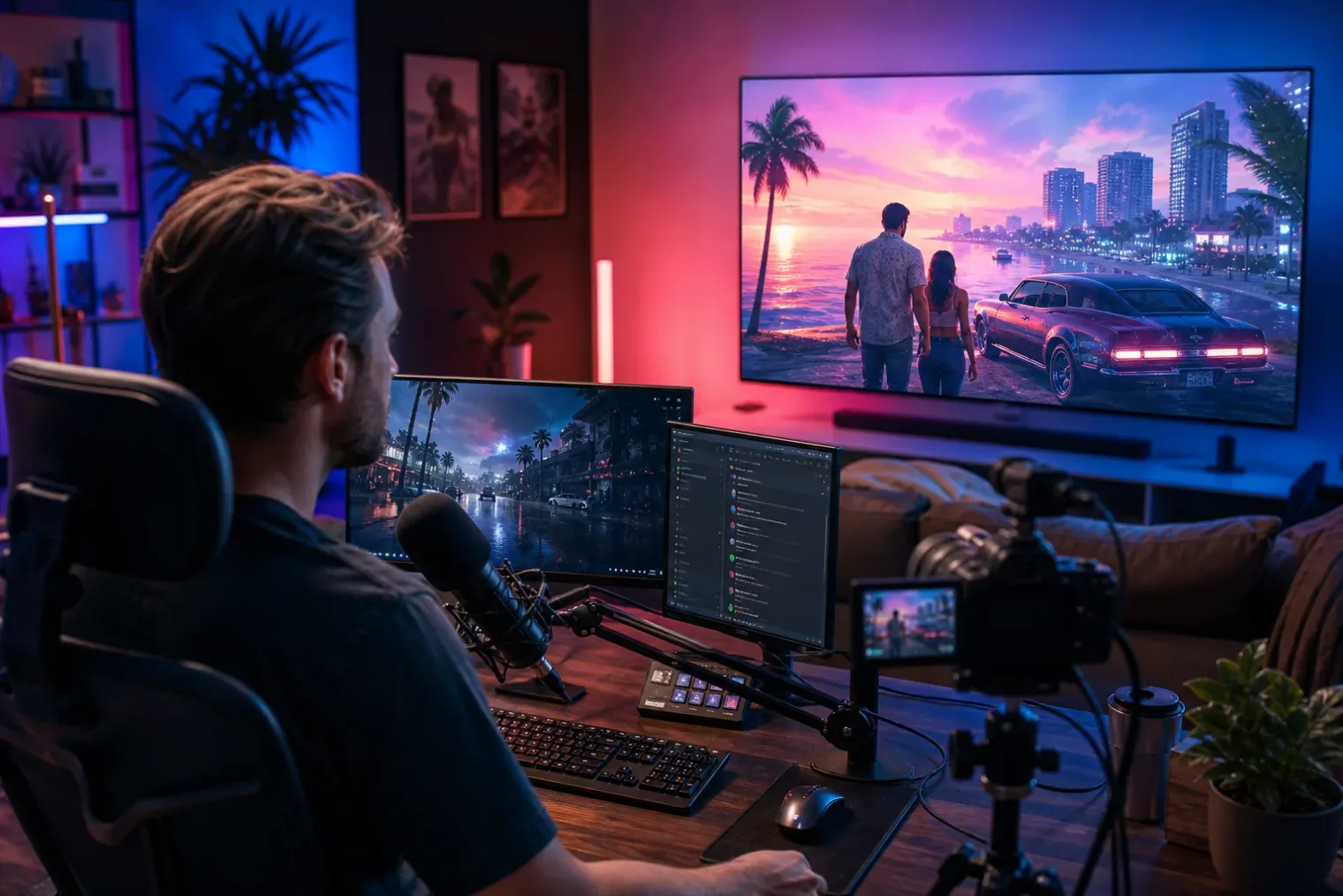
The more consequential detail is that Netflix has reportedly told creators they may cover the presentation once it is live, including through reactions and breakdowns. That does not necessarily amount to a blanket permission to rebroadcast the entire video unchanged. It does, however, indicate that Netflix does not intend to make the early window inaccessible to the wider online conversation that normally forms around a Rockstar reveal.
For viewers, the practical result may be that the first six hours are less an exclusive screening than a managed head start for Netflix. Subscribers would have the cleanest official route to the presentation, but non-subscribers could encounter clips, live reactions, commentary streams and analysis almost immediately elsewhere.
Coverage is not the same as redistribution
The distinction matters because the headline claim that streamers can “rebroadcast” GTA VI footage is broader than the reported wording supports. Permission to cover a release can encompass several very different uses: showing selected clips while discussing them, reacting live with the footage visible, pausing for analysis, or publishing a post-event breakdown.
It does not automatically settle whether a creator may upload the full presentation without added commentary, mirror Netflix’s feed from start to finish, or monetise a near-identical copy. Those questions depend on the underlying rights holders, platform rules and the precise scope of any permission.
Rockstar Games, rather than Netflix, is the developer and publisher brand responsible for the GTA VI promotional assets. Its official GTA VI media page currently offers downloadable video assets from the existing campaign, including the first two trailers and character clips. That established distribution channel suggests Rockstar remains prepared to control the official versions, presentation quality and timing of its material even when a third-party platform receives an early showcase.
Netflix’s approach may reduce one source of risk for creators, but it cannot itself determine every copyright outcome. The music, footage and game branding in the presentation may all be subject to rights managed by Rockstar or other parties. A permissive response from a distributor should therefore not be read as a universal licence for creators to reuse every part of the programme in every format.
YouTube and Twitch will still set the real boundaries
The early audience response will mostly occur on platforms whose automated systems handle copyright at scale. On YouTube, rights owners can apply Content ID claims to matched material, potentially choosing to track, monetise or block uploads. The platform’s rules also require claimed reference material to be exclusively owned, which means any campaign involving footage, licensed music and multiple commercial partners can require careful rights management.
That creates a difference between legal permission and platform experience. A streamer may be allowed to provide a reaction or critique, yet still receive an automated claim while the relevant owner’s policy is being applied. Conversely, a full re-upload might remain online temporarily without indicating that it is authorised.
Creators planning coverage should therefore avoid interpreting the reported Netflix position as assurance that every kind of stream will be unaffected. The safer editorial approach is likely to be transformative coverage: commentary, analysis, criticism and contextual discussion built around limited use of the footage. This better aligns with what Netflix is reported to have welcomed and with the audience value that creator coverage is meant to provide.
It also protects the purpose of the exclusive. Netflix can still market the presentation as an official first viewing destination, while reaction channels create additional attention across gaming communities. A wave of commentary can convert the six-hour delay into a sustained event rather than a barrier that fragments the audience.
Why the experiment matters to both companies
For Netflix, the arrangement is a high-profile way to associate its entertainment service with one of the industry’s largest upcoming launches. The company has invested in games and in live programming, but an early GTA VI presentation would give it a different role: not as the host of the game itself, but as the first venue for a global entertainment announcement.
For Rockstar and parent company Take-Two Interactive, the platform-first debut tests whether scarcity can add attention without provoking a destructive backlash. GTA VI is scheduled for release on 19 November 2026 for PlayStation 5 and Xbox Series X|S. Take-Two has described the title as central to its fiscal 2027 expectations, so every major marketing beat will be watched closely by players, creators and investors.
The six-hour gap is short enough that the official Rockstar upload should still reach a vast audience, but long enough to encourage Netflix viewers to watch first. The willingness to allow creator coverage, if implemented consistently, may be a pragmatic acknowledgement that an attempted blackout would be difficult to enforce and could produce more frustration than value.
What remains to be clarified
The key unknown is whether Rockstar will publish separate, detailed guidance before the presentation. Such guidance could clarify whether full-picture reactions are allowed, how much footage can be included in edited videos, whether monetisation is permitted, and how claims will be handled on YouTube, Twitch and other platforms.
Until then, the most accurate interpretation is limited. Netflix appears prepared to accommodate commentary and reaction-led coverage after the presentation goes live. That is significant for the scale and speed of the online response. But it is not yet evidence that creators have unrestricted rights to retransmit the entire GTA VI presentation as a substitute for Netflix or Rockstar’s own official release.
The episode could nevertheless become a useful test case for game marketing. If the Netflix premiere drives subscriber interest while creator reactions amplify rather than dilute the reveal, other publishers may consider similar short exclusivity windows. If copyright confusion dominates the event, it may instead underline why large game announcements have traditionally been released everywhere at once.
Sources
- GTA VI preview may be covered by streamers immediately from Netflix — Sector.sk
- Grand Theft Auto VI videos and downloadable media — Rockstar Games
- Take-Two Interactive reports fiscal third-quarter 2026 results — Take-Two Interactive
- Claiming individual videos: policies and best practices — YouTube Help
- Netflix will show more of GTA VI before a later YouTube release — Windows Central


