
A strategic mineral meets a scientific benchmark
A newly reported tungsten resource in eastern Nevada has put Railroad Valley at the centre of a conflict between two federal priorities: building more secure supply chains for defence manufacturing and preserving a landscape used to ensure the accuracy of Earth-observing satellites.
The immediate issue is a project held by Nevada-based 3 Proton Lithium, which is exploring a broad mineral and brine system in Railroad Valley. The company has promoted the area principally as a lithium and boron project, but recent reporting says drilling has identified a potentially very large tungsten deposit. The reported figure of almost two million metric tons should be treated as a company-resource claim rather than as production-ready supply. A deposit still needs technical studies, environmental review, financing, mine design, processing plans and permits before it can become an operating mine.
That distinction matters. The United States has not commercially mined tungsten since 2015, while China remains the dominant producer of mined tungsten globally. Tungsten’s hardness, density and heat resistance make it important for metalworking and mining, but also for defence uses including munitions, aerospace applications and military vehicles. The Pentagon has already funded work intended to revive domestic tungsten capacity elsewhere in Nevada.
The deadline increases pressure
The supply problem is becoming more acute because defence procurement rules are tightening. From January 1, 2027, restrictions will extend across the tungsten supply chain for certain defence uses, including tungsten ore and feedstock as well as powders and heavy alloys. The policy is intended to prevent dependence on material sourced from China, Russia, North Korea or Iran.
A legal prohibition, however, does not create mines, mills or qualified processing capacity overnight. New mining projects take years to move from exploration through feasibility work and construction. Tungsten also needs to be converted into specialised intermediate products before it is useful to many manufacturers. This means that domestic extraction is only one part of the challenge; processing, recycling, inventories and supply agreements with allied producers will remain important.
Railroad Valley therefore has political appeal as a possible domestic source. Yet using the deposit is complicated not simply by general conservation concerns but by a specific scientific use that depends on the surface remaining stable.
Why NASA needs Railroad Valley undisturbed
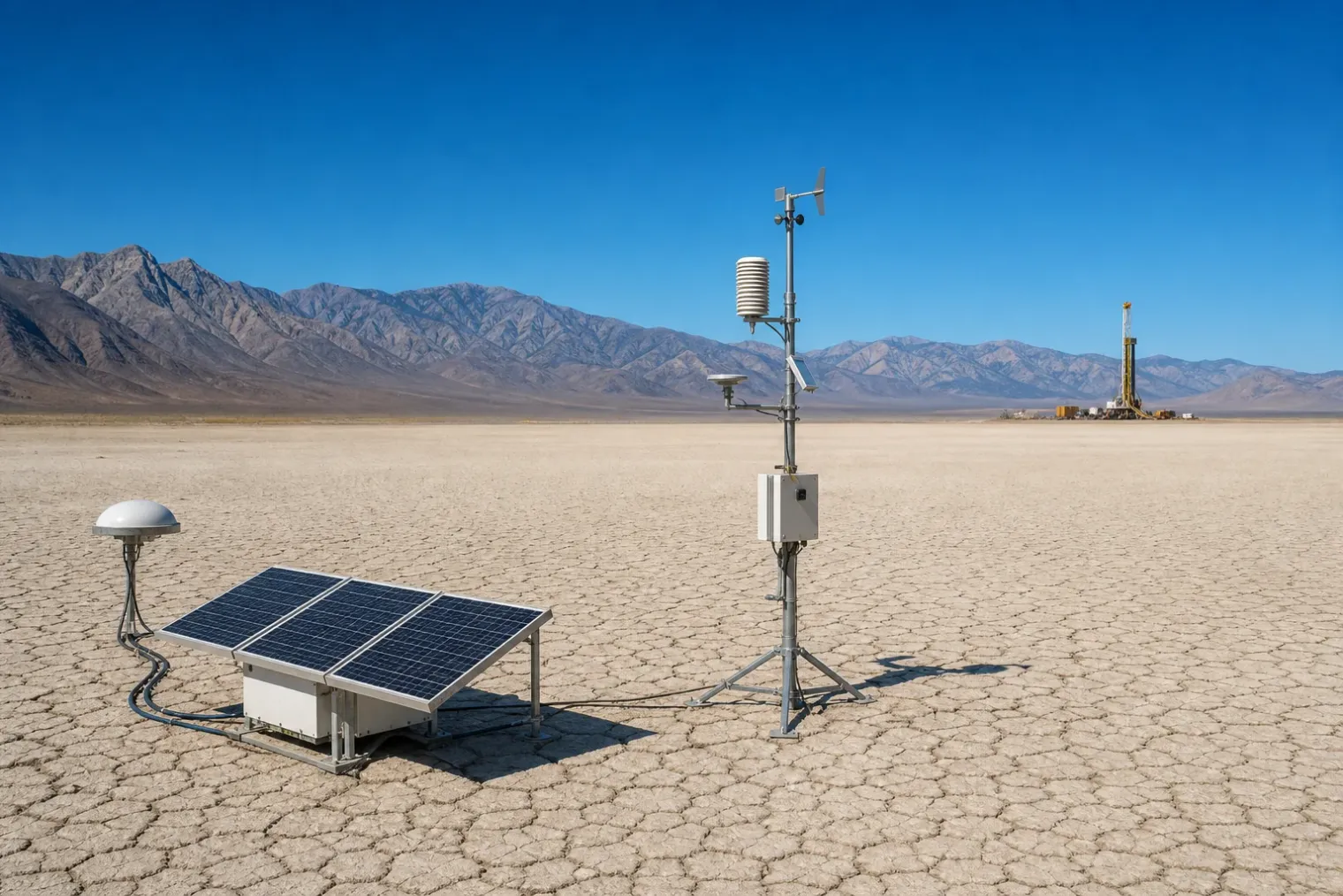
Railroad Valley contains a dry lakebed, or playa, whose physical characteristics make it an unusually valuable reference site for satellite calibration. NASA has used the location since 1993 to compare readings from instruments in orbit with carefully measured conditions on the ground.
The site is useful because it is large, flat, dry, sparsely vegetated, visually uniform and readily observable from space. These properties allow scientists to know with high confidence how much light the surface should reflect. Satellite teams can then adjust or validate their instruments’ measurements. Such work underpins confidence in data used for weather observation, land and water monitoring, agriculture, disaster response, climate research and other public and commercial applications.
The Bureau of Land Management approved a 20-year withdrawal effective in April 2023, removing roughly 22,684 acres from mineral entry, subject to valid existing rights. NASA says Railroad Valley is the only U.S. site that meets its full calibration requirements. The withdrawal protects the land surface rather than transferring ordinary ownership of the area to NASA; the Bureau of Land Management remains responsible for administration.
Mining activity could undermine the very conditions the calibration work requires. Surface disturbance, dust, roads, infrastructure and changes to reflectance could alter the benchmark over which satellite data are compared. The concern is not that every activity nearby would necessarily make calibration impossible, but that the value of the site comes from long-term consistency. Once a reference target is changed, recreating decades of comparable observations is difficult.
A question of boundaries and evidence
The key policy question is therefore narrower than a simple choice between mining and science. It is whether there is a technically defensible way to access any resource outside the protected calibration area, protect the surface conditions needed for satellite work and honour valid existing rights without compromising either mission.
That will require more evidence than headline estimates. Officials would need to assess the deposit’s geometry, the rights attached to specific claims, groundwater and brine impacts, potential subsidence, transport routes, dust control and whether underground or directional extraction could affect the playa. They would also need independent assessment of the tungsten resource and of the economics of producing a marketable concentrate or refined product.
The 2023 withdrawal does not mean that all mineral development throughout Railroad Valley is permanently foreclosed. It does mean that activities within the protected area face a high bar, because the federal government has formally recognised the calibration site as a national scientific asset. Any attempt to alter that arrangement would have to show not only that the mineral opportunity is substantial, but also that the loss or degradation of the reference site can be avoided or credibly offset.
The wider lesson for mineral policy
The dispute illustrates a recurring problem in critical-minerals policy. Governments can identify strategic vulnerabilities and announce ambitious domestic-supply goals, but promising geology often overlaps with other public interests: ecosystems, water resources, tribal interests, recreation, local communities, military land, or in this case a scientific facility with global relevance.
A durable response cannot rest on treating environmental review or scientific safeguards as mere obstacles. Nor can it rely on the assumption that imports will remain available on favourable terms. The practical task is to map conflicts early, build transparent evidence around deposits and impacts, support processing and recycling alongside extraction, and distinguish genuine near-term supply options from long-range geological potential.
Railroad Valley may yet contribute to U.S. mineral security. For now, it is a reminder that resource independence has trade-offs: a material vital to weapons manufacturing lies beneath terrain that helps verify information used to understand the planet.
Sources
- The U.S. military needs tungsten, but pristine NASA site may stand in the way — Scientific American
- Nearly 23,000 Acres Designated for NASA Satellite Calibration — NASA
- Public Lands Withdrawn in the Railroad Valley for NASA Satellite Calibration Activities — Bureau of Land Management
- Department of Defense Awards $6.2 Million to Sustain Critical Production of Tungsten — U.S. Department of Defense
- Restriction on Certain Magnets, Tantalum, and Tungsten — Acquisition.gov


