
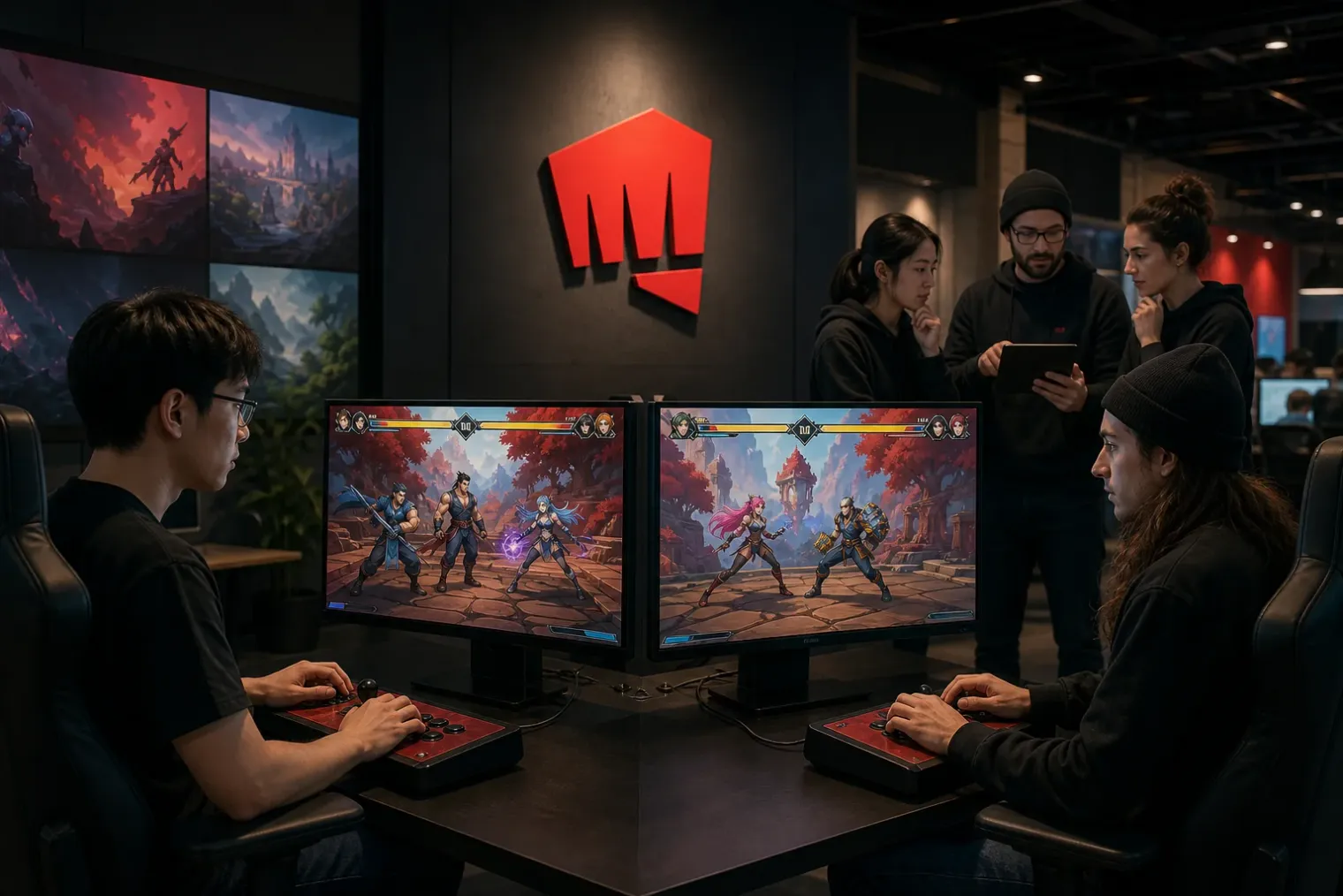
A live-service experiment reaches its endpoint
Riot Games has said it will conclude active development of 2XKO at the end of December 2026, less than 15 months after the League of Legends-based fighting game entered PC early access and roughly a year after its console release. The decision is not an immediate shutdown: the game will remain downloadable and playable on PC, PlayStation 5 and Xbox Series X|S, with online servers intended to stay available beyond 2026.
The distinction matters. Riot is winding down the continuing cycle of new seasons, paid currency, competitive-ranked progression and major content releases that defines a live-service title. It is not removing the game from players who already use it, nor is it setting a final date for online access. The company says it will give advance notice should those plans change.
Riot’s explanation is unusually direct for a major publisher. It said that, despite enthusiasm from a committed portion of the fighting-game community, player retention, engagement and revenue did not create a viable path to sustainability. The game cost substantially more to operate than it generated, according to the company, while engagement remained broadly flat even after larger updates and competitive events.
From early access to retrenchment
2XKO entered early access on PC on October 7, 2025, after a closed beta phase. Its original pitch was ambitious: a free-to-play, two-versus-two tag fighter built around League of Legends characters, designed to welcome newcomers while supporting long-term competitive play. Riot planned to combine regular character releases and cosmetics with ranked competition, community tournaments and platform expansion.
The game reached PlayStation 5 and Xbox Series X|S with its January 2026 launch. That expansion was meant to broaden access at a moment when fighting games depend heavily on console audiences, local play and tournament communities. Riot had also outlined a five-season calendar for 2026, each planned to introduce a champion and a new progression cycle.
By February, however, Riot had reduced the size of the 2XKO team. At the time, it said the game had found a passionate core audience but lacked sufficient overall momentum to justify the existing team. The studio still committed to improving the game and maintaining its competitive programme. The August announcement shows that the smaller-team approach did not change the underlying commercial trajectory.
That sequence illustrates a difficult feature of live-service development. A game may work technically, attract favourable responses and establish a credible competitive scene without reaching the scale required to fund continuing production. In a free-to-play model, a substantial audience is not merely desirable; it supports server operations, customer support, balance work, new content, marketing and tournament investment. A narrowly dedicated audience can sustain grassroots competition, but not necessarily a large publisher’s live-service roadmap.
What players will receive before development ends
Riot is using the remaining months of 2026 to transition 2XKO from an actively updated service to a maintained online game. It plans to ship two final champions, Lux in September and Samira in October. The October update is set to be the final major content patch, followed by an optional bug-fix-focused patch in December if needed.
The company is also changing the game’s commercial and progression systems. Purchases of KO Points were disabled on August 20, and Riot plans to refund qualifying spending made on or before that date, including currency and Starter Edition purchases. Platform-specific processes apply for console refunds, and Riot has indicated that refund timing will vary.
Rather than leaving core gameplay content behind paywalls or grinds after active development stops, Riot will unlock all champions for players. It will bundle most cosmetics, while making various avatar, stage and profile items available through earned credits. Existing owners will retain content they have acquired.
Several live-service systems will be removed in September, including battle passes, seasons, events, Champion Tokens and KO Points. Ranked matchmaking will also be discontinued and folded into a single skill-based casual matchmaking pool. Private lobbies will remain available, and Riot plans to add voice chat and a larger private-lobby map supporting up to 40 players.
These measures are a pragmatic attempt to preserve the game’s usefulness after its business model is dismantled. Removing fragmented queues can help maintain healthier matchmaking in a smaller player base, while universal character access reduces friction for returning players and tournament organisers. The trade-off is that the game will lose the scheduled rewards and competitive ladder that supplied much of its routine engagement.
Competitive play can continue, but Riot support will narrow
Riot’s 2026 Competitive Series will continue through its scheduled final event in November, including prize support for listed major and challenger events. After that, organisers may still run 2XKO events under Riot’s community competition guidelines, online or offline.
This leaves the game with a potentially durable community afterlife rather than a formal esports future. Fighting games have historically depended on local organisers, independent tournaments and committed competitors, so continued private play and online access give 2XKO a better chance of retaining that culture than a full closure would. Yet the loss of regular patches, ranked seasons and official event investment will make growth harder.
For Riot, the decision is also a reminder that intellectual property reach does not automatically translate into durable participation in every genre. League of Legends supplied recognised characters and a large global brand, but fighting-game audiences have their own competitive habits, expectations and established alternatives. Riot said it will continue exploring new genres, suggesting that the end of 2XKO’s active development is a retrenchment from one product rather than a withdrawal from experimentation.
The immediate priority is now execution. Refunds, clear communication, a stable final build and functioning servers will determine whether players view the transition as a responsible wind-down. Riot cannot reverse the game’s commercial outcome through those measures, but it can preserve access to the work already completed and leave its community with a version designed to remain playable.
Sources
- 2XKO Active Development Will End in December 2026 — Riot Games
- An Update on 2XKO — Riot Games
- 2XKO Early Access Starts October 7 — Riot Games
- 2XKO Patch Notes: 1.1.1 — Riot Games
- Riot is ending development on its League of Legends fighting game — The Verge


