
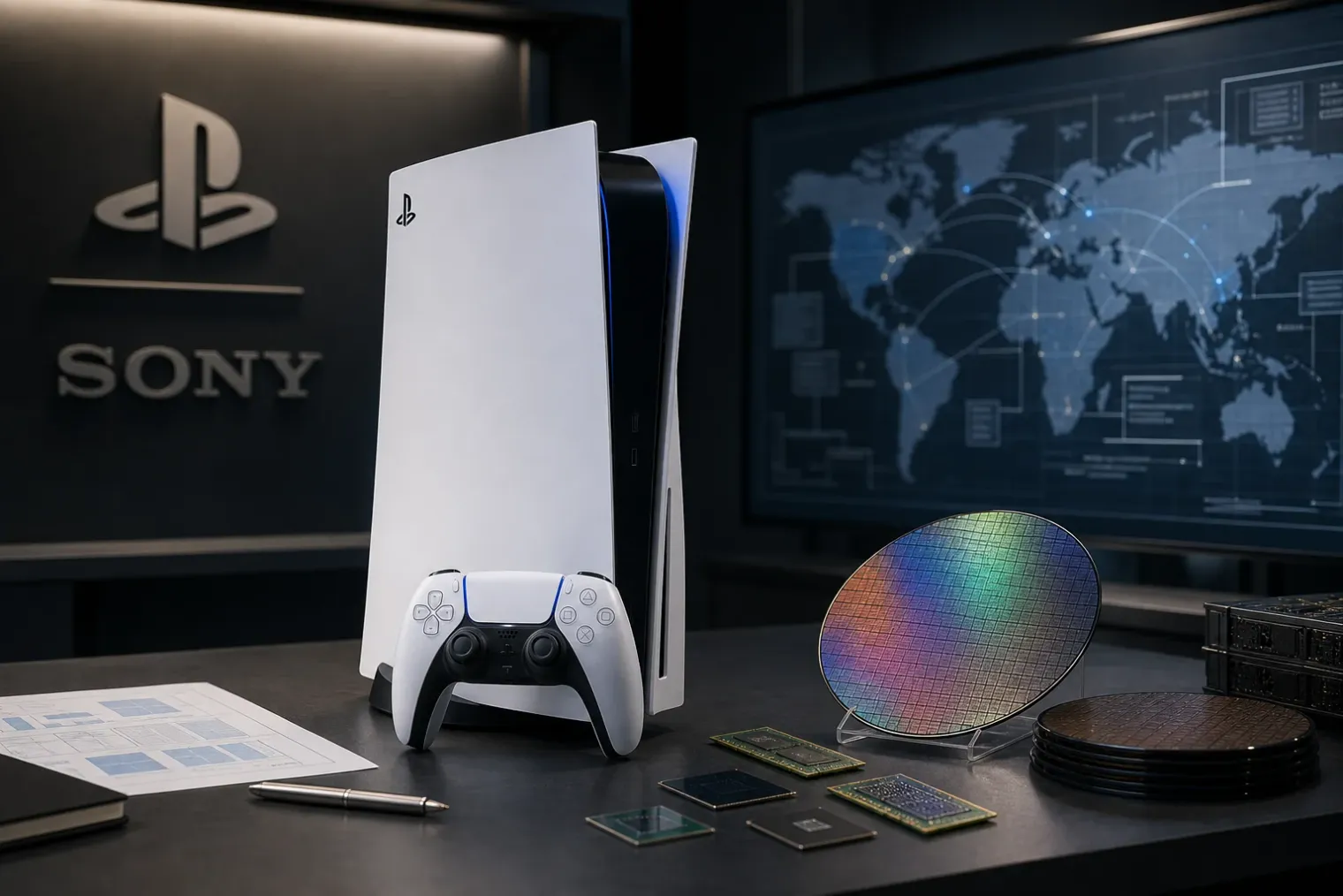
A decision deferred, not a launch delay
Sony has not announced a release date for a PlayStation 6, nor has it confirmed the name, specifications or price of its next console. The clearest statement on the issue came during Sony Group’s corporate strategy and earnings presentation on May 8, 2026, when President and CEO Hiroki Totoki said that no decisions had been made on the timing or pricing of next-generation platforms.
That is an important distinction in a market crowded with date forecasts. Sony has not declared that a planned PlayStation 6 launch has been delayed; rather, it says the underlying decisions have not yet been finalised. The company is assessing conditions that are unusually difficult for a mass-market console launch, especially the cost and availability of memory semiconductors.
The “PS6” label is widely used by players and the media as shorthand for a PlayStation 5 successor. Sony itself has referred more cautiously to “next-generation platforms”. Until the company provides a formal product announcement, any specific launch year or hardware configuration remains speculation.
Memory costs are now a strategic issue
Modern consoles require substantial high-speed memory, and a rise in memory prices feeds directly into the bill of materials for each unit. Sony said that higher memory prices raise manufacturing costs and that passing those increases into retail pricing could materially affect console adoption.
The company’s concern is not confined to a short-lived supply disruption. In its May question-and-answer summary, Sony said the prevailing view was for memory prices to remain elevated and supply-demand conditions to stay tight through 2027. Sony has linked the shortage to surging demand for artificial-intelligence infrastructure, which competes with consumer-device makers for parts and production capacity.
This creates an awkward timing problem. A new console typically needs a carefully planned price, supply ramp and marketing programme long before launch. If component prices are unstable, Sony faces a choice between accepting lower hardware margins, charging more than consumers expect, reducing specifications, or delaying volume plans until costs are clearer. None is an automatic outcome, and the company has not said which route it will choose.
Sony has indicated that it will examine several variables together: reducing non-semiconductor hardware costs, adjusting sales and go-to-market plans, and potentially changing elements of the business model. That language should not be read as confirmation of any particular policy, such as a digital-only device, a subscription requirement or a different release model. It describes a set of options under review rather than a product decision.
Why the installed base gives Sony time
The uncertainty comes while PlayStation remains a large and profitable platform. Sony Interactive Entertainment says that PlayStation 5 sell-in exceeded 95 million units worldwide by June 30, 2026, while PlayStation had 125 million monthly active users at that date. Those figures mean Sony can continue to generate revenue through software, add-on content, subscriptions and network services even without an immediate generational transition.
Sony’s latest annual report illustrates that shift. In the financial year ended March 31, 2026, Game & Network Services recorded segment sales of ¥4.69 trillion and operating income of ¥463.3 billion, a record for the segment. Hardware sales declined as unit sales fell, but growth in network services and non-first-party software helped support the business.
That mix matters when deciding the next console’s timing. A platform holder with recurring income from its store, subscription services and established audience is less dependent on hardware alone than it was in earlier console cycles. It can weigh the benefit of launching a more powerful device against the risk of asking customers to pay a high entry price during a component shortage.
Sony has also said it plans to manage the effect of memory costs on current hardware profitability through flexible adjustments to unit sales and promotional plans. It had secured the memory volumes needed for 2026 and had agreed pricing to a degree, offering more near-term certainty for PlayStation 5 than for a future platform.
A longer generation is plausible, but not confirmed
The PlayStation 5 launched in November 2020. A successor arriving later than the seven-year interval between PlayStation 4 and PlayStation 5 would make this generation longer by that historical comparison, but Sony has not committed to such an outcome.
A longer cycle would not necessarily mean a dormant platform. Sony’s strategy is centred on keeping players active through the PlayStation Store, PlayStation Plus, first-party games and third-party releases. The company has also described continued investment in artificial intelligence for game-development tools, platform operations and recommendation systems. These initiatives are designed to improve the existing ecosystem as well as to prepare for future hardware.
For consumers, the practical message is that PlayStation 5 remains Sony’s active hardware focus. There is no official reason to treat rumours of a 2027, 2028 or 2029 launch as settled plans. The relevant variables are still moving: memory supply, component pricing, expected consumer demand, competitive conditions and Sony’s willingness to subsidise hardware in pursuit of wider platform revenue.
What to watch next
The next meaningful update is more likely to emerge from Sony’s financial guidance and supply-chain commentary than from speculation about technical specifications. Investors will be looking for whether memory prices stabilise, whether Sony revises its assumptions on hardware profitability, and whether its PlayStation 5 sales and engagement remain resilient.
A formal next-generation announcement would eventually answer questions that Sony has deliberately left open: the product’s identity, price, launch date, hardware strategy and relationship with the existing PlayStation ecosystem. For now, the company’s position is straightforward. It sees continuing demand for PlayStation, but it does not yet see a sufficiently clear component-cost environment to lock in the timing and price of its next console.
Sources
- Sony still hasn't chosen a PlayStation 6 release date, says CEO, as RAM crisis continues — Eurogamer
- Corporate Strategy and Earnings Announcement Presentation Q&A (Summary) — Sony Group Corporation
- Form 20-F for the fiscal year ended March 31, 2026 — Sony Group Corporation
- The History of Sony Interactive Entertainment — Sony Interactive Entertainment


