
A forecast becomes a near-record opening
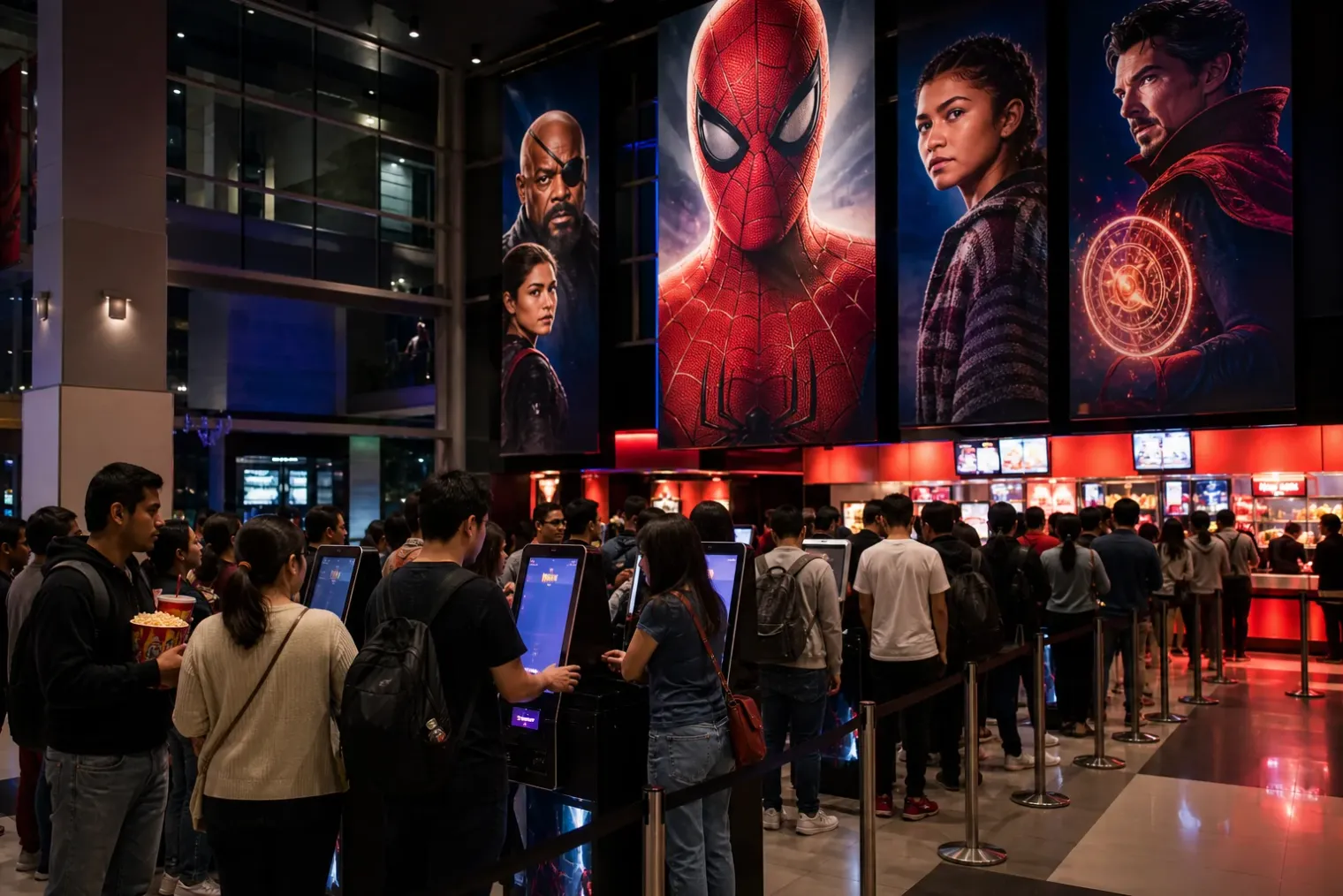
The first reports that Spider-Man: Brand New Day was heading for an $875 million global launch proved conservative. Sunday estimates put the film’s worldwide opening at about $927 million, including $355 million in the United States and Canada and $572 million from international markets.
That places the film second in the global-opening rankings behind Avengers: Endgame, which began with more than $1.2 billion in April 2019. In North America, Brand New Day is also provisionally second: its estimated $355 million launch is narrowly below Endgame’s $357.1 million record. The gap is small enough that final studio figures, expected after the weekend estimates are reconciled, remain consequential.
The distinction between estimates and final grosses matters. Weekend figures are compiled from thousands of cinemas before full reporting is complete, and the first published total can move modestly. Yet a revision would need to be unusually favourable for Brand New Day to overtake Endgame domestically. Its larger achievement is already clear: the film has delivered a scale of theatrical demand rarely seen since the pandemic disrupted the global cinema business.
A worldwide result, not only a domestic event
The $927 million figure reflects a broad international rollout rather than dependence on a single market. China contributed about $121 million, while the overseas total was collected from more than 73,500 screens. That distribution is important for Sony, as it demonstrates that Spider-Man remains a global theatrical brand even amid an uneven period for superhero releases.
The North American performance was particularly striking. The film took an estimated $168 million on its first day, including previews, surpassing Endgame’s previous opening-day benchmark. It then sustained enough attendance across the weekend to pass the $260 million opening of Spider-Man: No Way Home, the previous high point for the character in the domestic market.
Brand New Day therefore sits above not only its immediate predecessor but also Avengers: Infinity War and Star Wars: The Force Awakens in the ranking of North American opening weekends. Those comparisons should be treated carefully: ticket prices, premium-format availability, release patterns and the inclusion of previews differ between films. Still, the result shows exceptional audience mobilisation in nominal revenue and in cinema attendance.
Why the Spider-Man formula remains distinctive
The film arrives with several advantages that are not automatically available to other comic-book releases. Spider-Man is one of the best-known screen characters internationally, with separate but connected histories at Sony Pictures and Marvel Studios. The new film benefits from the continuity of Tom Holland’s Peter Parker while presenting a story designed around a more isolated version of the character after the events of No Way Home.
Sony describes the premise as Peter fighting crime full-time in a world that no longer remembers him, while confronting changes in himself and an unseen threat to the city. The cast reunites Holland with Zendaya and Jacob Batalon, while adding Sadie Sink, Jon Bernthal, Tramell Tillman, Michael Mando and Mark Ruffalo. Destin Daniel Cretton directed from a screenplay by Chris McKenna and Erik Sommers.
That combination appears to have balanced familiarity with renewal. No Way Home drew major attention by bringing together earlier live-action Spider-Man eras. Brand New Day did not rely on that same event-driven premise, but its opening indicates that audience interest in Holland’s version of the character remains substantial on its own.
A significant moment for cinemas
The film’s launch also boosted the wider North American marketplace. The combined weekend ticket sales across theatres were estimated at $430 million, helped by the continuing run of Christopher Nolan’s The Odyssey. For exhibitors, the overlap matters as much as the individual headline: a strong marketplace needs more than one film capable of drawing large and varied audiences.
The success does not settle the broader question of superhero cinema’s health. An exceptional Spider-Man opening cannot be assumed to translate to every franchise or sequel. The character’s decades-long cultural visibility, cross-generational appeal and unusually wide international recognition make it a special case. Moreover, an opening weekend is an indicator of anticipation rather than a complete measure of profitability or long-term audience satisfaction.
The next test is how sharply ticket sales decline after launch. A large opening gives the film a strong commercial foundation, but its final total will depend on repeat viewing, competition, audience reception and the length of its theatrical run. The scale of the debut means that even a conventional post-opening drop would leave it among the year’s biggest releases.
For now, the corrected headline is more precise than the original $875 million estimate: Spider-Man: Brand New Day has not surpassed Endgame’s global or North American opening records, but it has come remarkably close in the latter and established the second-largest worldwide start on record. That is a major result for Sony, Marvel and cinema operators—and a reminder that theatrical event films can still create worldwide cultural momentum.
Sources
- Spider-Man: Brand New Day reportedly opens to $927 million — Sector.sk
- Spider-Man: Brand New Day nets second best North American opening ever with $355 million — Associated Press
- Spider-Man: Brand New Day — Sony Pictures Entertainment
- Watch the Official Trailer for Spider-Man: Brand New Day — Marvel


