
A reported end to the original project
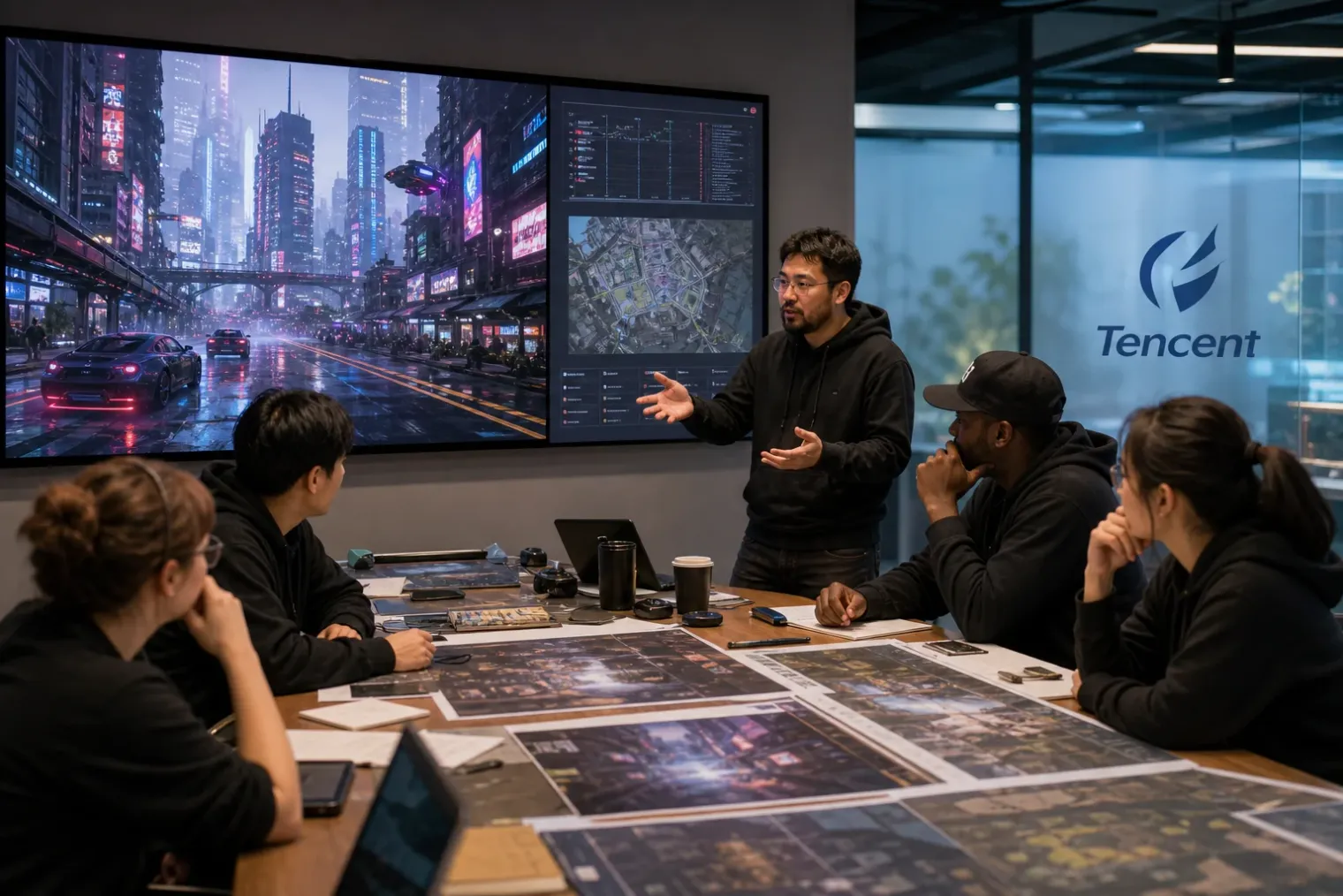
Last Sentinel, the futuristic open-world game announced by Tencent-owned Lightspeed LA in December 2023, is facing an uncertain future after reports of a major internal reversal. Reporting published at the end of July said Tencent had declined to continue with the game in its existing form following years of difficult development, and that about 80 jobs had been affected at the studio.
That does not amount to a formal cancellation announcement. Lightspeed LA has publicly said that it is changing the project’s creative and development direction after internal reviews and play-testing. It has also said that the studio remains open, will continue building games, and that Tencent’s commitment to North American development is unchanged. The distinction matters: the version of Last Sentinel shown to the public may be over, while the name, technology, assets or a reworked concept could still survive.
For players, however, the immediate result is similar to a cancellation. There is no release date, no confirmed platform schedule, no gameplay demonstration that establishes the project’s new shape, and no indication of how much of the originally announced game will remain.
An unusually ambitious first release
Lightspeed LA presented Last Sentinel as its debut title: a AAA open-world action game set in a futuristic Tokyo. Its announcement trailer introduced Hiromi Shoda, a protagonist moving through a dense, vertically built city shaped by advanced technology, crime and social decay. The studio’s stated ambition was to combine a character-led narrative with the freedom and scale associated with major open-world productions.
That positioning inevitably invited comparisons with Grand Theft Auto and Red Dead Redemption. The connection was reinforced by Lightspeed LA’s leadership and recruitment: the studio was led by Steve C. Martin, whose previous work included senior production roles on Rockstar games, while the team recruited experienced developers from prominent AAA studios.
Yet invoking Rockstar also highlighted the challenge. A modern urban open-world game requires more than impressive environments or cinematic aspirations. It needs reliable vehicle handling, combat, missions, artificial intelligence, animation, progression systems, technical performance and a consistent creative identity. Each area is difficult independently; integrating them into a seamless and believable city is a far larger undertaking.
The original project was therefore an ambitious attempt to establish a new Western AAA studio with a genre that is exceptionally expensive and notoriously hard to execute. A new team can have experienced individuals and substantial funding, but still lack the production routines built over several releases by established developers.
Reported problems point to a production failure
Accounts of Last Sentinel’s development describe a project that struggled with clarity and scale. Bloomberg’s reporting, as summarised by multiple outlets, said the game had been in production for roughly six years and had consumed hundreds of millions of dollars. It described delays, staff turnover, rising costs and an unclear creative direction. A play-test earlier in 2026 reportedly produced strongly negative feedback, prompting a final attempt to improve the game before Tencent decided against proceeding with that version.
These are reported claims rather than findings Tencent has confirmed in detail. Still, the company’s own statement supports the conclusion that the project reached a decisive point. Companies rarely change a game’s creative and development direction after extensive reviews unless they believe the existing course cannot meet the intended standard.
The reported job losses make the change more consequential. A reset can mean a smaller team, a more tightly defined game, a shift away from open-world design, or the reassignment of staff to other work. It can also mean retaining a brand and selected concepts while abandoning years of underlying production. Until Lightspeed LA shares more, none of those outcomes can be treated as confirmed.
Why the Grand Theft Auto comparison is misleading
Calling Last Sentinel a “GTA rival” captures its commercial aspiration but oversimplifies the situation. Rockstar’s games are not simply open cities with vehicles and criminal themes. They are the product of long-established technology, extensive institutional knowledge and production organisations that have shipped multiple large-scale titles. Matching that level of scope is a multi-project, long-term undertaking rather than a realistic benchmark for a studio’s first release.
The comparison can also create a damaging feedback loop. Marketing gains attention by invoking the leading name in a genre, but that attention raises expectations before the developer can show substantial gameplay. In Last Sentinel’s case, the public material emphasised mood, talent and creative ambition far more than playable systems. That is not unusual for an early announcement, but it becomes more conspicuous as the gap between reveal and release widens.
Tencent’s challenge was not a lack of access to capital or industry talent. It was the difficulty of turning those inputs into a coherent project while building a studio and pursuing one of the industry’s most demanding formats at the same time.
A test of Tencent’s overseas development strategy
The reversal also arrives during a period of greater scrutiny of Tencent’s international games operations. The company remains a major global investor and publisher, with interests across mobile, PC and console development. However, the economics of large Western AAA projects have become more difficult: development cycles are longer, budgets are higher, and a single project can consume years of investment before its commercial prospects are clear.
Earlier in 2026, Tencent also closed TiMi Montreal, another North American studio created to develop an original AAA franchise. That does not prove a wholesale retreat from overseas development, and Tencent has explicitly said its North American commitment remains intact. But it does suggest a more demanding approach to projects that have not demonstrated a convincing route to release.
For Lightspeed LA, remaining open is significant. It gives the studio an opportunity to retain part of its expertise and show that the reset is a change of direction rather than a quiet wind-down. Its next public update will be more important than another cinematic promise: it will need to show what the team is making, what scale it can credibly deliver and why the new plan is more achievable.
What happens next
The most accurate description of Last Sentinel today is not simply “cancelled.” The original version appears to have been abandoned or comprehensively rebooted, while Tencent and Lightspeed LA maintain that development is continuing in a new direction. Those positions are compatible, but they leave players without a clear sense of what remains.
A full cancellation remains possible. So does a smaller, reimagined project that keeps the title or setting. Tencent could also preserve selected work for a different game. Until there is a new reveal, the only firm conclusion is that the ambitious open-world game announced in 2023 is no longer proceeding as originally planned.
That outcome is a reminder that AAA development is not secured by a high-profile trailer, an experienced leadership roster or a large budget. Those factors can create opportunity, but they do not replace a focused design, stable production decisions and repeated proof that a team can turn ambition into a game players want to play.


