
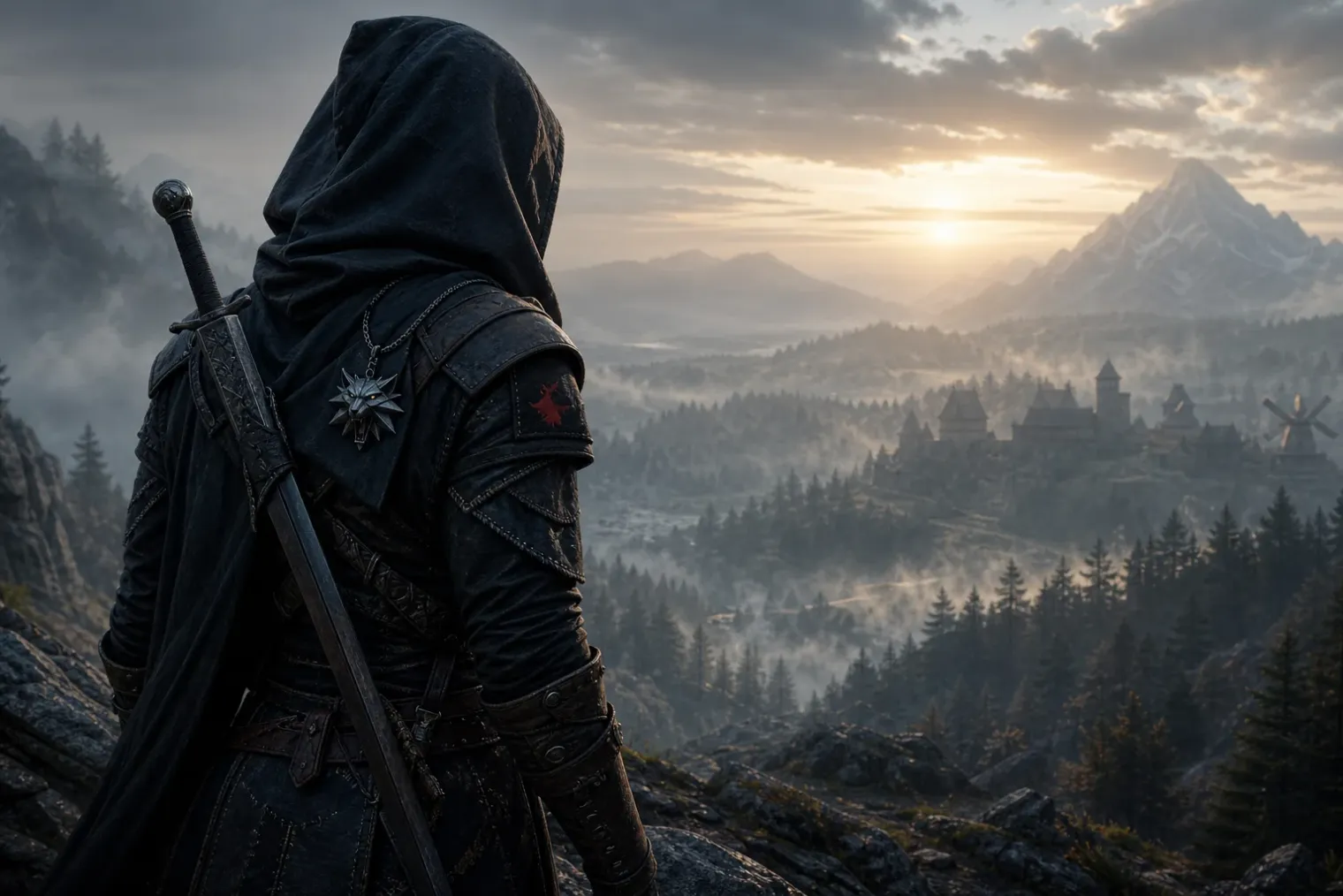
A target, not a fixed launch date
CD Projekt RED has said that The Witcher 4 is targeting a 2028 release window, narrowing expectations for the next mainline entry in its fantasy role-playing series. The update, delivered by joint CEO Michał Nowakowski ahead of Gamescom 2026, is the studio’s most specific public guidance on timing to date.
The phrasing is significant. A target window gives players and investors a useful planning signal, but it is not equivalent to a firm release date. CD Projekt has not announced a launch day, platforms, price or preorder programme. The studio will therefore have room to adjust its schedule if development, testing or certification requires more time.
That caution is appropriate for a project with unusually high expectations. The Witcher 4 begins a new saga after the commercial and critical success of The Witcher 3: Wild Hunt. CD Projekt has confirmed that Ciri will take the lead role in the new game, moving the series’ focus beyond Geralt while retaining its established world and audience.
Development scale explains the longer wait
The 2028 objective follows a lengthy production process rather than a sudden delay announcement. CD Projekt had previously said the game would not arrive by the end of 2026, and described it as being in full-scale production. The latest message also says that more than 500 developers are working on the project.
That staffing level underlines the scale of the undertaking, but it does not make a release date automatic. Large teams must integrate writing, quest design, world building, animation, combat systems, localisation, accessibility and quality assurance. For an open-world RPG, the late stages of development can be particularly demanding as the studio tests how countless player choices and systems work together across a vast game.
The project is being made using Unreal Engine 5 rather than CD Projekt RED’s former proprietary technology. The studio has presented a technical demonstration showing its approach to building a detailed open world with the engine, but that demonstration was not a declaration that the final game’s content, performance or visual settings had been locked. The distinction matters: technology showcases can demonstrate direction and capability while the game itself continues to change.
No Witcher 4 showing at Gamescom
The company’s announcement also clarified that The Witcher 4 will not be shown at Gamescom 2026. CD Projekt is still attending the event, but its Witcher presence is focused on Songs of the Past, an expansion for The Witcher 3: Wild Hunt that is scheduled for 2027 and is being co-developed with Fool’s Theory.
Separating the two projects gives CD Projekt an opportunity to sustain interest in the wider franchise without beginning a prolonged marketing campaign for a game that remains roughly two years away. It also reduces the risk that early footage creates expectations the team later has to revise. For an audience accustomed to major announcements at Gamescom, the absence of a new trailer may be disappointing, but it is consistent with the studio’s emphasis on development rather than near-term promotion.
Songs of the Past has another strategic role. The Witcher 3 has sold more than 65 million copies, giving the series an enormous existing player base. A new expansion can re-engage those players, introduce newer audiences to the setting and provide a bridge between Geralt’s story and Ciri’s new chapter.
A demanding plan for the broader trilogy
The 2028 target also provides a starting point for judging CD Projekt’s broader ambition. The company has previously outlined a plan to release the complete new Witcher trilogy over a six-year period, with later instalments intended to benefit from technology, tools and production knowledge established on The Witcher 4.
That plan should be viewed as an ambition rather than a release calendar. The first game in a new trilogy carries the burden of establishing core systems and production pipelines; sequels may be produced faster only if those foundations prove durable. CD Projekt has said its experience with Unreal Engine 5 has been positive, but delivering a large open-world game on a predictable timetable remains difficult across the industry.
The company’s financial position provides some support for a patient approach. In its first-quarter 2026 report, CD Projekt said it held PLN 1.4 billion in cash reserves at the end of March, while development investment was increasing as work continued across multiple projects. That gives the group greater capacity to prioritise quality and schedule discipline rather than rely on The Witcher 4 for an immediate release cycle.
What players can reasonably expect next
For now, the 2028 window is the headline rather than the beginning of a detailed product rollout. Players should not read it as confirmation of a specific season or quarter. The next meaningful milestones are more likely to be carefully selected demonstrations of gameplay, story, systems or platforms once CD Projekt considers them representative of the final product.
The key test for the studio will be whether it can match its creative ambitions with a polished launch. The Witcher 3 established a formidable benchmark for the series, while the troubled initial release of Cyberpunk 2077 made delivery quality a central issue for CD Projekt’s reputation. By identifying 2028 as a target rather than promising a fixed date too early, the company is signalling that it wants time to manage that balance.
For fans, the announcement turns a distant project into a more defined prospect. It does not end uncertainty, but it sets an expectation: The Witcher 4 is moving through full production, Ciri’s new story is intended to arrive in 2028, and CD Projekt is positioning the game as the foundation for the next era of the franchise.
Sources
- The Witcher 4 developers target a 2028 release — The Verge
- Important update from Michał Nowakowski, Joint CEO of CD PROJEKT RED — CD PROJEKT
- CD PROJEKT wraps up the first quarter of 2026 — CD PROJEKT
- CD PROJEKT Group FY 2024 results webcast transcript — CD PROJEKT


