
A scheduled 21:00 CEST broadcast
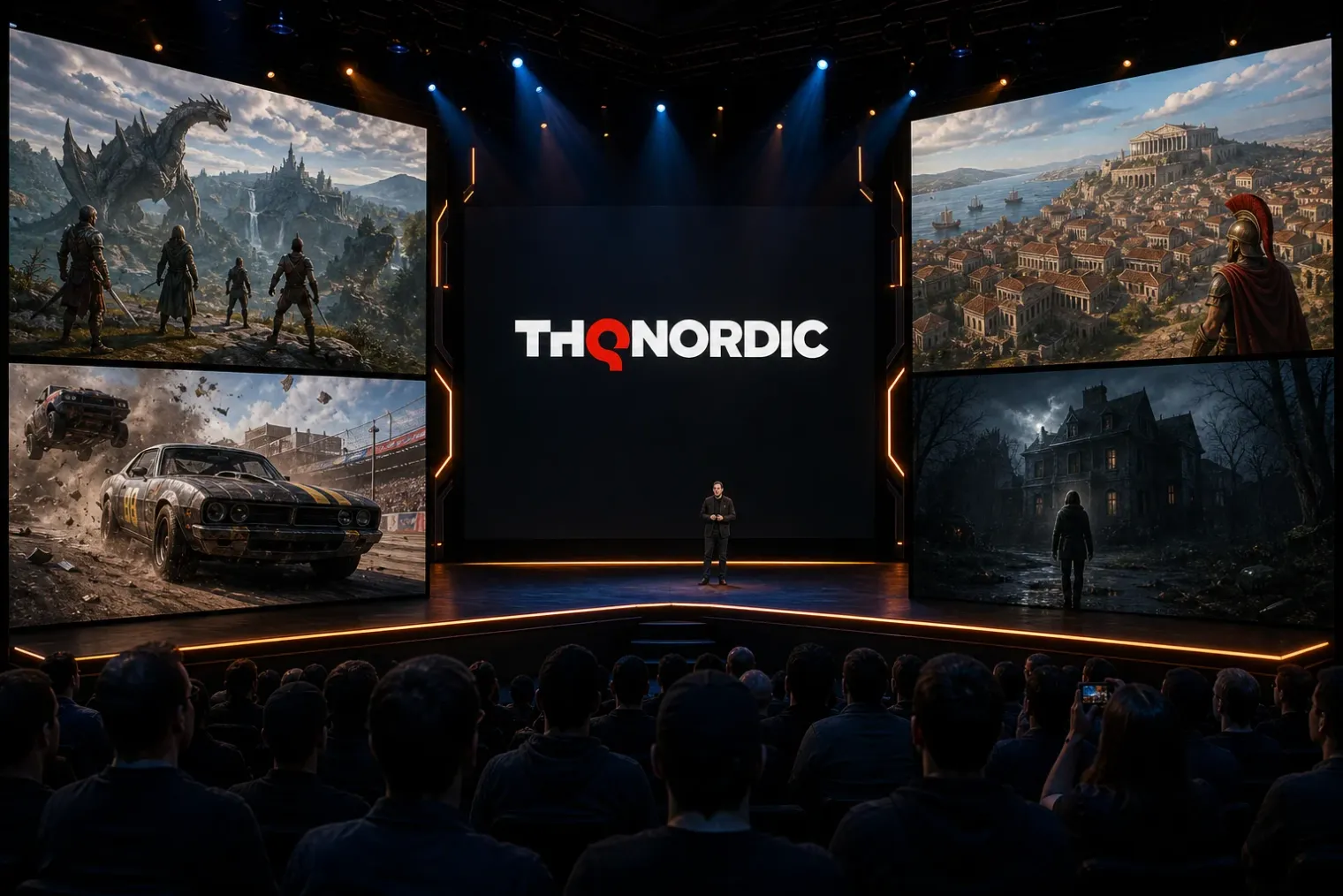
THQ Nordic will hold its Digital Showcase on Friday, August 7, 2026, beginning at 21:00 CEST. The broadcast is scheduled for 20:00 in the UK, 15:00 on the US East Coast and 12:00 Pacific time, and will be carried through the publisher’s official online channels, including YouTube, Twitch and Steam.
The timing places the event in the increasingly competitive late-summer showcase window, when publishers use direct broadcasts to provide release dates, gameplay demonstrations and announcements ahead of the autumn sales period. THQ Nordic has presented its own annual digital event in recent years, using it both to maintain visibility for long-running properties and to introduce games that may not receive the exposure of a major platform-holder presentation.
This year’s broadcast has been positioned as a portfolio update rather than a single-franchise event. That distinction matters: THQ Nordic’s catalogue spans role-playing games, racing, strategy, hunting, family entertainment and darker narrative-led titles. The showcase is therefore likely to be judged not only by individual announcements, but by whether it gives the publisher’s release pipeline clearer shape.
A varied line-up, with release dates in focus
Ahead of the show, THQ Nordic identified Titan Quest II, Wreckfest 2, The Guild – Europa 1410, Fatekeeper, Expeditions: Samurai, The Eternal Life of Goldman and Way of the Hunter 2 as games expected to receive attention. The publisher has also said that the presentation will include long-awaited reveals and release-date news.
That is a meaningful promise for several projects whose audiences have been waiting for firmer launch plans. Titan Quest II carries the legacy of a well-known action role-playing series, while Wreckfest 2 follows a racing game built around heavy vehicle damage and chaotic competition. The Guild – Europa 1410 revives a strategy and management brand with a dedicated PC audience, while Expeditions: Samurai extends a series that combines tactical combat with historical exploration.
The official 2026 showcase page also highlights Gothic 1 Remake, Reanimal, Call to Arms: Panzer Elite and several Gothic classic releases, alongside the previously announced projects. Its inclusion of Let’s Sing 2027 and Let’s Sing ABBA underlines the breadth of THQ Nordic’s business: the company is not solely relying on traditional PC and console enthusiast franchises.
The breadth is commercially useful, but it creates a communication challenge. A presentation that moves quickly between heritage role-playing games, family music titles and niche simulation projects must give each game a clear reason to exist in the market. For players, the most valuable outcomes will be concrete ones: gameplay that explains how a project has evolved, confirmed platforms, release windows and evidence that previously announced games remain on track.
The importance of established properties
THQ Nordic has frequently built its publishing identity around revisiting and extending recognised intellectual property. Gothic is a prominent example. The original games retain particular cultural weight in parts of Europe, while a remake offers an opportunity to reach audiences unfamiliar with the earlier releases. That makes any substantive update on Gothic 1 Remake especially important: it needs to show how the project balances the personality of the original with modern expectations for controls, interfaces and world design.
Titan Quest II faces a different version of the same challenge. Its appeal rests on an established action role-playing formula, but it enters a genre in which players now expect deep build variety, long-term support and polished cooperative play. A showcase segment can create interest, but a credible launch plan and a clear account of the game’s systems will matter more for sustaining that interest.
Other projects can broaden the publisher’s audience rather than simply activate nostalgia. Reanimal, from Tarsier Studios, represents a newer property with a darker co-operative premise. Embracer Group said in May that the game had sold more than one million copies, providing THQ Nordic and its wider corporate group with a successful new foundation to build on. The showcase can therefore serve a dual purpose: supporting known brands while signalling whether newer series can become durable parts of the portfolio.
A showcase during corporate change
The event comes as THQ Nordic’s parent company, Embracer Group, continues to reshape its corporate structure. In May 2026, Embracer announced its intention to spin off Fellowship Entertainment as a separately listed company during calendar year 2027. The planned organisation is intended to create two more focused businesses after earlier separations involving Asmodee and Coffee Stain.
For THQ Nordic, this context raises the value of disciplined portfolio management. Embracer reported net sales of SEK 15.9 billion and adjusted EBIT of SEK 905 million for the financial year ended March 2026, describing the period as a transition year marked by a quieter major PC and console release slate and shifts in the timing of some key titles.
A publisher showcase cannot resolve corporate restructuring, but it can demonstrate execution. A well-defined schedule, transparent updates and a sensible mix of releases are important signals when a group is trying to turn a large collection of studios and franchises into more predictable results. The presentation will be most persuasive if it avoids treating trailers as substitutes for practical information about when and where games will arrive.
What to watch for
The August 7 presentation should clarify several questions across THQ Nordic’s slate:
- whether major returning franchises receive firm release dates rather than broad windows;
- how much new gameplay is shown for projects such as Gothic 1 Remake, Titan Quest II and Wreckfest 2;
- whether newer properties, including Reanimal and The Eternal Life of Goldman, are assigned a clearer market position;
- and whether the publisher has unannounced projects that materially change expectations for its 2026 and 2027 line-up.
THQ Nordic has announced an unusually wide group of featured games before the stream, lowering the likelihood that the show will depend on one surprise to justify its running time. The trade-off is higher expectation for detail. For a publisher with a catalogue this diverse, the strongest presentation will be one that makes the road from announcement to release easier to understand.
Sources
- THQ Nordic nám o 21:00 prinesie svoju veľkú letnú prezentáciu — Sector.sk
- Guess Who's Back: THQ Nordic's Digital Showcase Returns August 7th, 2026! — THQ Nordic
- Digital Showcase 2026 — THQ Nordic
- Embracer Group publishes Interim Report Q4, January-March 2026 — Embracer Group


