
From roadside safety advocacy to a surveillance flashpoint
Steve Eimers built his public profile by arguing that roadside guardrails and related infrastructure must be installed in ways that protect people when vehicles leave the road. Known online as the “Guardrail Guy”, his advocacy follows the death of his teenage daughter in a 2016 crash involving a guardrail.
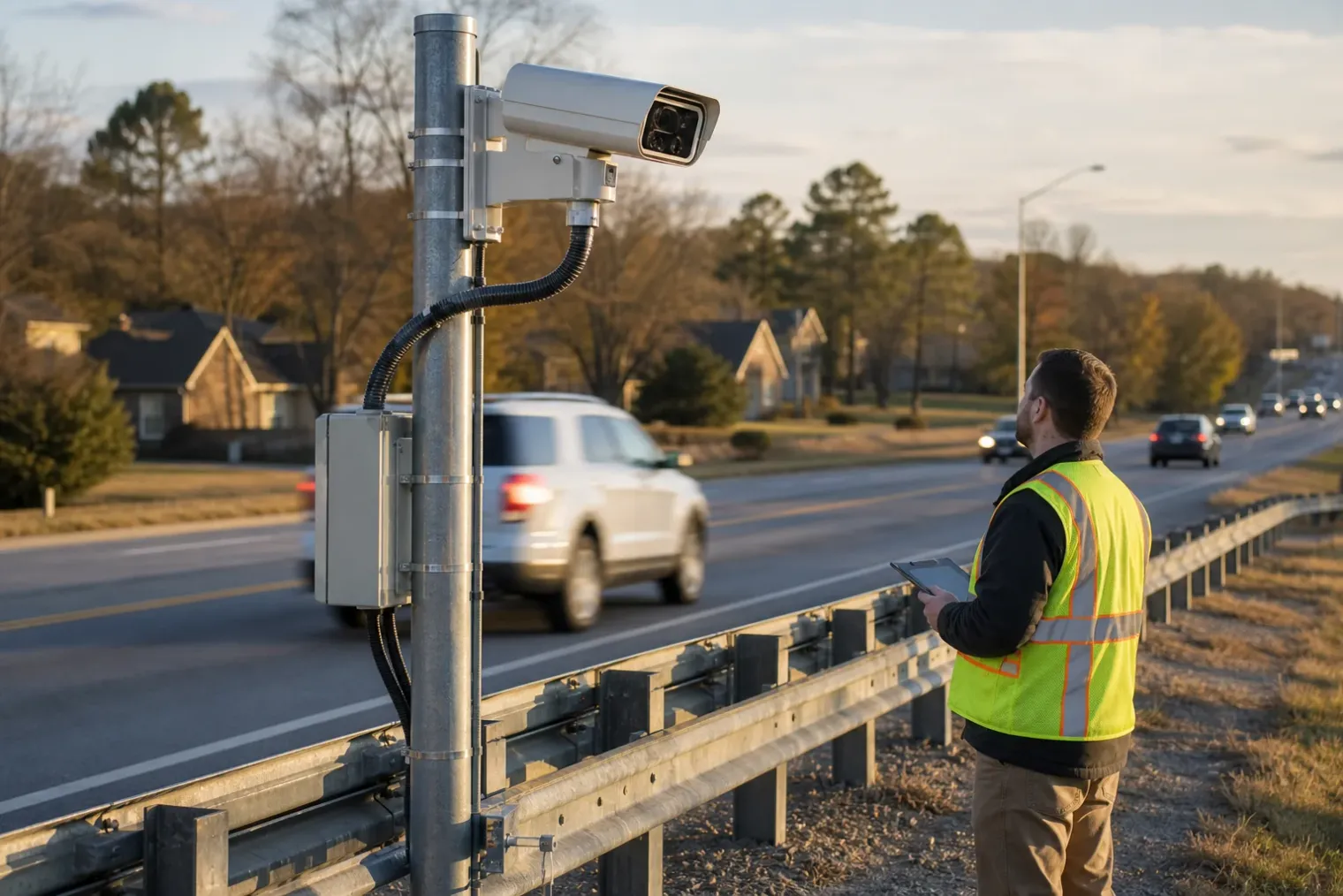
In 2026, Eimers began applying the same attention to automatic licence-plate reader installations. His videos focused on cameras mounted near guardrails and on posts that may have been designed to break away when struck. The concern was not principally about the cameras’ ability to identify vehicles, but about whether additional equipment could affect the performance of roadside hardware during a collision.
That technical argument quickly collided with a far wider political debate. Flock Safety, one of the most prominent suppliers of fixed licence-plate reader systems in the United States, has become a focal point for public concerns about police access to vehicle-location data. Eimers’ footage therefore attracted commenters who saw the installations less as a road-design issue than as symbols of expanding surveillance.
The result illustrates a familiar difficulty in technology policy: a narrowly defined safety complaint can gather a much broader audience, with different motivations and different ideas about what action should follow.
Damage allegations changed the stakes
According to reporting by WIRED, Eimers stopped his licence-plate reader advocacy indefinitely after finding two cameras that had appeared in his videos severely damaged. Local authorities announced on July 31, 2026 that a man had been arrested and charged with felony vandalism in connection with the shooting of four cameras in the Maryville area of Tennessee between July 14 and July 22. The case remains an allegation rather than a finding of guilt.
The report said police linked the damaged cameras to installations Eimers had highlighted. Eimers said the discovery left him concerned that attention to his posts could be interpreted as encouragement for unlawful action, even though his stated purpose was to raise safety questions. He has said he will leave existing material online but will not make further posts on the subject for now.
That decision matters because it marks the point at which an advocacy campaign loses its practical operating space. Public criticism, evidence gathering and calls for oversight are protected and necessary features of democratic debate. Destruction of equipment, by contrast, can endanger bystanders, divert police resources and make it harder to distinguish legitimate objections from threats or intimidation.
It also puts campaigners in a difficult position. They cannot control every response to widely shared material, but they can make clear distinctions between documenting a concern, seeking official review and taking direct action against property. Those distinctions are especially important when online discussion includes calls for sabotage or requests for precise locations.
Why mounting details deserve scrutiny
The underlying road-safety question should not be dismissed simply because the debate became heated. Federal Highway Administration guidance explains that roadside sign supports in a clear zone may need to be breakaway, yielding or protected by a barrier or crash cushion. The principle is straightforward: fixed objects beside a road can increase the severity of a crash, so their placement and design require care.
However, whether an individual camera installation is unsafe cannot be established from a social-media video alone. It depends on the road authority, the location’s speed environment, the kind of post or guardrail involved, the clear-zone assessment, the mounting system and the relevant crashworthiness requirements. A camera attached to a roadside structure is not automatically unsafe, nor does the existence of a breakaway support mean that no additional equipment can ever be fitted to it.
The proper response is engineering review. Transport agencies and local authorities should be able to identify who owns the mounting point, what approval process was used and whether the finished installation matches the relevant design and maintenance requirements. Suppliers also have a role in ensuring that contractors and customers receive clear installation guidance.
Flock told WIRED that it would conduct a nationwide audit of its camera installations, although the company did not publicly provide detailed methodology, scope or a timetable in that report. If carried out transparently, such an audit could help separate substantiated installation defects from generalised suspicion of the technology.
Surveillance concerns require different safeguards
Licence-plate readers create a separate set of questions. They record vehicle and plate information that can be searched in investigations, potentially helping police identify vehicles associated with crimes or locate missing people. Their value to investigations is the reason many agencies and local governments deploy them.
But the same capability can generate sensitive movement records about people who are not suspected of wrongdoing. The risks depend heavily on retention periods, sharing arrangements, search rules, access controls, audit logs and whether independent oversight can identify misuse. Policies also vary greatly between jurisdictions, meaning a resident’s practical protections may depend on where a camera is installed and which agency can search its data.
Flock says its systems incorporate controls such as audit logs, data-retention settings and access restrictions, and it provides public transparency portals for participating agencies. Those measures can be useful, but they do not eliminate the need for enforceable local policies, public reporting and consequences for improper access. The important question is not only what a vendor promises, but what government customers are permitted to do, what they actually do and how that use can be independently checked.
Keep the arguments separate—and lawful
The Tennessee episode shows why the road-safety and privacy debates should be pursued on their own terms. A camera’s potential data practices should be assessed through civil-liberties rules, procurement scrutiny and democratic oversight. Its physical installation should be assessed through engineering standards and responsible agencies. Combining the two may attract attention, but it can obscure the evidence needed to resolve either issue.
There is no contradiction in demanding both safe roadside infrastructure and strict limits on surveillance. In fact, the incident points to the same broader requirement in each area: public institutions and vendors must provide clear evidence, transparent processes and meaningful accountability. What cannot be part of that process is vandalism. Once disagreement turns into property destruction, safety, public trust and the possibility of constructive scrutiny all deteriorate together.
Sources
- He Went Viral for Posting About Flock Cameras. Then Someone Destroyed Them — WIRED
- IV. Sign Supports — Federal Highway Administration
- FAQs: Breakaway Sign and Luminaire Supports — Federal Highway Administration
- Civil Liberties & Rights Safeguards — Flock Safety
- Flock PD Transparency Portal — Flock Safety


