
Production recovery follows an unusual shutdown
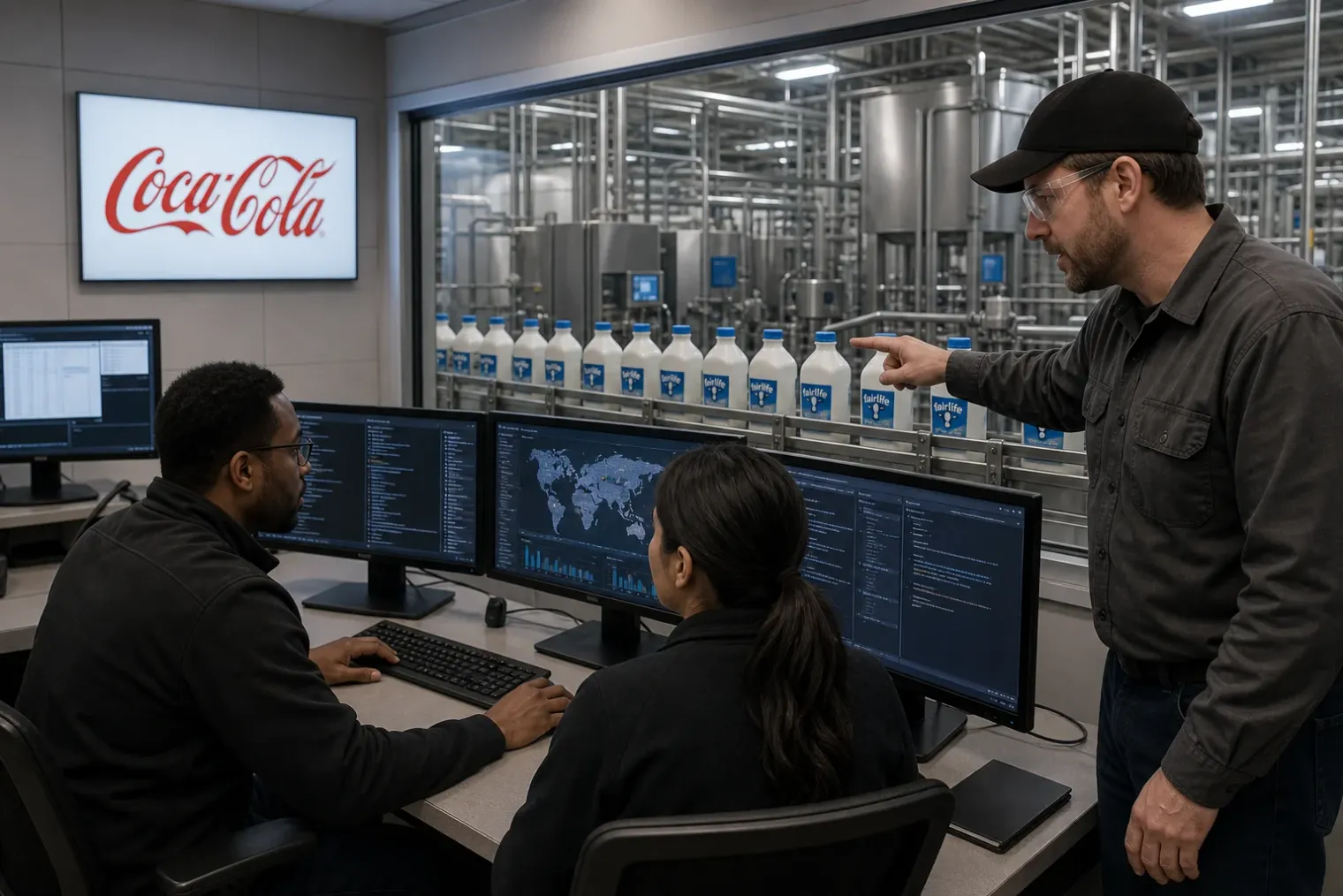
The Coca-Cola Company has restored the majority of production at four US facilities operated by its dairy subsidiary, fairlife, less than two weeks after a ransomware incident forced the company to suspend domestic operations.
In an update published on July 27, 2026, Coca-Cola said an unauthorised third party had accessed part of fairlife’s systems and taken certain data. The company said it was continuing to restore affected systems and operations. It also maintained that product quality and safety had not been affected, while existing inventory had largely protected retail availability.
The progress is meaningful because the disruption reached production-related systems rather than remaining confined to office technology. Food and beverage manufacturers increasingly depend on interconnected systems for production scheduling, plant operations, inventory, logistics and quality processes. Taking operations offline can therefore be a prudent containment measure, but it brings immediate commercial pressure to restore service safely.
A timeline of disclosure and recovery
Coca-Cola first disclosed the incident on July 16, 2026. At that point, it said fairlife had identified unauthorised access to a portion of its systems, including systems related to production, in connection with a ransomware event. US production was temporarily suspended, while Canadian production was said not to be affected.
The earlier disclosure said Coca-Cola had activated incident-response and business-continuity procedures, engaged external cybersecurity specialists and advisers, and notified law enforcement. Crucially, the company said the full nature, scope and effects of the event were not yet known.
The July 27 statement shows that recovery is under way, but it does not indicate that all systems or all production have returned to normal. The wording — “the majority of production” — leaves open the possibility that particular lines, sites, applications or business processes still require remediation. That is common in ransomware response, where organisations may restore services gradually while checking systems for persistence mechanisms, compromised credentials and data integrity issues.
Coca-Cola said, based on the information then available, that the event had not had and was not reasonably likely to have a material effect on its financial condition or results of operations. That assessment addresses the company’s threshold for financial disclosure; it should not be read as a complete account of operational costs, recovery work or potential future obligations related to the data theft.
Data theft changes the incident’s risk profile
The confirmation that certain data was taken makes this more than a production outage. Coca-Cola has not publicly described the types of data involved, the number of affected people or organisations, or whether personal information was among the material accessed. It has also not announced whether individuals, customers, suppliers or regulators must be notified.
Those unanswered questions matter. A ransomware event that includes data exfiltration can create parallel risks: extortion, exposure of confidential commercial information, fraud attempts using stolen contact details, and privacy obligations if regulated personal data is involved. The eventual impact will depend on what was accessed, whether it was copied successfully, how the information was protected, and which jurisdictions’ notification rules apply.
Cybercrime group Anubis has claimed responsibility for the attack and asserted that it stole a large quantity of data. Such statements are not independently verified and should not be treated as a definitive measure of the breach. Coca-Cola’s own disclosure is more limited: an unauthorised party took “certain data.” The gap between a criminal group’s claim and a victim company’s confirmed facts is typical during an active investigation.
For customers, employees and business partners, the practical issue is whether Coca-Cola later determines that their information was affected. Until the company specifies the data categories and affected populations, it is not possible to assess the scale of any privacy exposure.
A test of resilience in connected manufacturing
The fairlife incident illustrates how cyber resilience in industrial businesses has two linked objectives: preventing compromise and sustaining safe operations when prevention fails. A conventional corporate-network outage can hinder administration and sales. An incident touching production-related technology can interrupt physical output and force difficult decisions about availability, safety and recovery speed.
Coca-Cola’s initial decision to halt US fairlife production suggests that containment and operational safety took priority over maintaining output. The subsequent return of most production, alongside the statement that product safety was unaffected, indicates that the company has separated recovery of operations from any claim that the overall investigation is complete.
The company had already identified cybersecurity as a business risk in its 2025 annual report, noting that attacks or system disruptions could affect manufacturing, distribution, invoicing and collection. Its disclosures also describe an enterprise cybersecurity programme, incident-triage processes and business-continuity planning. The fairlife event is now a real-world examination of those arrangements across an acquired and operationally distinct business.
What to watch next
The next important disclosures will concern the remaining operational restoration and the nature of the stolen information. Coca-Cola may also clarify whether data included personal information, whether notifications are required, and whether the incident creates material costs or legal exposure.
There is also a narrower security question: how the attackers gained access and whether the intrusion moved between information-technology and production environments. Companies rarely disclose those details while investigations and law-enforcement activity are active, and Coca-Cola has not done so here. Nevertheless, that distinction will matter to security professionals assessing the event’s implications for segmentation, identity controls, backups and recovery procedures in manufacturing settings.
For now, the public record supports a balanced conclusion. Coca-Cola has contained enough of the disruption to resume most fairlife production at its four US facilities, retail supply has largely held up, and the company does not currently expect a material financial effect. But the theft of data and the incomplete technical picture mean the security and privacy consequences cannot yet be considered fully resolved.
Sources
- The Coca-Cola Company Announces Significant Progress in Restoring fairlife Operations Following Technology Disruption — fairlife
- The Coca-Cola Company Announces Technology Disruption Involving fairlife Operations — fairlife
- Form 8-K, July 16, 2026 — The Coca-Cola Company
- 2025 Annual Report on Form 10-K — The Coca-Cola Company
- Coca-Cola Confirms Data Breach After Fairlife Ransomware Attack — SecurityWeek


