
A narrower change than the piracy headline suggests
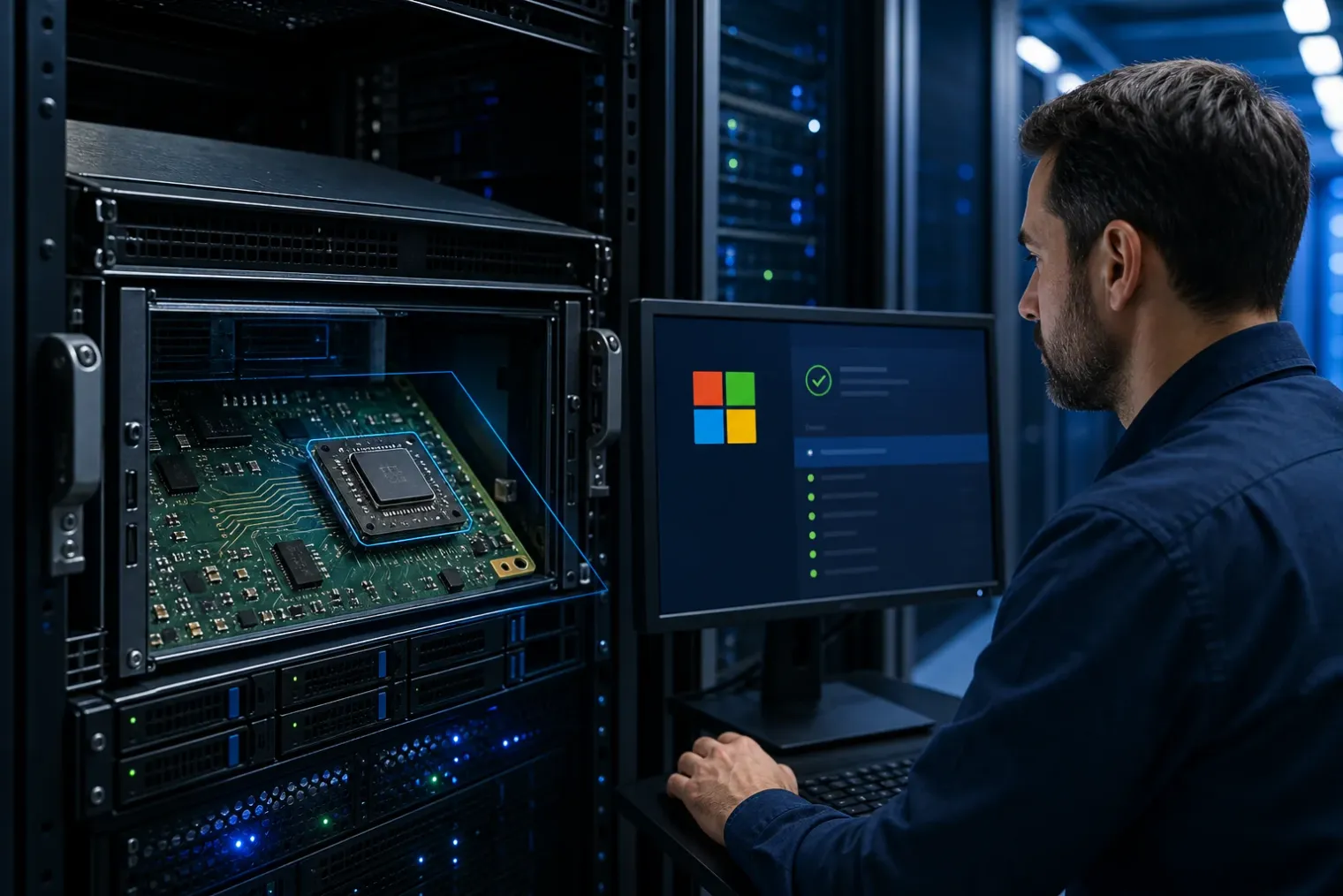
Microsoft is introducing a hardware-backed security model for Key Management Service (KMS), the on-premises activation system used by organisations that license Windows at scale. The initiative, called KMS Hardware-Secured, uses Trusted Platform Module (TPM) attestation to check whether a KMS host is running on recognised, uncompromised hardware before it can activate client devices.
The change has attracted attention because unauthorised activation tools have long imitated or redirected KMS infrastructure. It is reasonable to expect that stronger validation of legitimate KMS hosts will make some of those techniques more difficult. However, describing the announcement simply as a universal crackdown on pirated Windows activations overstates its immediate scope.
The new requirement concerns KMS infrastructure used for volume activation, rather than every consumer PC activation path. Microsoft’s stated objective is to improve trust in enterprise activation hosts, reduce spoofing and cloning risk, and protect activation secrets through a hardware root of trust. Any effect on unlicensed consumer installations is consequential rather than the core product description.
Why KMS hosts have become a security concern
KMS allows a business, school or other large organisation to activate eligible Windows installations through a local activation host instead of requiring every device to activate individually against Microsoft. That model is practical for environments with many managed endpoints, but it also makes the KMS host a high-value component: a compromised, copied or fraudulent server can create both licensing and security problems.
Microsoft says attackers have exploited fake or cloned KMS servers. A software-only activation host can be easier to replicate or impersonate because its trust depends largely on configuration and stored secrets. If a malicious host can convincingly mimic the expected activation service, it may be used to activate machines outside the organisation’s authorised estate or to lure devices into communicating with untrusted infrastructure.
This distinction matters for security teams. Improper activation is not only a compliance concern. Machines configured to reach unofficial activation services may be exposed to altered system settings, malicious downloads, credential theft or other unwanted changes. The risk is particularly acute where activation workarounds are bundled with tools that run with elevated privileges.
What TPM attestation adds
A TPM is a security processor, implemented as a discrete chip or integrated capability, that performs cryptographic operations and securely stores keys and measurements. Windows already uses TPM technology in features such as device health attestation, BitLocker-related workflows and hardware-backed identity protections.
For KMS Hardware-Secured, the TPM becomes part of the trust decision for the server acting as the activation host. Microsoft describes three parts of the process. First, the host provides a TPM-backed proof of its hardware identity for Microsoft to verify. Second, the attestation process checks platform integrity, seeking evidence that the server has not been tampered with. Only then can the verified host serve activation requests.
The practical effect is to tie the authority to perform large-scale Windows activation more closely to a particular, trusted machine. Copying a KMS configuration or imitating the network service should no longer be enough to establish the same level of trust. That is a material improvement over an approach based solely on software configuration.
TPM attestation does not make a server invulnerable. It is one layer in a broader security design that still depends on patching, access control, secure administration, network segmentation and monitoring. Nor does it automatically resolve licensing errors, prevent every form of abuse or eliminate the possibility that attackers will seek alternative activation or compromise methods.
The timetable: readiness first, enforcement later
The timing deserves careful reading. Beginning in August 2026, Windows Server 2025 is expected to display readiness messages that help administrators determine whether a machine can operate as a KMS host using hardware-based security. Administrators can see the status through licensing diagnostics and relevant event logs.
Microsoft is advising organisations to inventory their KMS hosts, confirm that physical hosts are certified for Windows Server, and ensure that TPM is installed and enabled. It also provides a PowerShell capability check for key attestation. Guidance for virtual KMS hosts has not yet been fully detailed, so organisations that depend on virtualisation should avoid assuming that their existing designs will be automatically eligible.
Mandatory TPM attestation is planned for KMS Hardware-Secured activation with the next Windows Server long-term servicing release. Microsoft has not presented the August 2026 readiness messaging as the same thing as immediate enforcement. This gives IT departments time to identify unsupported servers, plan hardware refreshes and test activation continuity before a later transition point.
Implications for administrators and users
For enterprise administrators, the announcement is primarily an infrastructure planning issue. Teams should establish who owns KMS, document the server hardware and operating configuration, verify TPM status, and test the readiness indicators as they become available. They should also review disaster-recovery procedures: hardware-bound trust can improve assurance, but it may require more deliberate planning for host replacement, migration and recovery.
For software asset managers, trusted KMS hosts can support clearer licensing governance. A central activation service that is harder to duplicate or spoof reduces ambiguity about which systems are authorised to activate devices. That does not replace contractual licence management, but it makes one important operational control more reliable.
For ordinary Windows users, there is no indication that the change creates a new TPM-based activation requirement for every existing personal computer. The immediate focus is the server-side volume activation system. The more visible consumer impact may instead be indirect: KMS emulation has been a common ingredient in some unauthorised activation ecosystems, and stronger host verification could weaken methods that depend on impersonating a legitimate enterprise service.
Hardware trust moves into licensing infrastructure
The broader significance is that Microsoft is extending hardware-rooted trust into another operational layer of Windows management. TPMs have increasingly been used to protect keys, assess boot integrity and support authentication decisions. Applying comparable principles to activation infrastructure recognises that licensing systems can also be security boundaries.
That approach has trade-offs. It can improve resistance to simple cloning and create better assurance around sensitive activation authority, but it raises the importance of compatible server hardware and careful operational preparation. Organisations should view the August 2026 messages as an opportunity to assess their estate, not as evidence that activation will abruptly stop on every legacy deployment.
Ultimately, KMS Hardware-Secured is best understood as a targeted hardening measure for enterprise activation. It may disrupt some unauthorised KMS-based activation practices, but its most direct purpose is to ensure that a server entrusted to activate Windows devices can prove both its hardware identity and its integrity.
Sources
- TPM dostává novou roli. Omezí pirátské aktivace Windows — Svět hardware
- Strengthening Key Management Service (KMS) with Hardware-Based Trust — Microsoft
- Trusted Platform Module Technology Overview — Microsoft Learn
- What is Secured-core server for Windows Server — Microsoft Learn


