
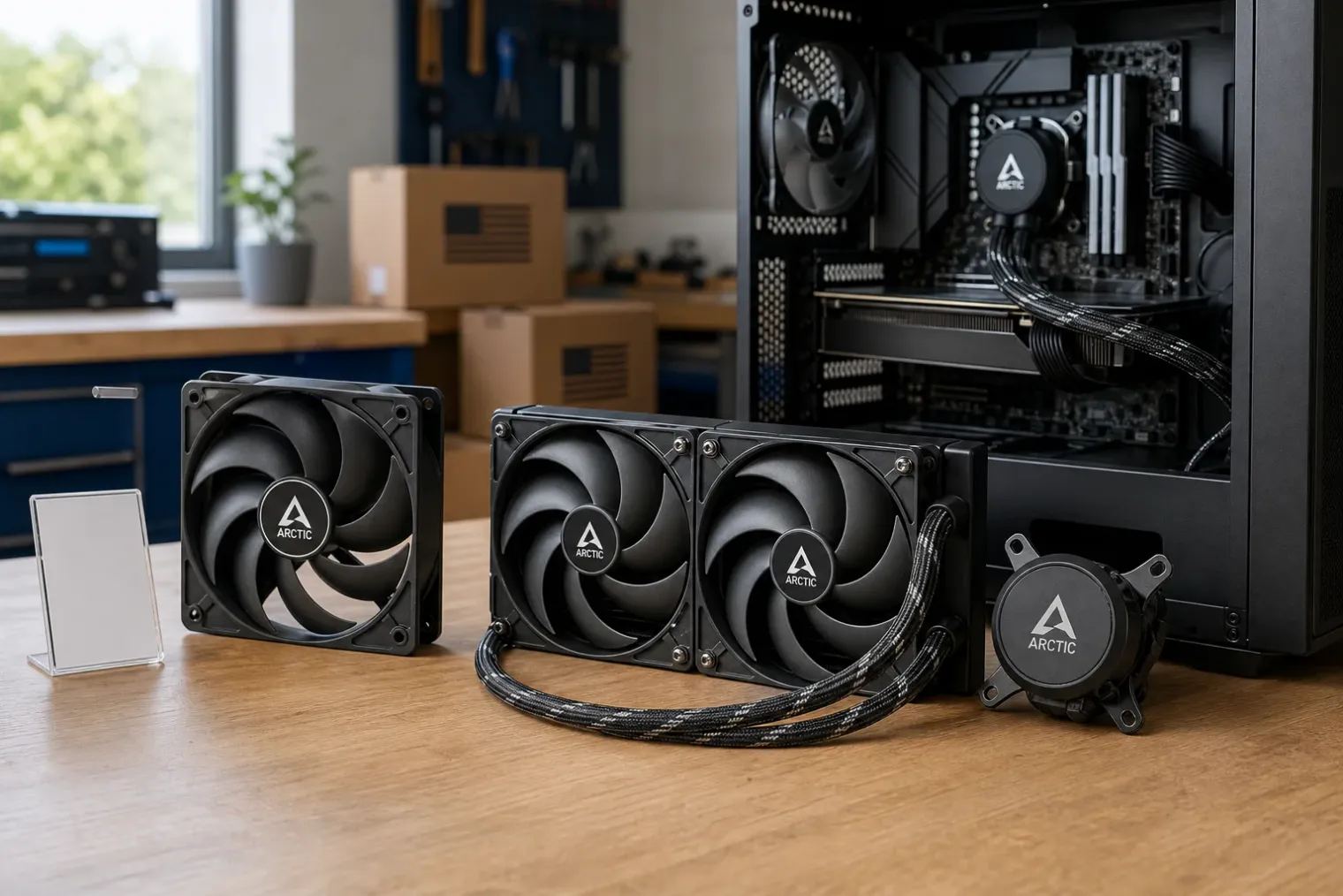
A tariff refund becomes a retail programme
ARCTIC has begun reducing prices across its U.S. product range after receiving refunds for import tariffs that had previously been collected under measures later found unlawful. The company describes the move as the “True Value Rollback”, saying it will return the full value of its tariff refund to the market through lower prices in its U.S. sales channels.
The policy is notable because it does not promise to reimburse individual past purchasers. Instead, ARCTIC is treating the refund as a pool of money to finance temporary, across-the-board reductions. That means the benefit is available to customers purchasing while the programme is active, rather than being tied to the particular products or customers that may have faced earlier price increases.
ARCTIC says it had absorbed as much of the higher tariff cost as possible, although it raised prices on a limited number of U.S. products. Its new approach applies more broadly: the company says reductions are being made throughout its lineup rather than only reversing the increases on the affected items. The promotion will remain in place until the amount received in refunds has been returned to customers through lower prices.
The policy backdrop
The refunds stem from the ending of duties imposed under the International Emergency Economic Powers Act. U.S. Customs and Border Protection said those IEEPA duties would no longer be collected for relevant imports entered for consumption from February 24, 2026. The agency’s notice covered several tariff actions, including measures connected to reciprocal trade policy, imports from China and border-related actions.
The removal of those duties should not be read as the end of all U.S. import tariffs. Customs explicitly said its action did not alter duties imposed under other authorities, including Section 232 and Section 301. For electronics and computer-hardware suppliers, the continuing mix of product-specific duties, country rules, logistics costs and component pricing still makes retail pricing more complicated than a simple before-and-after tariff comparison.
The scale of the broader refund process is substantial. The Bureau of Economic Analysis has estimated that affected importers and businesses in the United States and Puerto Rico were due around $166 billion in refunds, excluding interest, following the legal determination concerning the IEEPA tariffs. However, a company’s refund depends on its own import records, classifications, origin mix and payments, so the national estimate does not indicate ARCTIC’s individual recovery.
Why ARCTIC’s approach is unusual
Importers commonly face a delay between a policy change and a visible shelf-price response. Goods may already be in warehouses, prices may be set through retailer systems, and businesses may have absorbed part of an earlier cost increase. A refund also compensates the importer, not the shopper directly. It therefore creates a commercial decision: retain the funds, apply them to future costs, invest them, or lower prices.
ARCTIC has chosen a highly visible version of the last option. By spreading reductions across its U.S. assortment, it avoids the difficult exercise of matching a specific past tariff charge to a particular purchaser. It also gives the company a straightforward public commitment: the promotion ends only when the entire recovered sum has been returned to the market.
There is a marketing dimension as well as a financial one. PC cooling is a price-sensitive hardware category in which products are often compared on modest differences in performance, acoustics, warranty and cost. A temporary price rollback can strengthen a brand’s position with PC builders without permanently resetting its pricing architecture. The strategy may be particularly effective for lower-cost accessories and air-cooling products, where a relatively small dollar reduction is conspicuous to buyers comparing alternatives.
Still, customers should view the announcement as a sales programme, not as evidence that every ARCTIC item will fall by the same percentage or that prices will remain lower indefinitely. The company has not published a comprehensive schedule of reductions or the value of its refund. Prices may also differ between ARCTIC’s direct channels and third-party listings, and inventory turnover can affect when a change becomes visible.
Community spending adds a second use for the refund
Alongside price reductions, ARCTIC says it will support U.S. technology education and grassroots PC communities through hardware donations and technical support. The company has not yet set out detailed recipients, budgets or timelines for those initiatives.
That creates an important distinction in interpreting the promise. ARCTIC says every recovered dollar will be returned to the market through retail cuts, while also committing to community support. Until it provides more detail, it is unclear whether those initiatives are separately funded or are considered part of the wider customer-and-community response. Greater disclosure on the refund amount, price reductions and community allocations would make the programme easier to assess.
For now, ARCTIC’s decision provides a concrete example of how an importer can translate a tariff refund into a customer-facing action. It does not eliminate the wider uncertainty around U.S. trade policy or hardware costs. But it shows that refunds can become a competitive tool when companies choose to pass at least some of the benefit through to retail buyers.
Sources
- The ARCTIC Promise — ARCTIC
- Ending Collection of International Emergency Economic Powers Act Duties — U.S. Customs and Border Protection
- How are the International Emergency Economic Powers Act tariff refunds reflected in BEA’s National Economic Accounts? — U.S. Bureau of Economic Analysis
- Arctic announces price rollback thanks to a US government tariff refund — PC Gamer
- Arctic Announces U.S. Price Rollback Program Following Import Tariffs Repeal — TechPowerUp


