
A settlement centred on nonpublic information
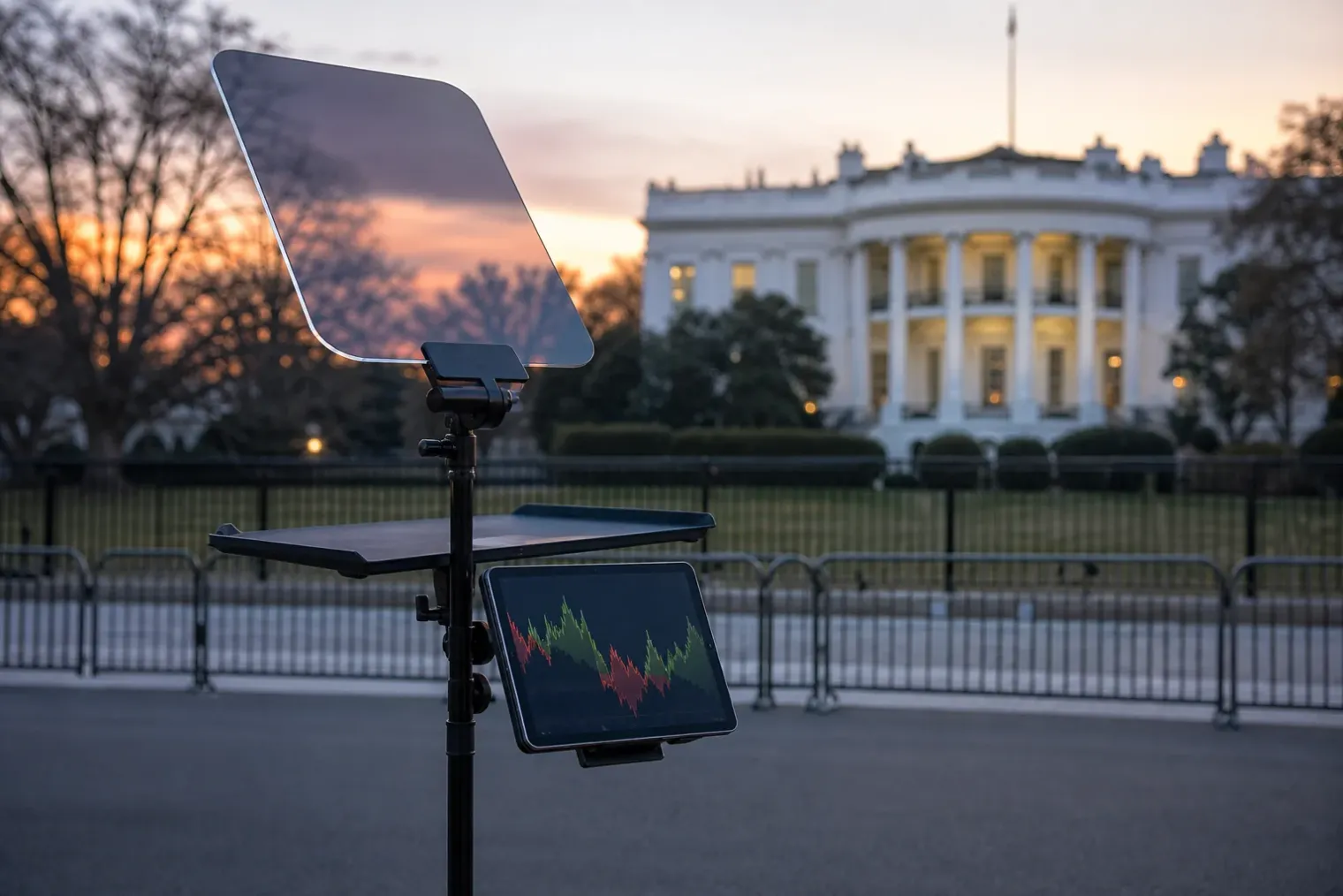
The US Commodity Futures Trading Commission has ordered Gabriel Perez, a former White House teleprompter operator, to surrender $107,539.02 in trading profits and pay a $65,000 civil monetary penalty. The August 28 settlement also requires him to cease violating commodities law and imposes a three-year trading ban.
The regulator said Perez used material, nonpublic information obtained through his federal employment to trade event contracts for his own benefit. According to the CFTC’s order, the conduct occurred between December 2025 and February 2026, when Perez had advance access to presidential speeches. He traded contracts linked to words or phrases President Donald Trump might use in those speeches.
The total financial obligation is $172,539.02. The CFTC said the civil penalty reflected a substantial reduction under its cooperation advisory because of Perez’s cooperation. A settlement resolves the regulator’s action without the need for a contested proceeding; it should not be read as a court judgment following a trial.
| Component | Amount |
|---|---|
| Disgorgement of trading profits | $107,539.02 |
| Civil monetary penalty | $65,000.00 |
| Total financial obligation | $172,539.02 |
The case is notable less for the mechanics of a teleprompter role than for the nature of the information involved. The outcome of a mention contract can become effectively knowable to someone who sees an approved speech before it is delivered. In such circumstances, a market designed to aggregate dispersed public expectations instead risks transferring money to a participant with a decisive informational advantage.
Why mention markets are especially exposed
Prediction markets allow users to buy contracts tied to an observable outcome. Their prices are commonly interpreted as estimates of the probability that an event will occur. A mention market narrows the question substantially: it may concern whether a public official will use a particular word, phrase or topic in a speech.
That narrow design can create an unusually clear line between public analysis and confidential knowledge. Political observers may reasonably assess a president’s priorities, previous remarks and policy agenda. A staff member who has reviewed a final or near-final speech has access to something different: information that can directly determine whether a contract pays out.
The CFTC described the contracts at issue as swaps and stated that the alleged misuse of confidential information breached a duty of trust and confidence. That framing matters because it places prediction-market conduct within established anti-fraud and anti-manipulation principles applicable to US derivatives markets, rather than treating it as a novel problem outside conventional market oversight.
The enforcement action also underlines that information risks are not confined to corporate earnings, mergers or commodity supply data. Government employees, campaign staff, sports participants, content creators and employees with early access to scheduled public releases can all possess information capable of moving a narrowly defined event market.
A test of exchange surveillance
The CFTC credited KalshiEX with assisting in the matter. Earlier reporting said the platform’s surveillance team flagged, investigated and referred suspicious trading to the regulator. The episode therefore offers evidence that exchange surveillance can identify anomalous activity, but it also illustrates the limits of after-the-fact detection.
Effective controls have to operate before and after a trade. Monitoring order patterns, unusually successful accounts and trading close to a known event can help surface suspicious behaviour. Yet surveillance is more useful when combined with preventative measures: knowing who customers are, obtaining employment information for higher-risk markets, restricting likely insiders and giving users a straightforward way to report concerns.
Kalshi has announced such measures, including market risk scoring, employment verification for certain markets and enhanced whistleblower tools. Its published rules also prohibit people with material nonpublic information from trading relevant contracts. These policies are commercially important as well as regulatory safeguards. If users conclude that highly connected participants can reliably trade against them, participation and liquidity may weaken, damaging the price signals that prediction-market operators present as their core value.
Regulation is moving from theory to enforcement
The Perez settlement follows a February CFTC enforcement advisory that explicitly addressed misuse of nonpublic information in event-contract trading. The advisory said designated contract markets have independent obligations to maintain audit trails, conduct surveillance and enforce rules against prohibited practices.
That is an important signal for the industry. Debate around prediction markets has often focused on whether particular contracts resemble gambling, whether state or federal regulators have authority, and how far markets should extend into politics, sports or public policy. The latest case brings a more operational question into focus: whether a market can prevent participants from exploiting privileged access to the event being traded.
The answer is unlikely to rest on a single rule. Broad bans on insiders are necessary, but exchanges also need carefully drafted market specifications, source-agency restrictions, identity checks, employee disclosures and credible sanctions. Regulators, meanwhile, need to show that the same enforcement concepts used in established financial markets can be applied swiftly to event contracts.
The business implication for prediction markets
For prediction-market platforms, integrity controls are becoming part of the product rather than a back-office compliance function. Markets that rely on official announcements, pre-recorded media, sporting decisions or corporate releases may attract interest precisely because they settle quickly and appear straightforward. They can also be vulnerable when employees or advisers can see the outcome before the public does.
The settlement does not settle the larger policy debate over the appropriate scope of prediction markets. It does, however, establish a concrete benchmark. A market’s usefulness depends not only on its ability to process public information, but also on its ability to keep confidential information from becoming an unfair trading tool.
For participants, that distinction is fundamental. A forecast produced by many independent judgments can be valuable. A price shaped by someone who already knows the answer is not a forecast at all.
Sources
- CFTC Orders Gabriel Perez to Pay $172,000 for Insider Trading of Mention Market Event Contracts — Commodity Futures Trading Commission
- CFTC Enforcement Division Issues Prediction Markets Advisory — Commodity Futures Trading Commission
- Former White House teleprompter operator ordered to turn over profits, pay fine over insider trading — Associated Press
- Kalshi to Implement Market Integrity Updates — Kalshi


