
A reported manufacturing threshold, not a complete competitive verdict
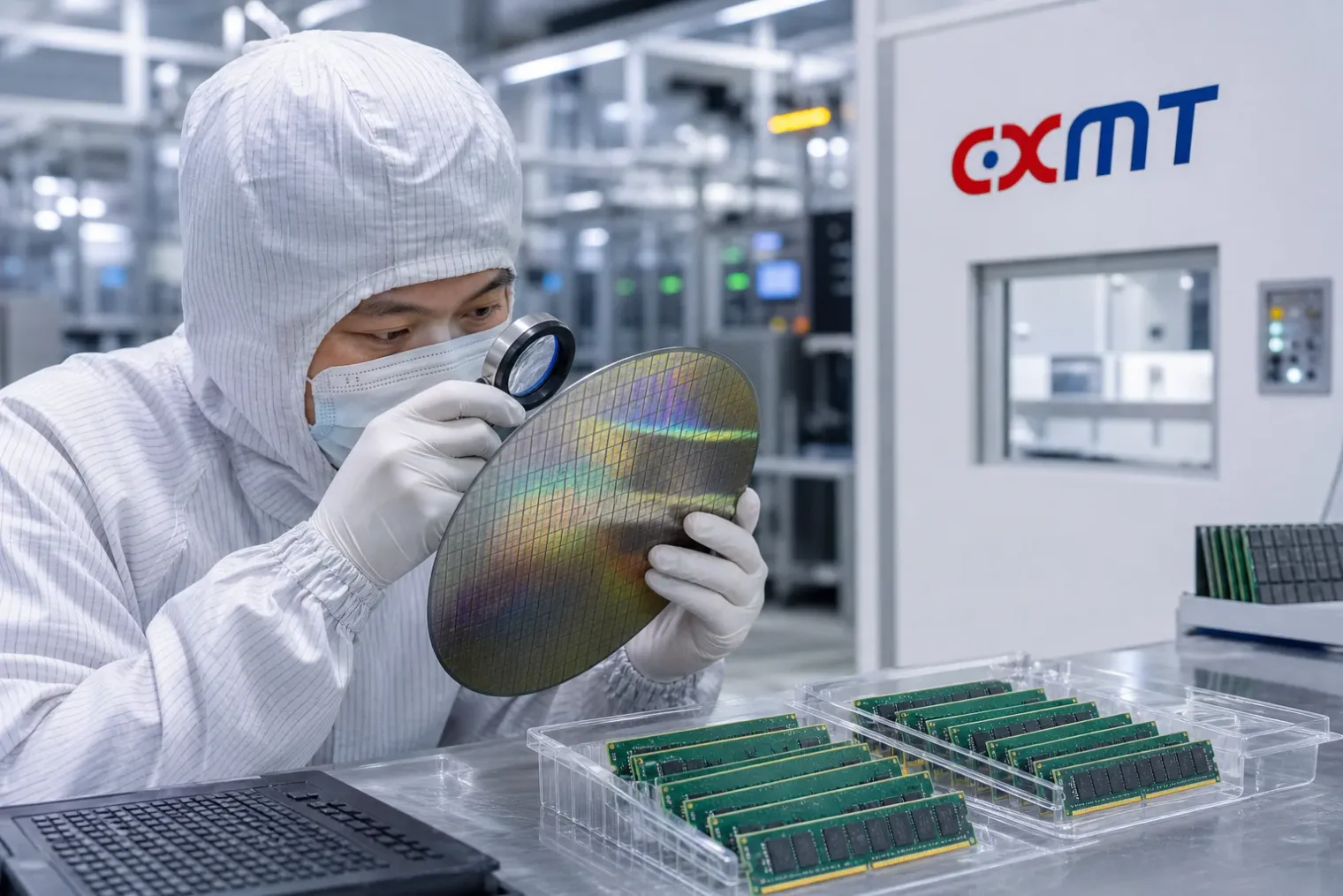
ChangXin Memory Technologies, or CXMT, has reportedly exceeded a 90% yield rate for DDR5 DRAM production. If accurate, the figure would represent a meaningful advance for China’s largest DRAM producer because yield is central to whether a memory chip can be supplied at scale and at a competitive cost.
The claim should nevertheless be treated carefully. CXMT has not publicly published a detailed yield methodology, the relevant process generation, die configuration, test criteria or production volume behind the reported number. In semiconductor manufacturing, a yield figure can refer to different stages: functional dies per wafer, dies that meet a particular speed grade, or final products passing packaging and module-level validation. A high number at one stage is important, but it is not automatically comparable with a rival’s fully qualified, high-volume output.
The more defensible conclusion is that CXMT appears to be making progress in DDR5 production and product readiness. Whether it has reached an industry-leading cost position remains a separate question.
Why 90% matters in DRAM
DRAM is a high-volume, price-sensitive business. The economics of a memory manufacturer depend on how many usable bits it can obtain from each processed wafer, as well as on die size, production throughput, packaging cost, reliability and product mix. As yield rises, the fixed cost of processing a wafer is spread across more saleable chips.
That is why moving from early-stage yields to a level around 90% can change the commercial outlook for a product. It can reduce waste, stabilise shipments and make a supplier more credible to module makers and system manufacturers that require continuity of supply.
The reported development is particularly relevant for DDR5, now a mainstream memory generation across new PCs and servers. CXMT publicly offers DDR5 components and modules with chip capacities of 16Gb and 24Gb, and says its DDR5 portfolio reaches data rates of up to 8,000Mbps. The company also displayed a broad set of module formats in late 2025, including desktop, laptop and server-oriented products.
This product breadth matters because a DRAM chip maker does not become influential solely by producing a working die. It must support the different capacities, layouts and validation cycles required by PC assemblers, notebook makers, motherboard vendors and server customers.
The gap between a good yield and market leadership
A reported 90% DDR5 yield would improve CXMT’s position, but it would not erase the advantages accumulated by Samsung Electronics, SK hynix and Micron. The three established suppliers have deep customer qualification relationships, extensive production experience, advanced process technology and leading positions in premium memory segments.
The comparison is also complicated by node maturity. A manufacturer can obtain a strong yield on a comparatively mature process while still having a cost disadvantage if its die is materially larger than a leading rival’s equivalent product. Larger dies reduce the number of chips available per wafer. They can therefore limit cost competitiveness even when the fabrication line is operating efficiently.
Performance and qualification remain equally important. Independent testing published during 2026 indicated that CXMT-based DDR5 modules could operate at high data rates with platform support, but also found differences in consistency and overclocking behaviour versus leading SK hynix-based memory. Such results do not rule out broad use in mainstream systems. They do show that the most demanding enthusiast and performance-oriented segments are not assessed by yield alone.
For enterprise deployments, buyers will focus on a wider set of factors: sustained reliability, module interoperability, server-platform certification, firmware support, logistics, security requirements and long-term supplier support. Those requirements can make customer validation slower than improvements within a fabrication plant.
Supply conditions create an opening
CXMT’s advance is taking place while the global memory market is constrained by strong demand for server and AI infrastructure. Industry research has described persistent DDR5 supply tightness, with capacity additions taking time to arrive. This environment gives system makers a practical reason to qualify additional sources, especially for products that do not require the highest-performing memory available.
The strategic opening may be greatest in China. Local cloud providers, device makers and server manufacturers have incentives to diversify their DRAM supply, while CXMT has a natural interest in expanding sales of server and PC memory. TrendForce has described the company as increasing its focus on DDR5 while building capacity and shifting more production towards domestic equipment.
Yet supply diversification does not necessarily translate into immediate global price disruption. New output must be available in enough volume, in the right configurations and with consistent quality. In addition, global procurement decisions are influenced by export controls, customer relationships and the concentration of advanced-memory expertise among incumbent suppliers.
Export restrictions remain a material constraint
CXMT’s development is also shaped by restrictions on access to certain US-origin semiconductor equipment and support. These constraints affect more than a company’s ability to buy a new tool: they can influence maintenance, spare parts, process upgrades and the pace at which a manufacturer can transition to more advanced nodes.
The result is a mixed outlook. CXMT can improve its position in conventional and mainstream DRAM products through yield learning, capacity expansion, domestic supply-chain development and customer validation. But keeping pace with the frontier of memory technology is harder, particularly in high-bandwidth memory and the most advanced server DRAM processes.
That distinction is important for interpreting the reported DDR5 result. The achievement, if confirmed on a sustained production basis, would strengthen CXMT as an additional supplier of mainstream DDR5. It would not demonstrate that the company has matched the largest competitors across manufacturing cost, top-tier performance, leading-edge nodes and advanced-memory capability.
What to watch next
The next evidence will be more informative than a single yield figure. Important indicators include the scale of qualified DDR5 shipments, adoption by major PC and server manufacturers, the mix of 16Gb and 24Gb products, and evidence that output remains stable over several quarters.
Investors and buyers should also watch for independent analysis of die size and cost, rather than focusing only on nominal yield. A supplier that combines high yield with smaller dies, dependable module validation and reliable customer delivery can alter market dynamics. A supplier that achieves only one of those milestones may remain strategically relevant without becoming a full-scale challenge to the DRAM leaders.
CXMT’s reported progress therefore deserves attention. It signals that China’s domestic DRAM effort is becoming more capable in DDR5. But the decisive question is not whether the company can report a 90% yield once; it is whether it can turn that manufacturing progress into repeatable, cost-effective and widely qualified supply.
Sources
- CXMT Surpasses 90% DDR5 Yield, Challenges Industry Giants — TechPowerUp
- Products — CXMT
- CXMT Debuts Latest DDR5 & LPDDR5X Portfolio at IC China — CXMT
- DRAM Market Bulletin - Jun. 17, 2026 — TrendForce
- CXMT's DDR5 RAM isn't as performant or as consistent as SK hynix dies, early testing shows — Tom's Hardware


