
A production claim tied to a named device
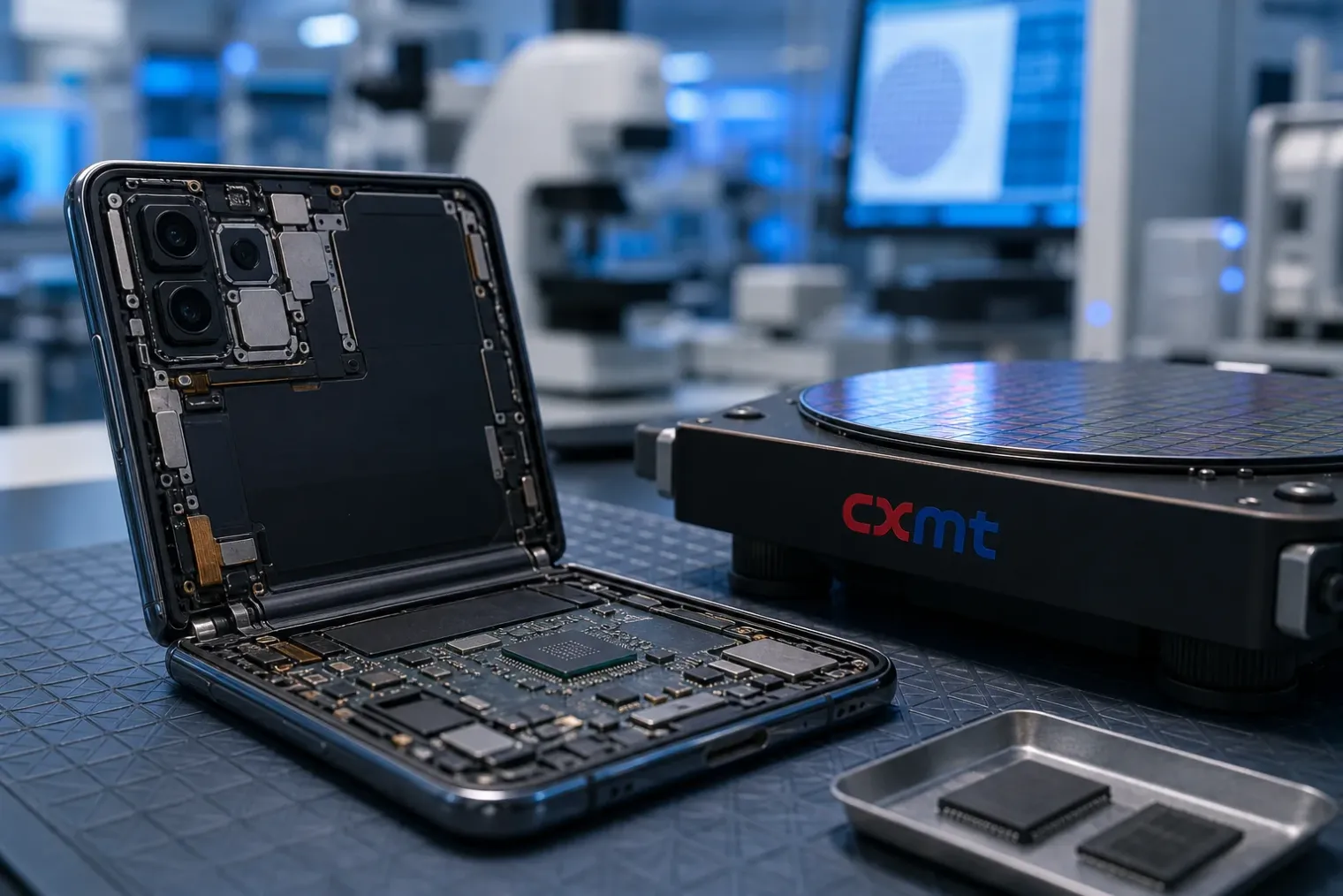
ChangXin Memory Technologies, better known as CXMT, has said it has begun mass production of LPDDR6 DRAM and will supply the chips for Xiaomi’s upcoming 18 Fold smartphone. Xiaomi has confirmed the supply arrangement, making the foldable handset the announced launch vehicle for the new memory.
The announcement matters because it moves LPDDR6 from a published specification and pre-production development into a commercial product programme with an identified customer. It also gives CXMT an early high-profile role in a segment of the memory market that is closely connected to premium smartphones, thin laptops and increasingly AI-focused devices.
The immediate commercial significance should nevertheless be kept in proportion. The companies have not disclosed the volume of chips to be supplied, manufacturing yield, memory capacities, speed grades, pricing or the extent of CXMT’s role in Xiaomi’s broader component sourcing. Mass production is an important manufacturing threshold, but it does not by itself establish large-scale global availability or prove that a supplier can meet demand across multiple device makers.
What LPDDR6 changes
LPDDR, or Low Power Double Data Rate memory, is designed for systems where energy use, physical space and heat are as important as peak performance. Unlike user-replaceable desktop memory, it is generally integrated directly into a device’s board or package. That makes its performance and efficiency characteristics especially consequential for smartphones and other compact hardware.
JEDEC published the LPDDR6 standard in July 2025. The specification defines the interface’s functions, electrical characteristics, packages and signal arrangements for compliant devices. Its arrival gives chipmakers, processor designers and device manufacturers a common technical basis on which to develop components and platforms.
For hardware makers, the practical appeal is not simply a higher headline transfer rate. Faster memory can help processors and accelerators access data more quickly, while a low-power interface is intended to limit the energy cost of that performance. Those gains may be relevant to on-device AI features, computational photography, multitasking and larger local models, but actual results will depend on the phone’s processor, software, memory capacity, thermal design and power-management decisions.
The Xiaomi 18 Fold is therefore more than a routine component win. Foldable phones put unusual pressure on battery capacity, internal space and heat control. A first deployment in that category presents LPDDR6 as a technology aimed at premium mobile devices rather than as a distant laboratory standard.
A rapid step beyond LPDDR5X
CXMT’s public product pages currently highlight DDR5, LPDDR5 and LPDDR5X families, while the company announced LPDDR5X mass production in late 2025. The LPDDR6 announcement suggests that it has advanced to a newer interface generation in less than a year after that earlier manufacturing milestone.
That pace is strategically notable, although the products should not be treated as directly comparable without more technical data. LPDDR5X and LPDDR6 may serve overlapping end markets, but a new standard entails new controller support, validation work, packaging decisions and platform qualification. The availability of a chip also depends on a compatible system-on-chip and a device maker willing to use it in a shipping product.
Xiaomi’s reported plan to introduce its 18 Fold in September provides that platform link. It reduces one of the principal uncertainties that can surround a memory announcement: whether an early component will reach an end product or remain limited to samples and internal testing.
Why CXMT’s role is significant
CXMT was founded in 2016 and describes itself as an integrated DRAM manufacturer serving products including phones, PCs, tablets and servers. It is China’s leading domestic DRAM producer, operating in an industry long dominated by Samsung Electronics, SK hynix and Micron.
Advanced mobile DRAM is a meaningful measure of competitive capability because success requires more than designing a chip that reaches a target speed. Suppliers must build stable processes, achieve acceptable yields, package and test the parts, and sustain quality through customer qualification. For a smartphone maker, the cost of a late component issue can extend beyond one chip to the timing of an entire product launch.
The agreement with Xiaomi is consequently useful evidence of customer confidence in CXMT’s readiness for at least one premium device programme. It also supports China’s broader effort to expand domestic semiconductor supply chains in technologies where local buyers have historically relied heavily on overseas suppliers.
However, an initial design win should not be mistaken for a wholesale reshaping of the global memory market. The established suppliers have deep portfolios, long customer relationships, broad manufacturing footprints and experience supplying high volumes across mobile, PC and server markets. CXMT’s longer-term position will depend on its ability to turn a named launch into repeatable output, additional qualifications and products that remain competitive on power, performance, reliability and cost.
The questions that remain
Several details will determine how consequential the announcement becomes after the Xiaomi launch.
- Capacity and speed: CXMT has not publicly set out the LPDDR6 configurations or performance grades destined for the 18 Fold.
- Manufacturing scale: neither party has disclosed shipment volumes or the share of the device’s memory requirements that CXMT will supply.
- Wider adoption: a single launch validates a product, but additional design wins would be a stronger indicator of ecosystem acceptance.
- Platform support: LPDDR6 adoption ultimately depends on compatible application processors and on board-level validation by device makers.
- Commercial economics: device manufacturers will weigh supply security, power characteristics, pricing and quality consistency alongside benchmark performance.
Those caveats do not lessen the importance of the reported start of production. They define the difference between a technology milestone and durable market impact.
A test case for the next mobile-memory cycle
CXMT’s LPDDR6 announcement arrives at the beginning of a new adoption cycle rather than at its conclusion. The standard is recent, and the first commercial devices will provide the evidence that specifications cannot: how well the memory integrates with real processors, how it behaves under sustained mobile workloads and whether suppliers can provide it in dependable volumes.
For CXMT, Xiaomi’s 18 Fold will be an early test of both product execution and commercial credibility. For Xiaomi, it offers an opportunity to place a domestically produced next-generation memory component at the centre of a flagship device. For the wider industry, the development adds another supplier to the race to commercialise LPDDR6, while underscoring that the decisive phase is no longer only technical development but qualified, repeatable delivery.
Sources
- CXMT Officially Starts Mass Production of LPDDR6 Memory — TechPowerUp
- China's CXMT to supply memory chip for Xiaomi's upcoming folding phone — Reuters via MarketScreener
- JEDEC JESD209-6 LPDDR6 Standard — JEDEC Solid State Technology Association
- CXMT Newsroom — CXMT


