
A confirmed 2027 arrival, but not a confirmed 256-core processor
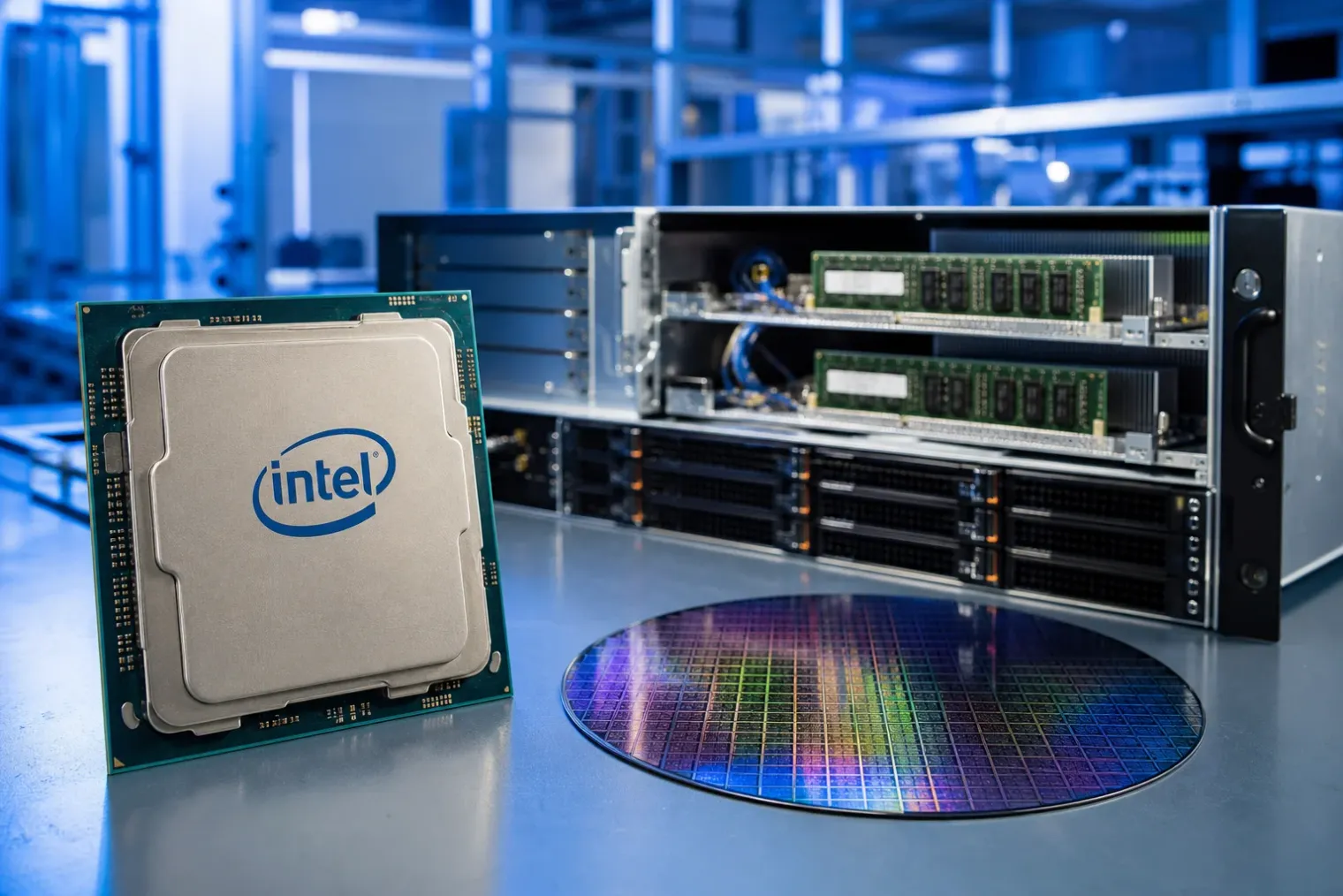
Intel’s next performance-core Xeon family, code-named Diamond Rapids and expected to be sold as Xeon 7, is now officially positioned for launch in 2027. That timing matters because earlier expectations placed the platform closer to the 2026 cycle, while Intel’s 18A-based Xeon 6+ generation has already reached the market in the form of Clearwater Forest.
The more dramatic claim surrounding Diamond Rapids is not its date but its potential scale. Reports based on leaked roadmaps and industry sources have suggested that Intel wants an initial model with 256 performance cores, with an even larger dense-core derivative possibly following later. However, Intel has not published a core-count specification for Diamond Rapids. The 256-core figure is therefore plausible industry reporting, not an official commitment.
That distinction is central to understanding the story. Intel has publicly outlined the direction of the platform, but the reported configuration that would make Diamond Rapids especially consequential remains subject to change.
What Intel has actually disclosed
At Computex 2026, Intel confirmed several broad characteristics for Diamond Rapids. The company said the platform would use Intel 18A-P, a performance-enhanced derivative of its 18A manufacturing technology. It also indicated that Diamond Rapids would support PCIe 6.0, provide 50% more cores than Xeon 6, and double memory bandwidth relative to the relevant current-generation Xeon comparison.
Intel had previously simplified the platform around 16-channel memory, abandoning a planned eight-channel variant. This prioritises memory capacity and bandwidth for demanding server deployments, although it could also leave fewer lower-cost platform options for customers whose workloads do not require that scale.
These disclosures point to a processor family aimed at high-end data-centre computing rather than a routine generational refresh. Modern AI-adjacent services, databases, scientific applications, virtualisation estates and cloud platforms can be constrained by memory throughput as much as raw core count. A move to 16 memory channels and PCIe 6.0 is therefore as important strategically as the headline number of CPU cores.
Intel’s process roadmap also gives the 2027 schedule context. Intel 18A-P entered risk production in June 2026. Intel says the node offers performance, power and thermal improvements over 18A while retaining design-rule compatibility, potentially allowing existing intellectual property and design flows to be reused more easily. Risk production, though, is not the same as mature high-volume output. Delivering a very large server processor requires both a working process node and sufficiently predictable yields across multiple compute and I/O tiles.
Why 256 P-cores would be difficult
A 256-core Diamond Rapids chip, if it materialises, would be notable because it is expected to rely on performance cores rather than the smaller efficiency cores used in Intel’s high-density Xeon 6+ products. That changes the engineering and market proposition.
Intel’s current Xeon 6990E+ demonstrates its ability to ship a 288-core server processor, but those are E-cores designed for density and throughput-oriented workloads. Its 450W thermal design power and 576MB cache also illustrate the physical scale involved even before moving to a more complex P-core design.
A 256-core P-core processor would have to balance several competing requirements:
- High manufacturing yield across large active compute tiles.
- Sufficient memory bandwidth to prevent cores from waiting on data.
- Power and thermal limits that can be supported in conventional server racks.
- A platform cost acceptable to cloud providers and enterprise customers.
- Strong per-core performance, not merely a higher number on a specification sheet.
The reports behind the 256-core claim suggest a design with four 64-core compute tiles. Such a configuration would make the availability of fully functional tiles an important factor in volume shipments. That is one reason why the reported decision to target 256 cores may be associated with a later arrival: Intel would be choosing a more ambitious top bin rather than shipping a lower-core configuration earlier. Yet neither the tile layout nor that scheduling rationale has been confirmed by Intel.
The competitive timing problem
The delay to 2027 gives AMD additional time to establish its next EPYC generation, Venice. AMD has publicly signalled up to 256 cores and substantially higher memory bandwidth for Venice, making core count and data movement central points of competition at the top end of the server market.
Intel is not competing only on the number of cores. Customers also evaluate software certification, accelerator connectivity, power consumption, availability, total system cost and performance on their own workloads. Nonetheless, a 192-core ceiling for a flagship P-core family would be less compelling in marketing terms if a direct rival offers 256 cores and simultaneous multithreading. That helps explain why reports of a 256-core Intel part have attracted attention.
Still, numerical comparisons need caution. A core is not a standard unit of performance across different architectures, and a processor’s results vary sharply between integer-heavy cloud tasks, memory-bound analytics, vectorised HPC workloads and virtual machines. Intel’s decision to focus Diamond Rapids on 16-channel memory suggests that it recognises this broader system-level contest.
What to watch before treating the report as settled
Intel has said it intends to provide more Diamond Rapids details at Hot Chips later in 2026. The most meaningful announcements would be confirmation of the maximum P-core count, the core architecture, simultaneous multithreading support, memory technology, power envelopes and exact availability window.
Until then, the verified picture is narrower but still significant: Diamond Rapids is a 2027 Xeon 7 platform built on Intel 18A-P, with PCIe 6.0 and a 16-channel memory design. The proposed 256-core model may become an important part of that launch, but it remains an unconfirmed roadmap detail. For Intel, the eventual result will be judged not simply by whether it reaches 256 cores, but by whether it can deliver those chips in volume, on time and with a competitive balance of performance, bandwidth and efficiency.
Sources
- Intel chce vydat i 256jádrový model Diamond Rapids, ale nestihne to včas — Diit.cz
- Intel Xeon 7 Diamond Rapids CPUs officially launching in 2027 on Intel 18A-P — Tom's Hardware
- Intel Foundry Details Process Milestones and Future Innovation at VLSI Symposium — Intel Newsroom
- Products formerly Clearwater Forest — Intel ARK


