
A retail listing rather than a global launch
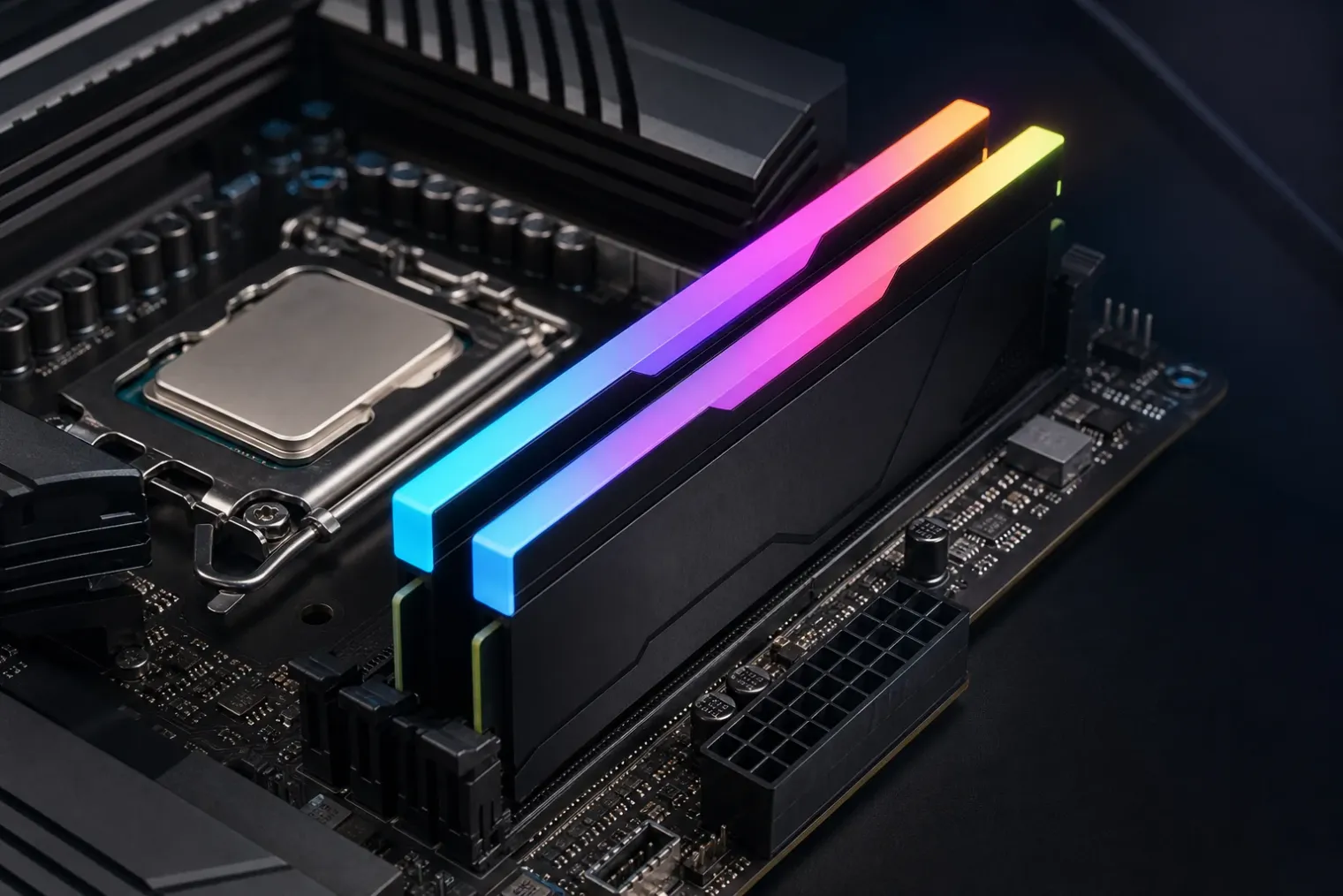
Lexar has listed a 32GB DDR5-7200 memory kit in China that places a new focus on the origin of the DRAM chips inside the modules. The kit consists of two 16GB DIMMs, is part of the second-generation THOR RGB range, and carries a listed price of 3,999 yuan. Its advertised specification is DDR5-7200 with CL38 timings, a 1.40V operating profile, and support for both Intel XMP 3.0 and AMD EXPO.
The listing matters because Lexar describes the product as using domestically produced DRAM. It does not explicitly identify the chip manufacturer. However, CXMT, or ChangXin Memory Technologies, is effectively the only credible Chinese supplier of modern DDR5 DRAM for this class of consumer module. That makes CXMT the strongly indicated source, rather than a formally confirmed component supplier.
This distinction is important. Memory-module brands normally sell finished DIMMs while sourcing DRAM dies from one or more chip producers, and the precise chips can vary by regional version or production batch. Lexar has therefore introduced a retail product built around Chinese DRAM, but has not published a conventional global announcement naming CXMT or confirming broad international availability.
The specifications place it in an enthusiast segment
At its rated settings, the new kit is designed for performance-oriented desktop systems rather than entry-level upgrades. DDR5-7200 is substantially above the base DDR5 data rates used in mainstream PCs, and its XMP and EXPO profiles are intended to simplify configuration on compatible Intel and AMD platforms.
The important qualification is that the stated speed is an overclocked memory profile, not an automatic guarantee for every motherboard and processor. Memory stability depends on the CPU’s integrated memory controller, motherboard firmware, DIMM layout and the number of installed modules. Lexar’s published compatibility material covers selected Intel Z890 and B860 boards as well as AMD B850 models, but prospective buyers should still consult the memory-support list for their exact board and BIOS version.
Lexar lists 38-48-48-86 primary timings for the DDR5-7200 version. Those figures are relatively loose compared with some premium kits based on established high-bin DRAM, but frequency and latency need to be assessed together. For users who simply want to run a validated profile, the kit’s appeal is its rated configuration and RGB-equipped heat spreader. For manual overclockers, the choice of DRAM supplier may be more consequential.
Early independent reports on CXMT-based DDR5 suggest that the chips can operate at high data rates but may offer less predictable headroom for voltage-based tuning and tighter secondary timings than leading alternatives from SK hynix. Those reports should not be treated as a verdict on this specific Lexar product: they concern limited samples, and retail memory behaviour can vary with chip revision, binning and platform settings. Still, they indicate that a DDR5-7200 rating should be viewed as the primary promise, rather than an assurance of exceptional overclocking beyond specification.
CXMT’s growing visibility changes the context
For much of the DDR5 era, the high-performance consumer market has depended overwhelmingly on chips from Samsung, SK hynix and Micron. CXMT’s appearance in branded DDR5 modules represents a meaningful expansion of the supply base, especially in China where local sourcing has become increasingly important.
The change is no longer confined to lower-speed, unbranded products. In recent months, motherboard makers have publicised firmware work and validation for CXMT-based DDR5 at higher transfer rates. Gigabyte has demonstrated CXMT-equipped Lexar modules operating at 8,200 MT/s on a selected AM5 platform, while other vendors have released compatibility-oriented BIOS updates. Such demonstrations do not mean that every CXMT kit will reach those speeds, but they show that platform vendors are investing in support for the new DRAM source.
For Lexar, the product also fits its corporate position. The brand is owned by Longsys, a Chinese storage and memory company, and can use its consumer distribution network to bring locally sourced components into a familiar retail name. This may make the origin of the DRAM less visible to ordinary buyers, who generally purchase a Lexar, Corsair, Kingston or G.Skill kit rather than raw chips from a DRAM manufacturer.
New supply does not yet mean lower prices
The initial price is the strongest reason not to overstate the short-term market implications. At 3,999 yuan, the DDR5-7200 kit was listed at roughly US$592 when it surfaced. That is not a budget price for 32GB of desktop memory, even allowing for its speed, lighting and enthusiast positioning.
A new supplier can matter strategically without delivering immediate savings. Early capacity may be directed towards domestic customers, premium bins may be scarce, and module makers must qualify chips across a range of platforms. Retail availability outside China also remains uncertain. A high initial price may reflect limited supply, regional distribution, demand for Chinese-made components, or a broader market environment rather than merely the manufacturing cost of the DRAM.
The more significant development is therefore competitive rather than promotional. If CXMT can expand output, consistently meet validated performance targets and become available across more module brands and regions, it could eventually create additional price and supply pressure on the established DRAM leaders. That outcome will depend on volumes, quality consistency, compatibility and trade conditions, not on one premium retail listing.
What buyers should take from the listing
The Lexar kit is an early sign that Chinese DDR5 has progressed into a higher-clocked branded retail category. It should not, however, be mistaken for proof that CXMT memory is already a low-cost alternative worldwide or that it matches every established DDR5 die for enthusiast tuning.
For buyers in markets where the kit becomes available, the practical checklist is straightforward: confirm motherboard support, update firmware where necessary, enable the advertised XMP or EXPO profile, and compare the final price against equivalent kits with the same capacity, speed, timings and warranty. The country of origin of the DRAM is becoming a more relevant part of the supply-chain story, but verified operation at the promised specification remains the decisive consumer test.
Sources
- Lexar THOR RGB DDR5-7200 32GB product listing — JD.com
- Lexar introduces a DDR5-7200 32GB kit with Chinese CXMT chips — Diit.cz
- Lexar lists 32GB DDR5 memory with homegrown Chinese chips — Tom's Hardware
- Gigabyte announces support for Chinese-made CXMT memory — Tom's Hardware
- Early testing examines CXMT DDR5 tuning behaviour — Tom's Hardware


