
A new push into entry-level Windows laptops
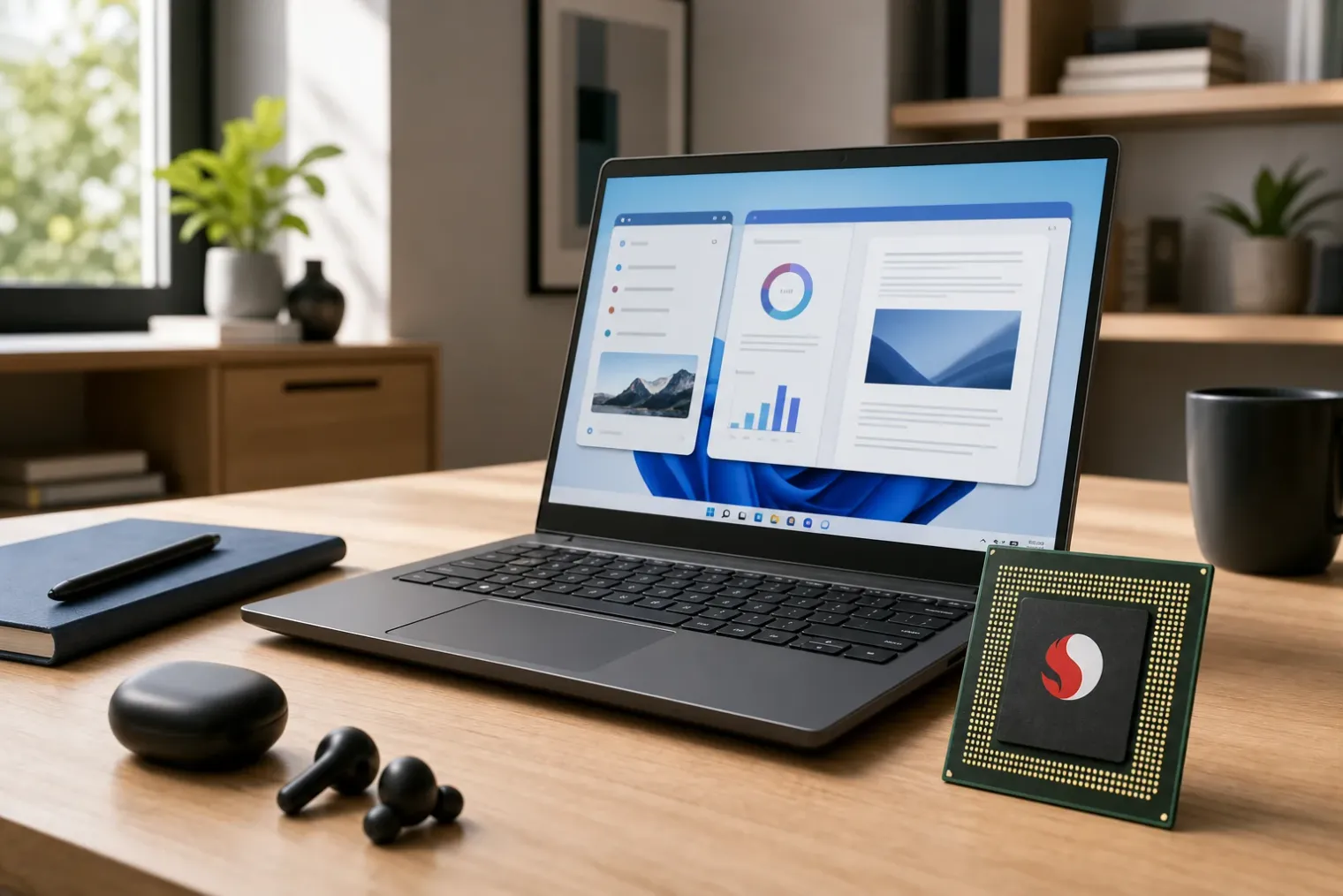
Qualcomm is expanding its PC processor range downwards with Snapdragon C, an Arm-based platform intended for entry-level Windows laptops starting at about $300. The company first announced the platform on May 28, 2026, positioning it for students, families and small businesses whose typical work consists of browsing, video streaming, office tasks and video calls.
The latest Snapdragon C material adds more detail to that pitch. Qualcomm says the platform can deliver up to 67% faster performance than Intel’s Processor N250 in its stated comparison. That is a notable claim because the N250 is a common low-power x86 chip in inexpensive Windows laptops. However, the result should be read as a manufacturer benchmark rather than a definitive measure of retail-laptop performance: the comparison was conducted on battery power, and system configuration, cooling, memory capacity and software can materially affect outcomes.
The more important development is therefore not just a single percentage figure. Snapdragon C represents Qualcomm’s attempt to make Windows on Arm viable at the lower end of the market, where price, usable battery life and dependable everyday behaviour generally matter more than peak performance.
What Snapdragon C is designed to do
Snapdragon C is separate from Qualcomm’s more capable Snapdragon X line. It is not aimed at demanding creative software, workstation loads or the premium AI-PC category. Qualcomm has instead focused on a familiar budget-laptop formula: a relatively integrated processor designed to provide responsive basic computing while consuming little power and producing limited heat.
The platform includes a CPU, graphics, connectivity components and a neural processing unit. The latter gives entry-tier machines some on-device AI capability, though Snapdragon C does not meet the hardware and memory thresholds required for Microsoft’s Copilot+ PC designation. That distinction matters. Buyers should not assume that every AI feature promoted for premium Windows laptops will be available on a lower-cost Snapdragon C system.
Qualcomm’s central selling points are cool and quiet designs, all-day battery life and steady performance in light applications. These are plausible advantages for an Arm-based system-on-chip, but the actual experience will depend on each laptop maker’s choices. A low-cost notebook with limited memory, slow storage or a poor display can still feel compromised even with an efficient processor.
The comparison with Intel N250 needs context
Intel launched the Processor N250 in the first quarter of 2025. It has four CPU cores, a maximum turbo frequency of 3.8 GHz, 6 MB of cache and a 6 W processor base power rating. It is built for low-cost, low-power systems rather than performance-oriented laptops.
That makes it a logical target for Snapdragon C, but also a narrow one. A claim of up to 67% faster performance against the N250 does not establish how Snapdragon C compares with every other budget Intel, AMD or Arm option. It also does not describe graphics performance, application compatibility, storage speed, display quality or sustained performance when the laptop is plugged in.
Benchmark conditions are particularly significant here. Testing on battery can be relevant to real-world mobile use, since some Windows laptops reduce processor power away from the charger. Yet consumers should wait for independent tests that use comparable retail machines, disclose power settings and cover a range of applications. Browser work, office software, video playback and native Arm applications may produce a different picture from older x86 software running through Windows emulation.
The price target is an ambition, not a specification
Qualcomm describes Snapdragon C laptops as targeting $300 and up. The phrase “and up” is essential: it is not a commitment that every device will sell for $300, nor is it a guarantee of a particular set of hardware specifications at that price.
Acer’s Aspire Go 15 is the first announced Snapdragon C design. Its listed configuration includes a 15.6-inch 1080p display, up to 8 GB of memory, up to 512 GB of storage and a 53 Wh battery. Those specifications show what the platform may enable, but Acer had not established a final consumer price or broad retail availability when the system was first presented.
The market challenge is substantial. The low-cost notebook segment is highly sensitive to the prices of memory, storage, displays and Windows licences. Manufacturers may use the platform’s efficiency to build lighter or quieter machines, but keeping the final price near Qualcomm’s target will require careful component choices. A more attractive configuration with 16 GB of memory, a better screen or larger storage could quickly move beyond the entry tier.
Compatibility will remain a buying consideration
Windows on Arm has advanced substantially, with native applications available for many common tasks and x86 software able to run through emulation. Nevertheless, compatibility remains more relevant at the low end than Qualcomm’s performance chart alone suggests. Budget-laptop buyers often keep devices for many years and may rely on older utilities, peripherals, school software or specialised line-of-business applications.
For web-first usage, streaming, communication and mainstream productivity tools, Snapdragon C could be well suited if manufacturers achieve the promised price and battery-life balance. The case is less certain for buyers who depend on legacy drivers, niche x86 programs or games. Retail systems will need clear specification sheets and realistic compatibility guidance rather than broad claims about AI or performance.
A strategically important test for Qualcomm
Snapdragon C gives Qualcomm a way to compete where Windows on Arm has historically struggled: affordable mainstream laptops. Its claimed lead over Intel’s N250 is encouraging, but it is only one vendor-supplied data point and should not be treated as a universal performance verdict.
The platform’s success will be decided by finished laptops. If PC makers deliver competent displays, enough memory, sensible storage and strong battery life near $300, Snapdragon C could make Arm-based Windows machines more accessible. If prices rise or compromises become too severe, the chip’s efficiency and benchmark claims will have less influence on buyers than the familiar strengths of inexpensive x86 laptops and Chromebooks.
Sources
- Qualcomm Introduces $300 Laptops With Snapdragon C, Outruns Intel N250 by Up to 67% — TechPowerUp
- Introducing Snapdragon C: Designed to Revolutionize Entry-Tier Laptop Experiences — Qualcomm
- Intel Processor N250 Specifications — Intel
- Acer Aspire Go 15 — Qualcomm
- Qualcomm aims Snapdragon C laptop chip at the budget laptop segment — Tom's Hardware


