
A developer statement, not a Valve announcement
The latest Steam Frame release discussion began with an independent game developer rather than Valve. In a community message reported on August 14, the developer said that its project, being published by 2080 Games, would launch alongside Steam Frame and that the team felt a date for Valve’s headset was “just around the corner”. The developer added that it could not disclose further details before Valve made public information available.
That wording is more meaningful than ordinary fan speculation because a developer planning a coincident release may have some awareness of platform scheduling. It is not, however, confirmation of a retail date. The statement neither names a day nor establishes that Valve has locked one in publicly. Developers can plan around a target window, while hardware suppliers retain the ability to change an announcement or shipping schedule.
For prospective buyers, the distinction is important: Steam Frame remains officially announced but not yet dated. Valve has not published a recommended price, a release day, regional availability or a pre-order timetable.
Valve’s official window is still summer
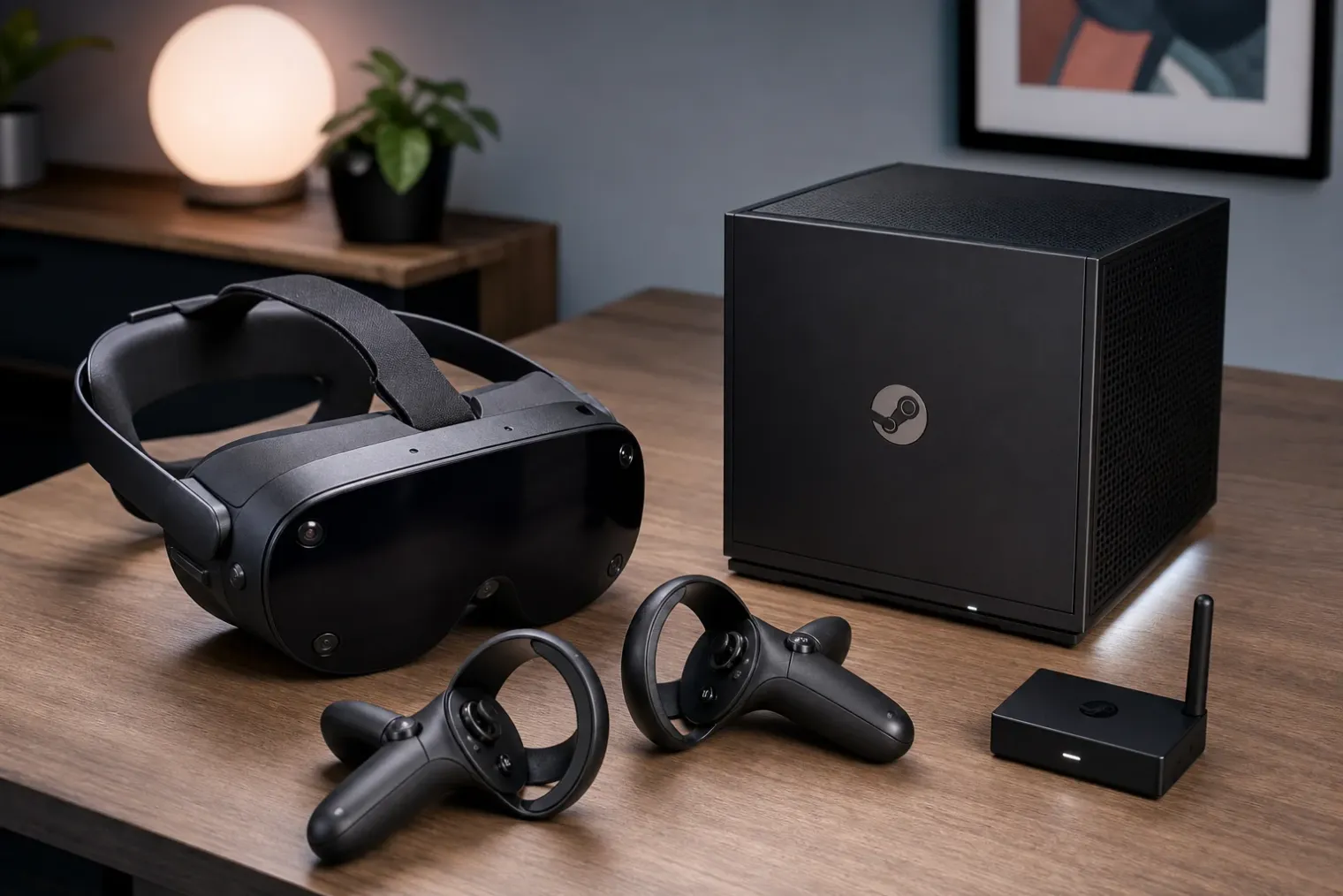
Valve introduced Steam Frame in November 2025 as part of a new hardware group alongside the Steam Machine and a redesigned Steam Controller. The company positioned the headset as a device for VR and non-VR games, combining standalone use with wireless streaming from a PC.
Its original early-2026 ambitions were interrupted by component-market pressure. In February, Valve said that limited availability and rising prices for critical components required it to revisit its exact shipping schedule and pricing. That update made clear that supply conditions could affect not only the final cost but also the timing of the launch.
The clearest subsequent commitment came on June 4, when Valve expanded its Verified programme to cover Steam Machine and Steam Frame games and said both products were shipping in summer 2026. On August 14, that remains the company’s most specific public release window. In the United States, astronomical summer ends on September 22, although corporate references to “summer” do not necessarily define a precise cut-off date.
The key point is that the developer’s comment does not supersede Valve’s own messaging. It reinforces the possibility that an announcement is close, but the official position remains a broad seasonal window rather than a confirmed launch event.
Software preparation is the more concrete signal
There are practical signs that Valve is preparing the Steam ecosystem for the headset. The Steam Frame Verified programme is intended to identify games that meet compatibility expectations for the device. That work matters because a new VR headset needs more than hardware availability: buyers need confidence that their existing Steam libraries, controls, interface text and performance settings will work appropriately.
Valve’s framework also reflects the product’s dual role. Steam Frame is expected to run some content locally while also serving as a wireless endpoint for PC-powered games. These use cases have different performance and battery demands, and they require different levels of developer testing. A verified catalogue can reduce uncertainty for users who may be comparing a standalone headset with a PC VR upgrade.
Recent SteamOS beta notes have added preliminary support for the Steam Frame Wireless Adapter. This is a stronger operational sign than unverified shipment reports or storefront changes, since wireless PC streaming is central to the product’s intended experience. Nevertheless, beta support is a preparation milestone, not a launch notice. Companies often add drivers and setup features ahead of hardware availability to allow final testing and to ensure that launch software is ready.
Why a coordinated game release matters
A third-party game arriving with Steam Frame would give Valve useful launch-day software without requiring a new first-party title. The Steam Deck demonstrated the value of pairing hardware with a clear compatibility message, but VR faces a different challenge: users are often concerned with both content depth and the technical friction of PC setup.
A game designed to attract attention at the same time as the headset could help show that Steam Frame is not merely a successor to Valve Index hardware. It could also demonstrate the headset’s wireless workflow and compatibility with contemporary VR software. That is especially relevant for a market in which PC VR has a sizeable existing catalogue but fewer high-profile native releases than broader console or mobile ecosystems.
The commercial benefit is mutual. A developer gains visibility during a hardware launch, while Valve can point buyers toward software that has been prepared for the device. Still, a coordinated plan does not necessarily mean exclusivity, a bundled game or a major launch partnership. None of those details has been announced.
What remains unknown
The absence of pricing is now the largest unanswered question. Valve previously linked its schedule review to the cost and availability of memory and storage components. Without a price, it is difficult to judge where Steam Frame will sit between lower-cost standalone VR headsets and premium PC-focused hardware.
There is also no confirmed information about launch quantities, countries, prescription-lens options, accessories or whether reservations will be used. These details can materially shape how accessible a new headset is, particularly during an initial supply-constrained period.
The developer’s claim therefore deserves to be read as a fresh indication of momentum, not as a release-date leak. Valve has progressively built the software, compatibility and wireless-streaming foundations around Steam Frame, and its public summer 2026 target is still active. Until Valve announces a date and price itself, though, the exact moment buyers can order the headset remains unresolved.


