
A new default for Twitch creators
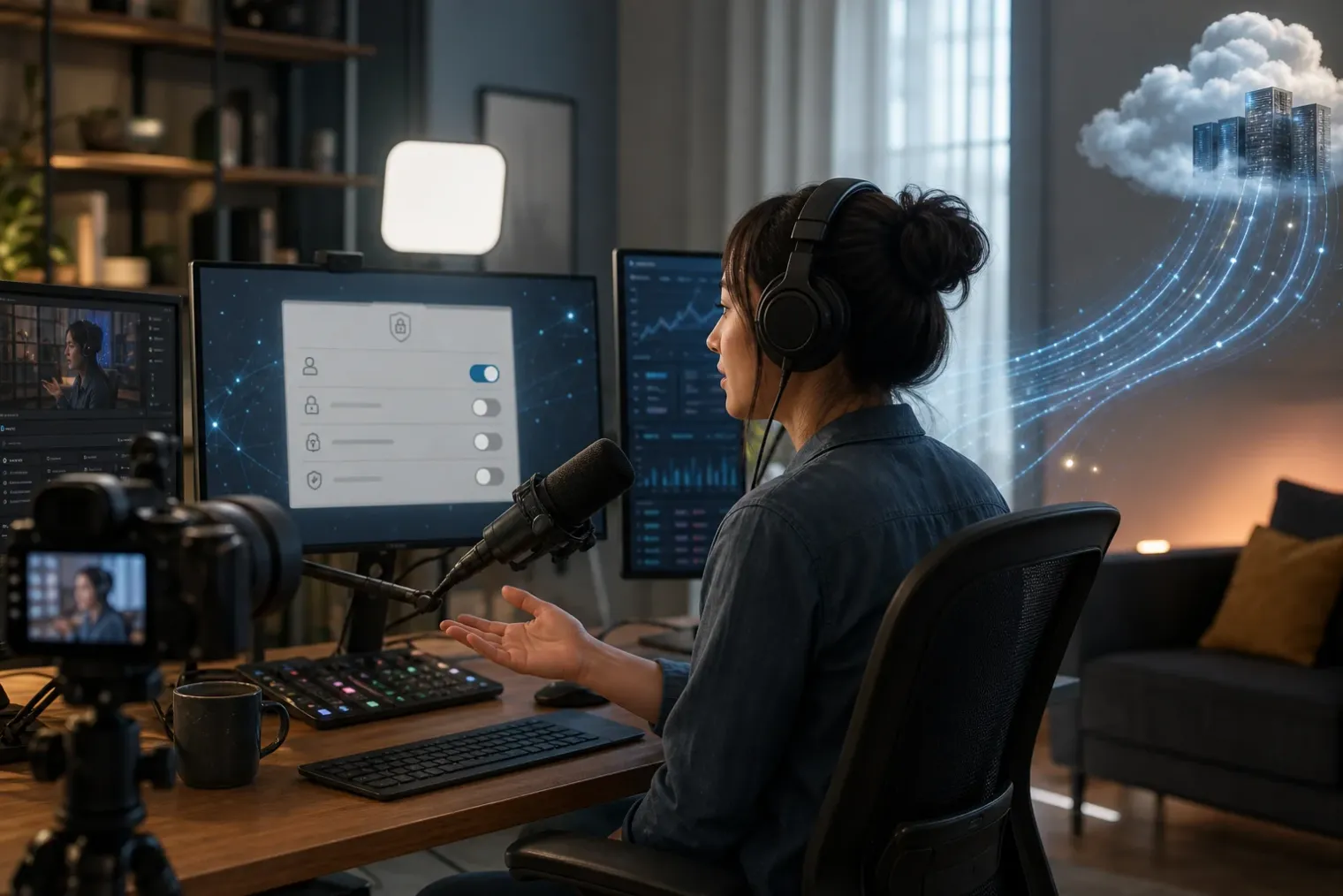
Twitch has added a setting allowing channel owners to prevent their channel content from being used to train generative AI models across Amazon. The option is available in the Security and Privacy area of account settings under “Generative AI Training”, but it is enabled by default. Creators who do not change it remain included.
The significance of the change lies less in the existence of an AI-related setting than in its design. An opt-out system treats participation as the baseline and places the burden on creators to find, understand and alter a privacy control. For a platform built on user-produced live video, recorded broadcasts, audio, chat and community activity, that choice has immediate implications for trust.
Twitch’s published wording also draws an important boundary. Turning off the generative AI training option does not stop Twitch and Amazon from using channel content for other purposes described in Twitch’s privacy notice. Those purposes can include operating and improving services, recommendations, safety tools, advertising-related functions and other platform features. The setting is therefore a narrower control over a stated training use, not a general prohibition on data processing or AI-assisted features.
Why the opt-out model has drawn criticism
Creators’ objections have focused on both consent and transparency. A large number of streamers have responded to a Twitch feedback thread opposing the use of their content for Amazon AI training by default. The central concern is that a broadcaster’s videos and voice are not simply incidental platform data: for many streamers, they are the product of paid labour, personal identity and long-term audience building.
Twitch product leadership has acknowledged the likely negative reaction. In public comments reported by several outlets, the company’s chief product officer said an opt-in approach would attract very limited participation. That explanation states the commercial logic of an opt-out design plainly, but it also reinforces the creators’ case: if many contributors would decline when actively asked, a default-enabled system can appear to depend on inattention rather than affirmative agreement.
The issue extends beyond major channels. Smaller streamers may have less time to track platform policy changes, fewer legal or business resources and less ability to assess how AI training could affect their work. In that context, discoverability matters. A control buried in a settings menu may technically offer a choice while still failing to produce informed participation at scale.
Broad licences do not settle the transparency question
Twitch’s terms have long required users to grant the platform extensive rights to host, reproduce, adapt, distribute and otherwise use user content, including through sublicensees. Such language is common on platforms that need operational permission to deliver live streams, create clips, moderate uploads, promote channels and make content available across devices.
However, a broad contractual licence and a clear explanation of generative AI training are not identical. The former may provide a legal framework for a wide range of platform uses; the latter tells creators, in concrete terms, that their material may contribute to the development of models beyond the immediate streaming experience. The rollout has exposed the gap between what users may technically agree to in lengthy terms and what they reasonably expect from a service they use every day.
Twitch’s privacy notice says that the company may share personal information with Amazon and its subsidiaries, and that information collected by Twitch may be combined with data about Amazon customers to develop and improve the companies’ products and services. This makes the new toggle more consequential than an isolated feature setting: it sits within a wider relationship between a streaming platform and its corporate parent.
What creators can and cannot control
Creators who do not want their channel content used for this specified purpose can open Twitch settings, select Security and Privacy, find the Generative AI Training control and disable it. They should review the wording shown alongside the setting and periodically recheck it, since platform controls and legal notices can change.
That action should not be interpreted too broadly. Disabling the setting does not remove material already shared publicly elsewhere, prevent unrelated third parties from accessing public content, erase data held under other legal or operational grounds, or guarantee that a creator’s likeness will never be imitated by an external AI system. It also does not replace copyright management, moderation protections or wider privacy choices.
For creators who work with guests, collaborators or communities, the announcement is a reason to review consent practices. A live stream can contain other people’s voices, faces, gameplay, music, personal information and brand material. Streamers have always needed to consider the rights attached to that material; the prospect of generative AI training gives that responsibility a new dimension.
A test of platform governance
Amazon and Twitch are far from alone in looking for data to build and refine AI systems. Major technology companies increasingly frame user-generated material as an input for improving products, while users and regulators scrutinise how that data is collected, explained and governed. High-quality multimodal material such as livestreams is especially valuable because it combines speech, video, interaction and context.
The Twitch case demonstrates that the governance question is not only whether a platform can rely on a broad content licence. It is whether it should use a default that converts creator activity into training material unless the creator intervenes. An opt-in system would offer a clearer signal of willingness but might sharply limit available data. An opt-out system offers scale but risks undermining trust, particularly when the use is disclosed through a newly introduced settings control rather than a prominent advance notice.
The practical outcome will depend on how Twitch communicates future changes, how clearly it defines the scope of training, whether the control applies prospectively or to retained content, and whether creators receive more detailed information about the models and uses involved. For now, the setting gives creators a direct action to take, but not a complete answer to the broader question of who should decide how creative work becomes AI training data.


