
A confirmed report, not yet a confirmed root cause
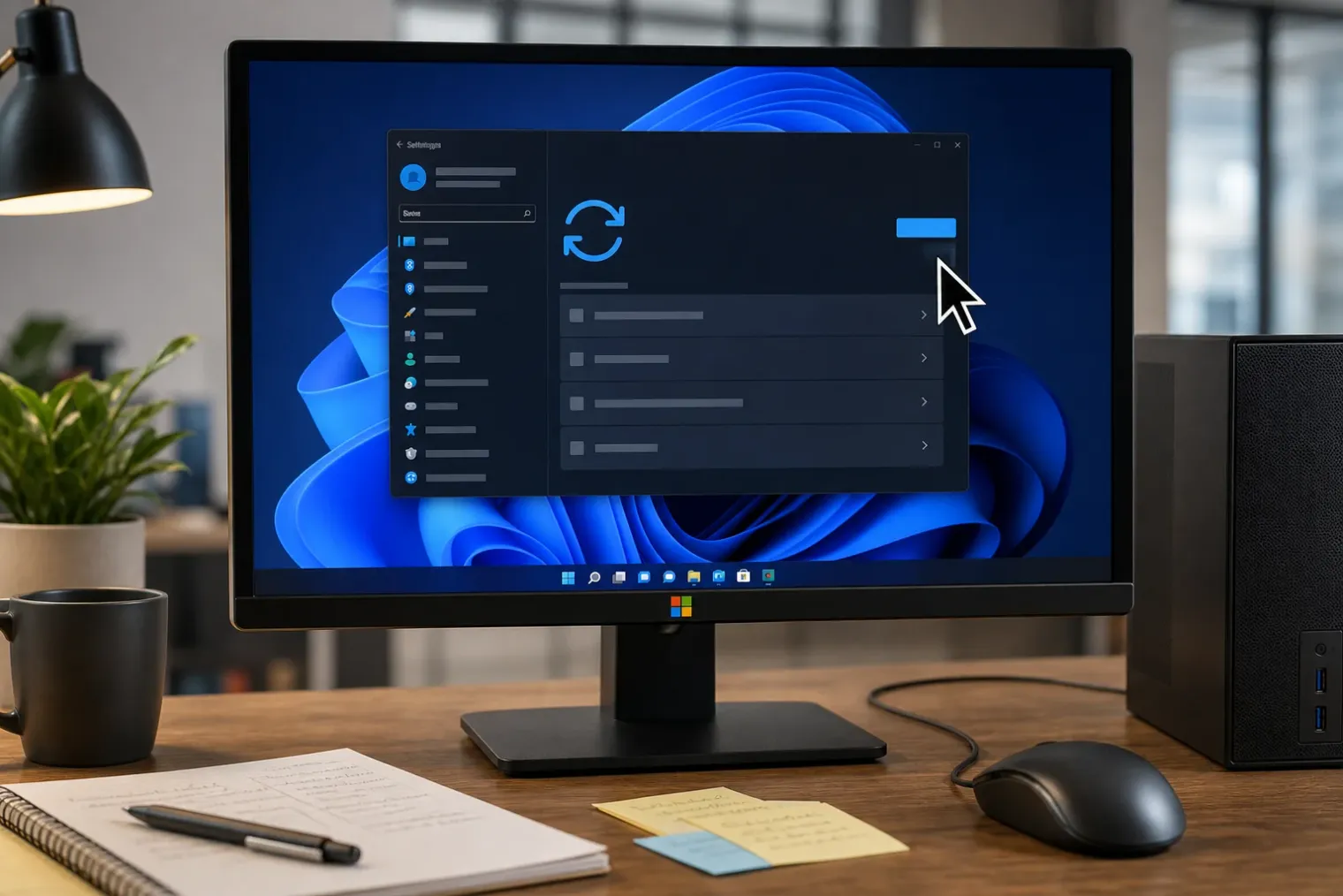
Microsoft has added a mouse-customisation problem to its Windows 11 release-health dashboard after reports emerged following the August 27, 2026 release of KB5120998. The company says some users have found that cursor personalisation settings change or revert to standard settings after installing the update.
The wording matters. Microsoft has acknowledged the reports and recorded the issue as “Reported”, but says it is still investigating whether the behaviour is caused by Microsoft. That is more limited than confirming a technical root cause, scope or remediation timetable. Still, the company’s description closely matches the symptoms reported by users: cursor appearance can regress, animations can change intermittently, high-DPI pointers may be replaced by larger white cursors, and custom cursor animations may return to standard settings. Attempts to restore previous settings have also been reported as unsuccessful.
The affected platforms listed by Microsoft are Windows 11 versions 24H2 and 25H2. The issue is associated with OS Build 26100.9278, released through KB5120998; the corresponding 25H2 build is 26200.9278.
Why this update warrants particular caution
KB5120998 is an optional, non-security preview cumulative update rather than the regular monthly security release. Microsoft describes such previews as a way for administrators and users to validate forthcoming changes before they appear in the next scheduled monthly security update.
That distinction has practical consequences. Users who have not installed KB5120998 do not need it to receive the August security fixes. They can reasonably wait for Microsoft to establish the cause of the problem and publish a correction, especially if they depend on high-visibility, high-DPI, animated or custom pointer schemes.
Preview updates nevertheless reach ordinary production PCs; they are not equivalent to Windows Insider builds. KB5120998 can be found in the Optional updates section of Windows Update, and it also appears in the Microsoft Update Catalog. The update contains a broad mix of changes, including taskbar-position options, Start menu customisation, Search changes, File Explorer adjustments and touchpad reliability improvements. That scale helps explain why an optional cumulative release should be treated as an early deployment stage rather than a zero-risk feature download.
For organisations, the incident reinforces the value of staged rollout policies. A cosmetic-looking pointer setting can be important for accessibility, visual comfort and day-to-day productivity. A user who relies on a larger, contrasting cursor may experience a material disruption if Windows replaces it and refuses to preserve the preferred alternative.
An inconsistency in Microsoft’s documentation
Microsoft’s individual KB5120998 support page still states that it is not currently aware of issues with the update. Its separate Windows release-health page, however, records the cursor problem as reported and shows it was opened on August 28, 2026.
The discrepancy does not invalidate the release-health entry; it illustrates how different Windows documentation pages may be updated on different schedules. The release-health dashboard is the more relevant source for the current incident because it contains the specific symptom description, affected versions and investigation status.
Users should therefore avoid relying solely on the “known issues” section of an individual KB article when deciding whether a recent Windows update has an acknowledged problem. Checking the release-health dashboard provides a more current view of active investigations and safeguard information.
What affected users can do now
Microsoft has not published a repair, a configuration workaround or a target date for a fix. Its immediate request is for affected users to submit reports through Feedback Hub, which can be opened with the Windows key and F. Those reports can help the company determine the conditions under which the problem occurs and whether particular display, accessibility or cursor configurations are involved.
For users who installed the optional update and are unable to restore an essential cursor setup, Windows provides an update-removal route. In Settings, open Windows Update, select Update history, then Uninstall updates, and choose the relevant update if Windows makes it removable. A restart will normally be required. This is a practical recovery option, not a universal recommendation: removing updates should be considered carefully, particularly where a later security update may already be installed.
Because KB5120998 is a non-security preview, postponing it is the low-risk course for people who have not yet installed it. Affected users should also record their current Windows version and build number before changing anything, and keep a note of any customised pointer scheme or accessibility settings. That information improves the usefulness of a Feedback Hub report and simplifies recovery after Microsoft releases a fix.
What to watch next
The immediate question is whether Microsoft will correct the issue through a revised preview update, a separate out-of-band release or the next monthly cumulative update. Microsoft uses out-of-band releases when a recently identified quality or security issue cannot wait for the normal schedule, but it has not indicated that such a release is planned for this problem.
Until then, the strongest conclusion is narrowly defined: Microsoft has formally logged reports that KB5120998 and later Windows updates may lose or override mouse cursor customisation on Windows 11 24H2 and 25H2. The company has not yet established the cause, detailed the affected hardware or configuration combinations, or supplied a permanent remedy.
That restrained assessment is important. The problem is credible enough for Microsoft to investigate and for users to defer an optional update, but the available evidence does not show that every system running KB5120998 will be affected. For now, cautious deployment and clear reporting are more useful than assuming either universal failure or a finished diagnosis.
Sources
- Windows 11, version 25H2 known issues and notifications — Microsoft Learn
- August 27, 2026—KB5120998 (OS Builds 26200.9278 and 26100.9278) Preview — Microsoft Support
- Update release cycle for Windows clients — Microsoft Learn
- How to uninstall a Windows Update — Microsoft Support


