
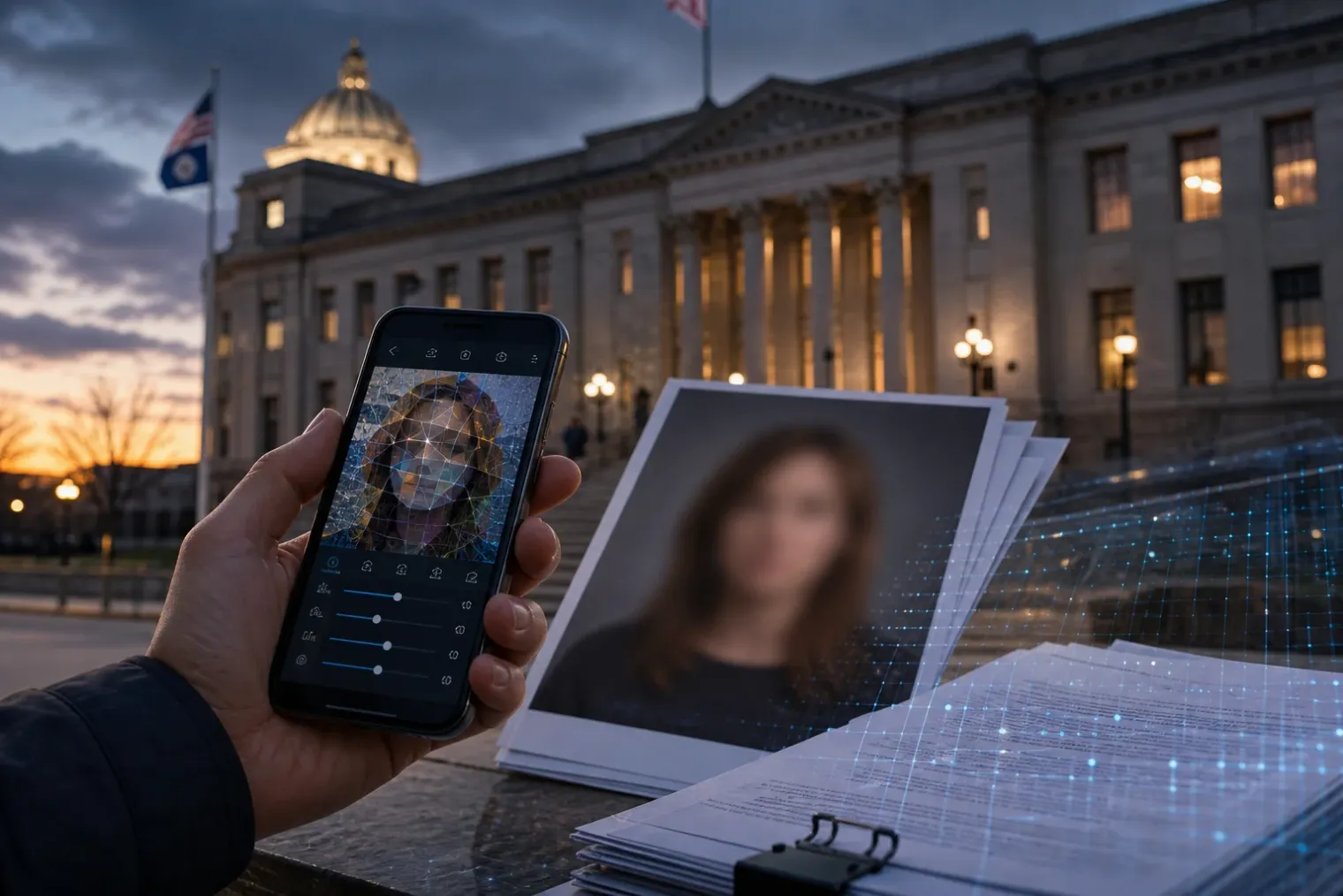
A challenge to a new type of AI regulation
xAI, the artificial-intelligence company founded by Elon Musk, has filed a federal lawsuit challenging Minnesota’s new restrictions on so-called nudification technology. The law, which took effect on August 1, 2026, targets services that allow users to generate or alter images and videos so that an identifiable person appears to have intimate body parts that were not present in the original material.
The dispute is notable because Minnesota is not merely pursuing people who create or distribute non-consensual sexual deepfakes. Its law places obligations on the owners and controllers of websites, applications and software that enable the creation of such material. That makes the case an early test of whether states can require generative-AI providers to prevent a category of harmful output at the product-design level.
The immediate defendant is Minnesota Attorney General Keith Ellison, but the broader implications extend far beyond one state. Image-generation systems are increasingly embedded in social networks, chatbots and consumer editing tools. A ruling on Minnesota’s approach could influence how companies set safeguards, how legislators frame future rules, and where courts draw the boundary between protected expression and preventable digital harm.
What Minnesota’s law prohibits
Minnesota’s statute defines nudification as altering or generating an image or video to depict an intimate part not shown in the original material, where the result is realistic enough that a reasonable person would believe it belongs to the identifiable individual depicted.
The law prohibits a person who owns or controls a website, app, program or other service from allowing a user to access, download or use the service for that purpose. It also prohibits creating the manipulated image on a user’s behalf and advertising or promoting a service that does so.
The measure contains an exemption where the service requires substantial individual technological or artistic skill and human judgement to produce the output. That distinction appears designed to focus regulation on easily accessible, automated tools rather than every form of image editing. However, the practical line between a one-click AI feature and a tool requiring meaningful user control may become a central point of dispute.
The statute permits affected individuals to seek compensatory and punitive damages, injunctions and legal costs. It also authorises the attorney general to enforce the law, with civil penalties of up to $500,000 for each unlawful access, download or use. The legislation says it does not alter federal protections under Section 230, the US law that can shield online services from liability for third-party content.
xAI’s constitutional argument
xAI does not dispute the state’s interest in stopping the non-consensual distribution of synthetic nude images of real people. Its lawsuit instead argues that the law reaches further than that objective and imposes an unconstitutional, content-based restriction on speech and visual expression.
The company’s position is that the law can cover consensual creations, self-created images, satire and other material that may be protected by the First Amendment. It also argues that the law lacks a safe harbour for providers that make good-faith efforts to prevent misuse. Under this view, a provider could face exceptionally large liability even if it has rules against non-consensual sexual imagery and deploys technical safeguards that users sometimes evade.
Those arguments are not simply procedural. Generative systems can create a vast range of outputs from the same underlying capability: fictional characters, artistic transformations, parody, historical reconstructions and harmful depictions of real people. xAI is asking the court to decide whether a state may regulate the capability itself when the stated harm arises from a subset of outputs and users.
Why the state’s approach differs
Minnesota’s model differs from many existing deepfake laws. Rules addressing non-consensual intimate imagery often punish the person who creates, shares or threatens to share the material. The new Minnesota provision instead seeks to deny access to automated nudification services in the first place.
That structure reflects the speed and scale of generative AI. Once an image-editing system can convincingly modify a photograph from a simple prompt, the victim may not know the material exists, who created it, or where it has been redistributed. Remedies after publication can therefore be inadequate, particularly where images spread across multiple platforms or are used for harassment, blackmail or reputational damage.
Supporters of this preventive approach can argue that providers are best positioned to install restrictions before a harmful image is made. The state’s case is likely to stress that the law addresses a specific form of realistic impersonation involving identifiable people, rather than a general ban on nudity or creative software.
The difficult questions ahead
The court will have to examine whether the law is sufficiently narrow, how its technical-skill exemption operates, and whether the financial penalties are proportionate. It may also need to consider how much responsibility an AI provider can reasonably bear for outputs initiated by users.
A ruling for Minnesota could encourage other states to place stronger obligations on AI providers whose tools can generate non-consensual intimate imagery. A ruling for xAI could push lawmakers towards narrower laws focused on distribution, notice-and-removal processes, or intentional facilitation by platforms.
Whatever the outcome, the dispute demonstrates that AI governance is moving beyond broad ethical principles. Legislators are now testing concrete rules for individual features, while companies are contesting whether those rules can coexist with constitutional speech protections. The legal answer will shape not only one category of harmful synthetic image, but also the degree to which AI developers must build prevention into their systems before harm occurs.
Sources
- Musk žaluje Minnesotu kvůli zákazu generativní AI svlékající lidi — Svět hardware
- HF 1606: Prohibition on Nudification Technology — Minnesota Revisor of Statutes
- Elon Musk’s xAI sues Minnesota over its first-in-the-nation law banning ‘nudification’ technology — Associated Press
- HF 1606 Bill Summary Details — Minnesota House Research Department


