
A striking reading in northern Russia
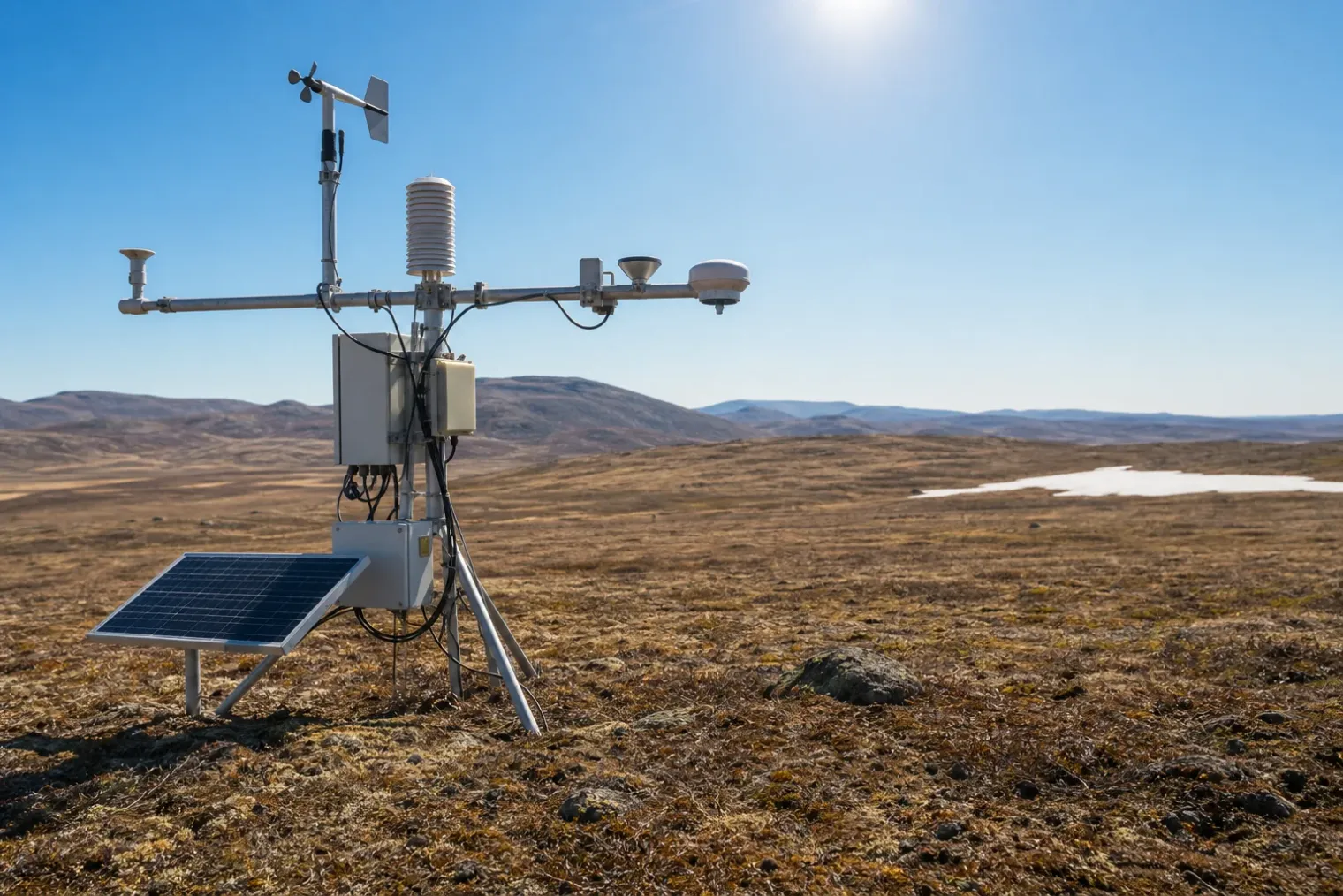
Northern Russia experienced unusually intense heat in the days leading up to August 3, with two meteorological stations near the Arctic Circle registering temperatures above 90°F (32.2°C). Scientific American reported a high of 93.0°F (33.9°C) at Selagoncy and 90.9°F (32.7°C) at Olenyok, using observations distributed through the Ogimet weather-data service.
The readings explain the force of the headline, but they also require precision. They do not mean that the entire Arctic, much less the North Pole, was at 90°F. The Arctic is a vast region spanning ocean, sea ice, mountains, tundra and boreal landscapes; temperatures can differ sharply from one location to another. These were local station observations in northern Siberia, close to the Arctic Circle, during the warmest part of the Northern Hemisphere summer.
Even so, a 90°F-plus temperature in that setting is climatically significant. It is a vivid example of the kind of high-latitude heat extremes that are becoming more plausible as the regional baseline rises. The event should be assessed against each station’s observing history and local conditions, but its broader context is not in doubt: the Arctic has been warming markedly faster than the planet as a whole.
Why the Arctic is warming faster
The defining feature of Arctic climate change is known as Arctic amplification. Greenhouse-gas emissions warm the global climate, but several processes make the response at high northern latitudes particularly strong.
The most familiar is the loss of reflective snow and sea ice. Fresh snow and ice send a substantial share of incoming sunlight back into space. When they melt, darker land and open ocean absorb more solar energy. That extra absorbed energy increases local warming and makes further melting more likely. This is a feedback: an initial change reinforces itself.
The mechanism is especially consequential over the Arctic Ocean. A summer with reduced sea ice allows the ocean to take up additional heat. During autumn and winter, that stored heat can be released to the atmosphere, helping keep temperatures higher than they otherwise would be. Changes in moisture, clouds, atmospheric circulation and the northward transport of heat also contribute to the faster warming.
The precise multiplier depends on the period, geographic boundary and dataset used. Peer-reviewed research has estimated that Arctic surface warming since 1980 has been roughly four times the global average, while NOAA’s latest Arctic assessment describes annual Arctic air temperatures as warming nearly three times faster than the global mean. Those figures are not contradictory; they illustrate that the rate is sensitive to the measurement approach. The central conclusion is robust: the Arctic is warming several times faster than the global average.
An extreme day is weather, but it occurs in a changing climate
A single hot day is weather. It can be shaped by a short-lived mix of factors, including clear skies, dry soils, warm air transported from lower latitudes and persistent high-pressure patterns. Climate change does not eliminate those immediate weather drivers. Instead, it shifts the background conditions in which they operate.
That distinction matters. It would be inaccurate to say that one station temperature proves a particular amount of human-caused warming. Formal attribution studies compare the likelihood and intensity of an event in today’s climate with simulations of a world without human-driven greenhouse-gas warming. Such analysis takes time and requires more than a striking headline.
But it would be equally misleading to treat the Siberian readings as isolated curiosities. When average temperatures rise, heat thresholds that were formerly rare can be crossed more often. Extreme heat also starts from a warmer baseline and can therefore reach higher absolute values. The event in northern Russia fits a long-established pattern of exceptional warming and climate disruption across the Arctic.
The Arctic’s longer-term warning signals
NOAA’s 2025 Arctic Report Card found that the October 2024 to September 2025 period was the region’s warmest in records extending back to 1900. It also reported that 2016 through 2025 were the ten warmest individual Arctic years in that record.
The consequences extend well beyond summer discomfort. Higher temperatures affect the duration and character of snow cover, the growth and thickness of sea ice, glacier mass, permafrost stability and wildfire conditions. They alter rivers, coastal erosion, ecosystems and the availability of food and safe travel routes for many Arctic communities.
Sea ice is particularly important because it links local change to global systems. Its seasonal retreat changes habitats and marine ecosystems, while the continued loss of land ice from Greenland and Arctic glaciers contributes to sea-level rise. Thawing permafrost can also damage buildings, roads, pipelines and other infrastructure built for reliably frozen ground.
The impacts are uneven. Arctic communities face distinct risks depending on geography, livelihoods and infrastructure, and Indigenous knowledge and local observation are essential to interpreting change and designing responses. The region is not an empty climatic laboratory: it is home to people whose lives are closely tied to ice, land and wildlife.
What the Siberian heat should tell us
The immediate news is straightforward: parts of northern Russia reached temperatures more commonly associated with subtropical summer heat than with the popular image of the Arctic. The larger message is less about a single dramatic number than about a changing range of possible conditions.
Station records remain vital for documenting local extremes, while satellite observations, ocean measurements and climate reanalyses provide the regional picture. Together, they show an Arctic undergoing rapid transformation rather than a series of unrelated anomalies.
The 90°F readings should therefore be understood neither as a novelty nor as an Arctic-wide temperature report. They are a sharp local signal from a region where the climatic background has been changing faster than almost anywhere else on Earth.
Sources
- It’s 90 degrees in the Arctic right now — Scientific American
- Arctic Report Card 2025: Surface Air Temperature — NOAA Arctic
- Internal Variability Increased Arctic Amplification During 1980–2022 — Geophysical Research Letters
- Arctic Report Card documents evidence of accelerating climate change — World Meteorological Organization


