
A projection, not a finished-year result
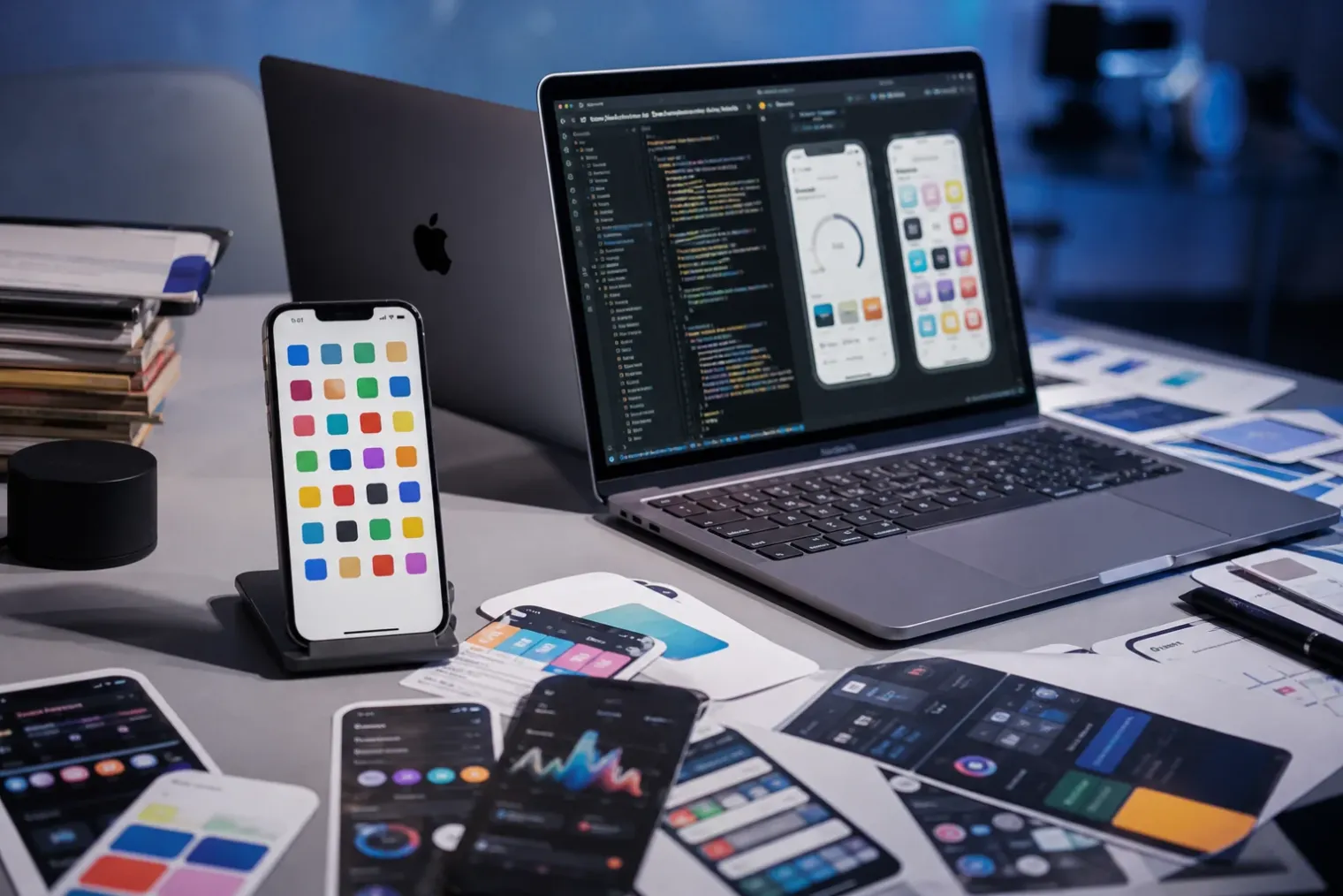
Apple’s App Store could add roughly one million new apps during 2026, according to market-tracking figures cited in recent reporting. The estimate follows reports that around 560,000 new apps were released between January and June, nearly matching the approximately 600,000 recorded during all of 2025. If the first-half pace continues, the one-million threshold would be plausible before the end of the year.
That figure should nevertheless be read carefully. It is a projection based on commercial market-intelligence data rather than an official Apple year-end count, and the precise number can vary with the methodology used to define a new release, app availability and storefront coverage. As of 1 August 2026, it is not yet established that one million apps will actually be added this year.
The more consequential point is the abrupt increase in supply. Making a simple mobile app has become far easier as coding assistants, visual development platforms and generative AI tools can produce interfaces, boilerplate code, store descriptions and marketing assets in minutes. That does not eliminate the work of testing, design, privacy compliance, support and maintenance, but it significantly reduces the time and technical expertise needed to reach a first submission.
Why “AI slop” is an imprecise label
The phrase “AI slop” has become shorthand for applications perceived as derivative, poorly tested or created primarily to capture search traffic and subscription revenue. It reflects a real concern about volume overwhelming discovery, yet it is not a measurable App Store category and should not be treated as a verdict on every app made with AI assistance.
AI can help an independent developer prototype a useful accessibility tool, local service or niche productivity app that would otherwise never be built. It can also help established teams speed up repetitive work while retaining rigorous engineering and product review. The problem arises when low production costs make it economical to publish many slight variations of the same idea, with little differentiation or ongoing support.
For users, the visible effects can include repetitive search results, misleading screenshots, generic descriptions and apps that offer a thin interface over an existing online service. The risk is not limited to disappointing software. Applications that handle personal data, payments, health information or uploaded media must be designed and operated securely. Fast creation does not substitute for responsible data practices, transparent pricing or a developer capable of fixing faults after release.
Apple’s review system faces a scale challenge
Apple already operates a large review and enforcement system. Its 2025 transparency report says it reviewed more than 9.1 million app submissions, rejected just over 2 million and removed nearly 167,000 apps from the store. The company reported 2.17 million apps available on the App Store at the end of that reporting period.
Those numbers show why a rise in new listings is not automatically equal to a rise in the store’s enduring catalogue. Apps can be rejected, revised, removed, withdrawn or become inactive. They also show that Apple’s task is broader than approving an app on its initial appearance: a marketplace must contend with fraud, intellectual-property complaints, policy violations and obsolete software.
Apple’s guidelines already prohibit spam, copycats and apps that are substantially indistinguishable from products already widely available. The rules discourage developers from releasing multiple versions of the same basic app for individual locations or audiences when one configurable app would suffice. Apple can also remove apps that are not maintained, do not meet minimum download thresholds or no longer offer sufficient value.
Enforcement, however, is inherently difficult at high volume. A review process can identify obvious duplicates or technical failures, but assessing whether an apparently functional app is genuinely useful often requires contextual judgement. Overly aggressive filtering could shut out small developers and legitimate niche products; overly permissive filtering can leave users to sift through a growing number of low-effort listings.
Discovery may matter more than raw app count
The surge is occurring in a marketplace where attention is already scarce. Apple says the App Store serves hundreds of millions of weekly users across 175 countries and regions, but that scale does not mean each new developer gains an audience. In practice, search ranking, editorial selection, advertising, reviews, brand recognition and social distribution strongly influence whether an app is found.
This creates a paradox. Easier development expands participation, but an abundance of similar apps can make it harder for the best new products to reach users. For small teams, the challenge increasingly shifts from writing a first version of software to demonstrating trustworthiness, explaining a clear benefit and continuing to improve the app after launch.
The commercial opportunity remains substantial. Apple says consumer-facing AI features appeared in more than 40 of the top 100 apps in its storefront in 2025, while those apps recorded faster billing growth than the other top-ranked apps. That suggests demand for AI-enabled experiences is genuine. It does not, however, mean that every app marketed with an AI label has a viable product or audience.
The likely next test for the App Store
The expected wave of releases is therefore best seen as a stress test of marketplace curation. Apple will need to distinguish innovation from duplication without making the App Store inaccessible to newcomers. More meaningful signals of quality could include clearer subscription disclosures, stronger evidence of ongoing maintenance, better reporting tools and discovery systems that reward user satisfaction rather than simply keyword coverage or advertising spend.
For developers, AI-assisted creation lowers the entry cost but raises the importance of judgement. A successful app still needs a real problem to solve, a coherent product experience, secure handling of data and a support plan. For users, the practical response is equally familiar: examine the developer, permissions, pricing terms, recent reviews and update history before trusting an unfamiliar application.
One million new apps would be a striking milestone. It would not, by itself, prove that the App Store has become worse or better. The meaningful measure will be whether Apple’s systems can help useful, well-maintained software stand out while preventing a larger catalogue from becoming a larger burden on users.
Sources
- Apple App Store letos přivítá asi 1.000.000 aplikací. Většina je "AI slop" — Svět hardware
- Apple's App Store is on pace to add 1 million new apps this year, most are AI slop — TechSpot
- 2025 App Store Transparency Report — Apple
- App Review Guidelines — Apple
- App Store ecosystem reaches record $1.4 trillion as developers continue to thrive globally — Apple


