
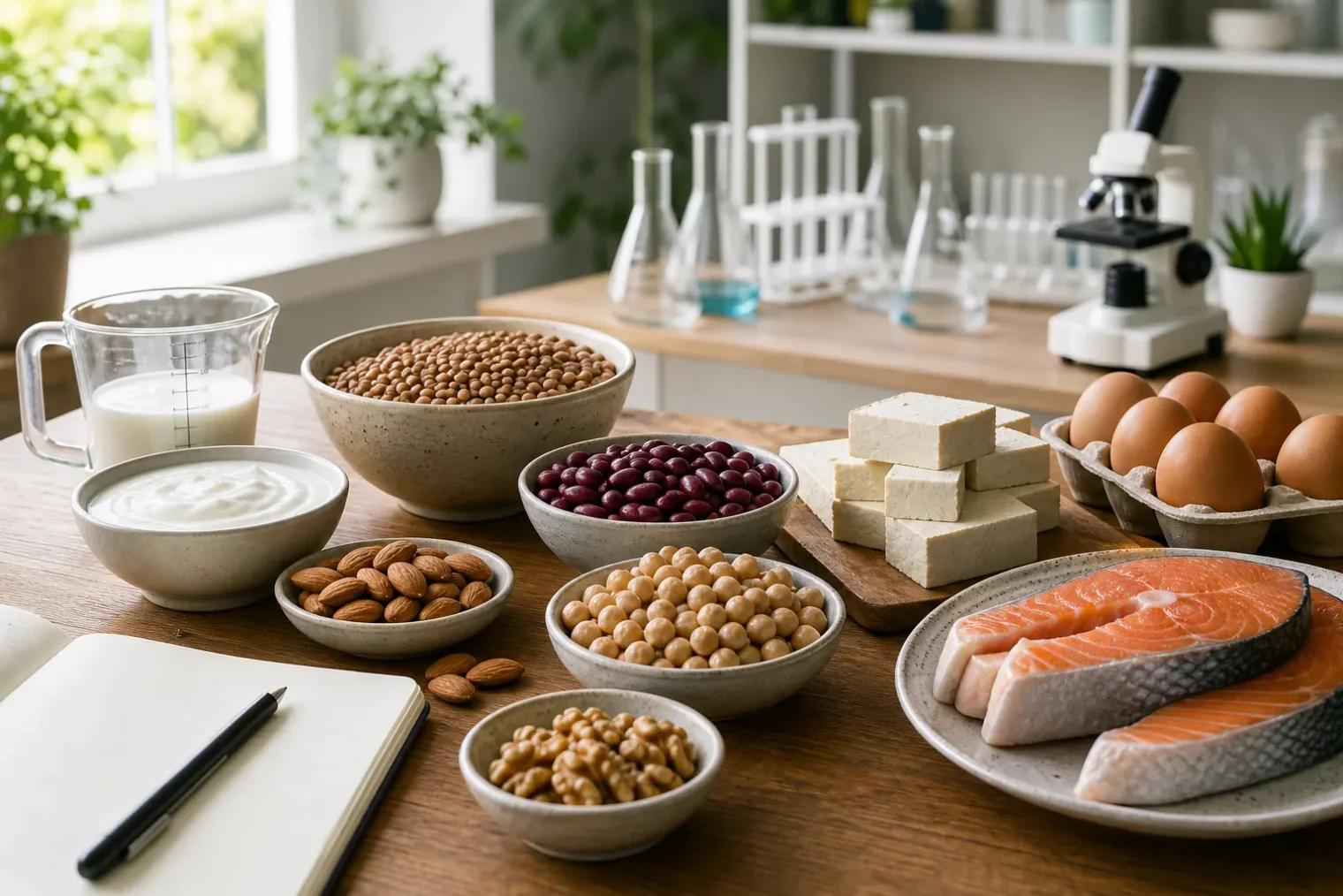
A challenge to the high-protein narrative
Protein has become a conspicuous selling point in modern food marketing, promoted as a route to weight control, muscle gain and healthier ageing. New research is complicating the simplest version of that message. A review published in Cell Press Blue, drawing together more than 350 earlier studies, argues that the amount and composition of dietary protein can materially influence metabolic health and lifespan in laboratory animals.
The central finding is not that protein is harmful. It is indispensable: dietary protein supplies amino acids used to build and maintain muscles, organs, enzymes and immune cells. Rather, the research suggests that once biological requirements are met, consistently high intake may not bring universal benefits—and, in some experimental settings, a lower intake produces metabolic changes associated with healthier ageing.
That distinction matters. “Less protein” is not a single intervention. Outcomes can depend on total calories, which amino acids are reduced, the food replacing protein, age, physical activity, sex, genetics and underlying health. The most striking lifespan evidence remains in animals, not people.
The valine experiment
The immediate trigger for renewed attention is a Nature Aging study published on 24 July 2026. Researchers fed male and female C57BL/6J mice diets in which valine—one of the essential branched-chain amino acids—was reduced by 67 percent. The diets were designed to provide the same calories and comparable amounts of fat and carbohydrate as the control diets.
Mice on the valine-restricted diet gained less body fat, showed better glucose control and lower frailty scores. They also ate more calories relative to body weight and expended more energy, indicating that the results were not simply caused by calorie restriction. Male mice experienced a 23 percent increase in median lifespan. The study also reported fewer cancers and lower markers of cellular senescence in the restricted groups.
Yet the sex difference is crucial: female mice showed several health improvements but no lifespan extension. The intervention also began when the animals were four weeks old, well before adulthood, and was tested in one inbred mouse strain. Those limits make it impossible to translate the result into a dietary instruction for adult humans.
The study is nevertheless useful because it separates protein quality from protein quantity. Instead of merely lowering all protein, it points to particular amino acids as possible drivers of some effects. Earlier work has similarly implicated branched-chain amino acids, especially isoleucine, in metabolic and lifespan responses in mice.
A proposed metabolic pathway
One leading explanation centres on fibroblast growth factor 21, or FGF21. This hormone rises when protein or specific amino acids are scarce. In rodent experiments, FGF21 has been associated with greater energy expenditure, changes in fat tissue and improved insulin sensitivity. The valine study found changes in metabolism and gene activity across tissues, including a male-specific increase in liver mitochondrial respiration that may be relevant to its lifespan outcome.
Mechanistic explanations should still be treated carefully. Ageing biology is not governed by a single pathway, and the researchers did not establish that mitochondrial changes caused longer life. In fact, the study found signals that do not fit a tidy account of how amino-acid restriction affects ageing. That uncertainty is a scientific strength rather than a weakness: it shows why dietary interventions need to be tested across different models before firm conclusions are drawn.
What the human evidence does—and does not—show
Human research is beginning to detect metabolic responses consistent with the animal work. In a 2025 controlled trial, healthy lean men followed protein-reduced diets that still met minimum protein requirements for five weeks. To maintain their body weight, participants required more dietary energy than before, while FGF21 levels increased. The findings suggest that reducing protein can alter energy balance in people, whether protein calories are replaced by carbohydrate or fat.
A 2026 trial in men with overweight or obesity also reported weight loss during a controlled, isocaloric protein-reduction intervention. But these were short studies designed to measure physiology and body weight—not lifespan, late-life function, fracture risk, cancer rates or long-term muscle preservation. Their participants were also narrowly defined groups, so the results cannot be assumed to apply across sexes, ages or clinical conditions.
There is no completed human trial demonstrating that deliberately reducing protein intake extends lifespan. Observational studies linking protein consumption with disease and mortality are difficult to interpret because protein sources often travel with other variables: body weight, smoking, exercise, calorie intake, socioeconomic circumstances and the quality of the overall diet. A diet rich in processed meat is not biologically or nutritionally equivalent to one providing protein mainly from pulses, fish, dairy or minimally processed plant foods.
Why broad advice would be premature
Protein needs are not identical for everyone. Older adults can be vulnerable to loss of muscle and strength, particularly during illness, injury, unintended weight loss or reduced appetite. Athletes, people undertaking resistance training, pregnant individuals and patients recovering from trauma or surgery may also have different requirements. In these settings, indiscriminately cutting protein could create real risks.
There is also a practical problem with focusing only on grams of protein. A person can lower protein intake by replacing nutritious food with refined carbohydrates and still miss the point of the research. Conversely, a moderate-protein diet built around fibre-rich plant foods, unsaturated fats and minimally processed meals may have different effects from a high-protein diet dominated by processed products. Food pattern, energy balance and physical activity remain central.
The emerging research is best understood as a challenge to protein maximalism, not a reason to pursue protein minimisation. It supports a more precise question: which levels and types of protein support metabolic health, physical function and healthy ageing for particular people?
The next tests
The next phase of research will need larger and longer human trials, with diverse participants and outcomes that matter beyond short-term weight change. These should assess muscle mass and function, bone health, appetite, cardiometabolic risk, nutritional adequacy and the effects of reducing specific amino acids rather than protein wholesale.
For now, the evidence supports scepticism toward the idea that more protein is automatically better. It does not support a promise that eating less protein will add years to a human life. The most defensible conclusion is narrower: protein intake may be a modifiable lever in ageing biology, but the safe and effective setting of that lever remains unresolved.
Sources
- Eating less protein could help you live longer — Scientific American
- Lifelong restriction of dietary valine has sex-specific benefits for health and lifespan in mice — Nature Aging
- Dietary protein restriction elevates FGF21 levels and energy requirements to maintain body weight in lean men — Nature Metabolism
- Dietary Protein Reduction During Isocaloric Conditions Reduces Body Weight in Men With Overweight or Obesity — Obesity


