
An intriguing association in a difficult cancer
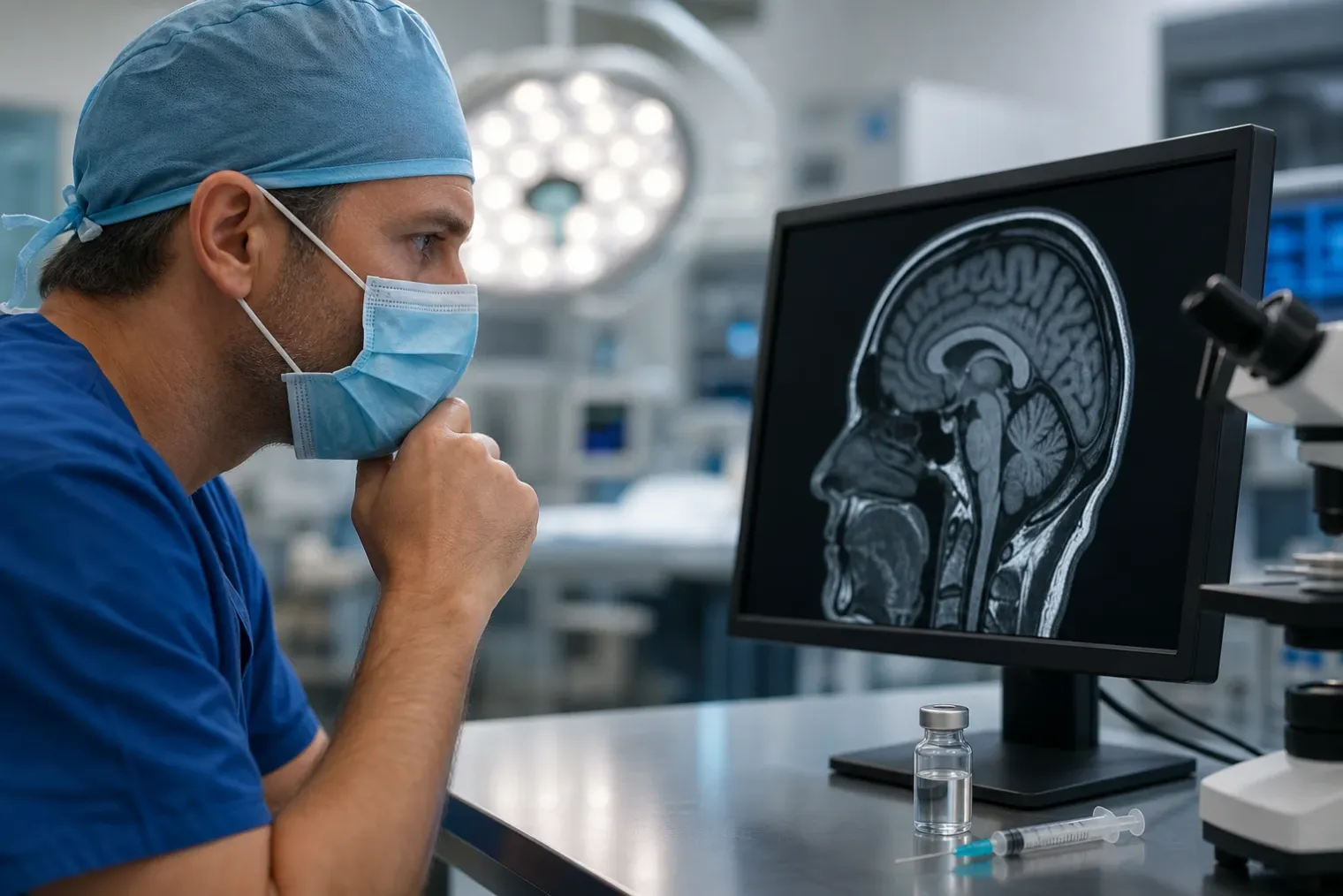
A preliminary study from the University of Alabama at Birmingham has raised an unexpected question: could a recent COVID-19 vaccination influence outcomes for people undergoing surgery for glioblastoma, the most aggressive common malignant brain tumour in adults?
In the retrospective, single-centre analysis, researchers reviewed 187 adults who underwent an initial biopsy or tumour removal between 2021 and 2025. Sixty-four had received a COVID-19 vaccine during the 100 days before their first operation, while 123 had not. Most vaccinated participants received an mRNA vaccine.
The reported survival difference was large. Median overall survival was 743 days in the recently vaccinated group, compared with 318 days in the unmatched comparison group. After the researchers used propensity matching to create more similar groups, median survival remained 743 days for vaccinated patients and 349 days for comparators.
Those figures make the result notable in a disease where progress has been slow. But they do not establish that a COVID-19 vaccine extended anyone’s life. The study is a preprint posted in July 2026, meaning it has not yet undergone peer review, and its observational design cannot eliminate all alternative explanations.
Why surgery may matter to the hypothesis
Glioblastoma is notoriously difficult for immunotherapies to treat. The tumour and its surrounding environment can suppress immune activity, while treatment itself often involves corticosteroids that can further affect immune responses. Standard care for newly diagnosed glioblastoma generally involves surgery followed by radiation with temozolomide chemotherapy, then additional temozolomide.
The researchers’ hypothesis centres on the period around surgery. An operation disrupts tumour tissue and may release tumour antigens, or molecular fragments that the immune system can potentially recognise. A recent vaccination, meanwhile, may leave the immune system in a temporarily activated state. The authors propose that those two events could overlap in a way that improves anti-tumour immune recognition.
This is biologically plausible, but it remains a hypothesis rather than a demonstrated mechanism in glioblastoma patients. The study did not show that vaccination generated tumour-specific immune cells, nor did it prove that surgery and vaccination interact in the proposed way.
The investigators did look for several competing explanations. Their analyses accounted for factors including clinical and tumour characteristics, functional status, steroid exposure, COVID-19 severity, aspects of treatment and surgical selection. They also used influenza vaccination as a negative control; unlike recent COVID-19 vaccination, it was not associated with longer survival in their data.
Such checks can make an observational result more credible, but they cannot fully correct for unmeasured differences between people who did and did not receive a vaccine. Vaccinated patients may differ in access to care, underlying health, treatment adherence, timing of diagnosis or other factors that are difficult to capture from clinical records.
The broader mRNA cancer-immunity question
The glioblastoma report arrives amid wider interest in whether mRNA COVID-19 vaccines can influence cancer immunotherapy. A peer-reviewed Nature study published in 2025 examined people with advanced non-small-cell lung cancer and metastatic melanoma treated with immune checkpoint inhibitors. It found that people vaccinated with a COVID-19 mRNA vaccine within 100 days of starting immunotherapy had better survival in retrospective cohorts.
That study also included mouse experiments and immune analyses suggesting that mRNA vaccination could increase type I interferon signalling, activate antigen-presenting cells and help prime anti-tumour T-cell responses. In the experimental models, the strongest effects came when an mRNA vaccine was combined with checkpoint blockade, a treatment designed to prevent tumours from switching off immune cells.
Glioblastoma is a distinct disease and the new study did not test checkpoint inhibitors as the key accompanying treatment. It instead points to surgery as a possible moment when an immune stimulus could matter. The two lines of research therefore share an underlying idea — that a vaccine designed against an infection might alter the wider immune environment — but they should not be treated as evidence for the same clinical intervention.
There is also an important reason for restraint. A later reanalysis of the lung cancer and melanoma data argued that the original survival estimates could have been inflated by differences in when vaccinated and unvaccinated patients entered follow-up. Using a target-trial-emulation approach intended to better align eligibility and timing, its authors found no clear evidence of a survival benefit. That reanalysis is itself a preprint, but it illustrates why striking effects in retrospective data require independent testing.
What would be needed to move from signal to treatment
The current glioblastoma finding should be regarded as a lead for research, not a change in care. It does not show the best vaccine timing, the relevant number of doses, whether the observed association applies to all vaccine platforms, or whether an intentional pre-operative vaccination strategy is safe and effective.
A useful next step would be validation in independent patient cohorts, ideally from several hospitals and health systems. Researchers would also need detailed immune measurements before and after vaccination and surgery, including immune-cell activity, tumour samples and markers of inflammation. Those data could help distinguish a genuine biological effect from an association produced by patient selection or clinical timing.
Ultimately, a prospective randomised trial would be needed to answer the causal question. In such a study, eligible patients would be assigned to a clearly defined vaccination schedule or a comparison strategy, while receiving otherwise standard glioblastoma care. Outcomes would need to include not only survival, but also surgical complications, treatment delays, neurological function, quality of life and interactions with steroids, radiation and chemotherapy.
Prospective testing is already beginning in a related setting. A University of Florida phase 2 trial, listed as not yet recruiting as of August 2026, plans to test whether a Pfizer-BioNTech mRNA COVID-19 vaccine can improve responses to checkpoint inhibitors in people with stage IV non-small-cell lung cancer. It will not answer the glioblastoma question directly, but it reflects a shift from retrospective observation toward deliberate clinical evaluation.
The practical message for patients
For now, COVID-19 vaccines remain tools for preventing serious infection, not approved treatments for brain cancer. People with glioblastoma should not postpone surgery, radiation, chemotherapy or other recommended treatment in an attempt to coordinate vaccination around a speculative survival benefit.
Still, the report identifies a potentially valuable idea. Existing mRNA vaccines are widely available, comparatively inexpensive and capable of producing strong immune signals. If careful prospective studies confirm that those signals can be used safely to improve cancer treatment, the implications could extend well beyond one brain tumour. The current evidence, however, is an observation worth testing — not yet a therapy proven to work.
Sources
- Recent COVID-19 Vaccination Before Glioblastoma Surgery Is Associated With Longer Survival — medRxiv
- SARS-CoV-2 mRNA vaccines sensitize tumours to immune checkpoint blockade — Nature
- Avoiding biases when estimating effects of COVID-19 vaccination during immune checkpoint inhibitor therapy — medRxiv
- Universal Immunization to Fortify Immunotherapy Efficacy and Response — ClinicalTrials.gov
- Central Nervous System Tumors Treatment (PDQ®) — National Cancer Institute


