
A reported restart at Dalian
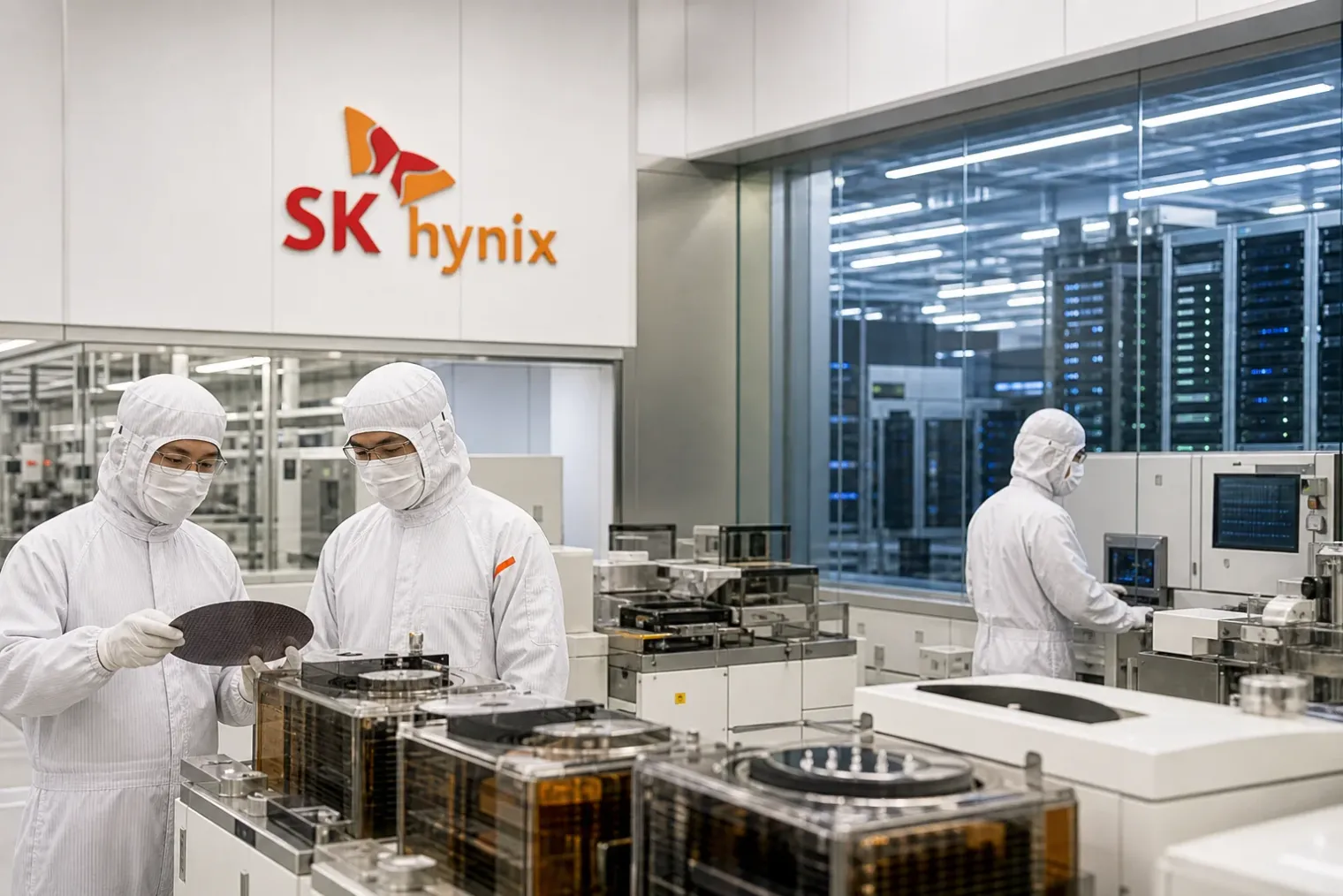
SK hynix is reportedly preparing to restart expansion work at Dalian Plant 2 in China, an important development for a NAND flash market that has been constrained by strong demand for enterprise storage. Reports in June and July indicated that the company was considering new production lines at the site, with equipment installation potentially beginning in the second half of 2026 and the build-out proceeding in stages into the first half of 2027.
The headline figure that SK hynix could raise NAND flash production in China by 50% in 2027 requires qualification. The available reporting points to a planned addition of roughly 30,000 to 50,000 wafers per month at Dalian Plant 2, rather than an official company forecast for a 50% increase in all Chinese NAND output. Actual bit production would also depend on the technology installed, manufacturing yields, product mix and the pace at which equipment is qualified.
SK hynix has not publicly set out a China-wide NAND percentage target in its recent official investment announcements. The company has instead confirmed major long-term investment in South Korea, including the Cheongju M17 NAND fab. This makes the Dalian project best understood as a reported, nearer-term expansion of an existing manufacturing base, not a substitute for the company’s larger domestic capacity strategy.
Why the Dalian facility matters
Dalian became central to SK hynix’s NAND operations through its acquisition of Intel’s NAND and solid-state drive business. The site gives the company an established production footprint in China and a route to serve regional customers, while also adding manufacturing flexibility to its wider flash-memory business.
The reported project is associated with high-layer NAND based on floating-gate architecture. That is distinct from simply adding more wafer starts: denser chips can increase the number of storage bits produced per wafer, while new lines increase the physical volume of wafers processed. Either route can lift available NAND supply, but the commercial result is shaped by the balance between high-capacity enterprise products and consumer-oriented flash components.
The proposed capacity of 30,000 to 50,000 wafers per month is sizeable for a single production line. Yet it does not automatically translate into a matching increase in finished SSDs or retail storage devices. NAND makers allocate output across chips, packaged products and SSD businesses, and prioritise the segments with the strongest demand and margins. In the current market, enterprise SSDs for servers and AI infrastructure are likely to command particular attention.
AI demand is changing the NAND equation
NAND flash is often associated with smartphones, PCs and consumer SSDs, but the demand profile is shifting. AI services require substantial storage capacity for datasets, model checkpoints, logs and inference-related data. Enterprise SSD demand has consequently become a major driver of flash consumption.
SK hynix has described NAND demand as rising rapidly alongside broader investment in AI infrastructure. Its August 2026 investment announcement also cited demand for enterprise SSDs and storage for key-value cache data used in AI inference. This is significant because inference workloads can create sustained storage requirements after a model has been trained, widening the market beyond the specialised high-bandwidth memory used close to AI processors.
The effect is a more complex supply picture. Memory companies have been prioritising DRAM and high-bandwidth memory investments, where AI-related demand has been especially intense. That can limit the speed at which new NAND capacity is brought online, even as demand for enterprise flash rises. Expanding Dalian could therefore help SK hynix add NAND supply without waiting for an entirely new fab to become operational.
Constraints remain material
The Dalian expansion is not risk-free. Semiconductor projects require timely access to deposition, etching, inspection and other specialised tools, as well as stable supplies of materials and support services. United States export-control policy has added uncertainty for advanced semiconductor equipment shipped to Chinese fabs operated by foreign companies.
Industry reporting has suggested that the transition from the former Verified End User framework to annual equipment approvals has made planning conditions clearer, but it has not removed regulatory risk. Equipment availability, approval decisions and technology limitations could all affect the project’s schedule and the sophistication of the NAND produced in Dalian.
Market risk is also relevant. TrendForce expects NAND supply growth to outpace demand in the second half of 2027 as suppliers upgrade existing lines and Chinese production expands. Its forecast still assumes robust server demand, but also weak consumer electronics demand. If that balance changes, NAND manufacturers could delay equipment installation or calibrate output to protect utilisation and pricing.
A selective expansion, not a blanket capacity surge
The most credible reading of the reported plan is that SK hynix is selectively reopening an expansion option that was delayed during the NAND downturn and amid policy uncertainty. Dalian offers a comparatively fast route to additional output because the site already exists, whereas the new M17 fab in Cheongju is scheduled to open its first cleanroom in December 2028.
That timing matters. A Dalian ramp in 2027 could address a nearer-term supply need, while Cheongju provides a longer-term NAND production platform. SK hynix has also said that cleanroom expansion and equipment installation at its new facilities will be paced according to customer demand, underscoring that headline investment totals do not equal immediate output.
For storage buyers, the expansion is more likely to support supply resilience than to cause an immediate fall in SSD prices. The result will depend on how much capacity reaches volume production, how much is allocated to enterprise customers and whether broader NAND supply catches up with AI-led demand. The reported Dalian plan is strategically meaningful, but the 50% figure should be treated as an estimate attached to a developing project rather than a company-confirmed production commitment.
Sources
- SK hynix to Boost NAND Flash Production in China by 50% in 2027 — TechPowerUp
- SK hynix Reportedly Revives Dalian Plant 2 Expansion in 2H26, Adding New V8 NAND Capacity — TrendForce
- SK hynix Invests 54 Trillion Won in Yongin Y2 and Cheongju M17 to Secure Mid-to-Long-Term Production Base for AI Memory Demand — SK hynix Newsroom
- NAND Flash Supply Growth to Outpace Demand in 2027, Easing Supply Constraints in 2H27 — TrendForce
- SK Hynix reportedly preparing Dalian fab for 200-layer FG NAND to capture AI storage demand — DIGITIMES Asia


