
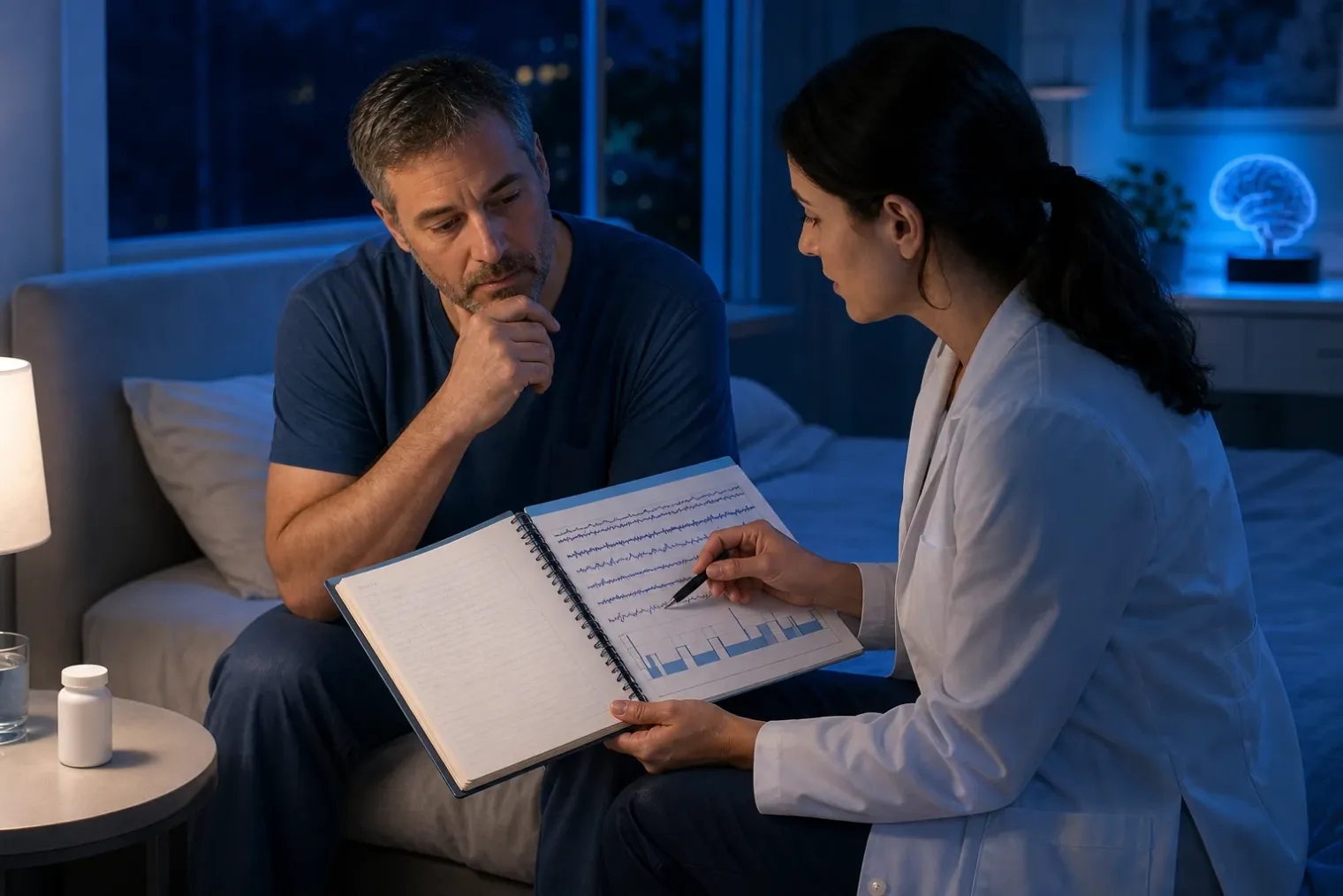
A targeted result for a difficult PTSD symptom
A recent clinical trial has added stronger evidence to a long-running but unsettled question: can tetrahydrocannabinol (THC) ease the recurrent nightmares experienced by some people with post-traumatic stress disorder (PTSD)? The study tested dronabinol, a pharmaceutical preparation of THC, rather than smoked or retail cannabis products. Its findings indicate that a carefully dosed bedtime medicine may reduce nightmare burden for a meaningful proportion of patients.
The distinction matters. PTSD is a broad condition involving intrusive memories, avoidance, shifts in mood and cognition, and heightened arousal as well as disturbed sleep. A medicine that improves one particularly debilitating symptom is clinically important, but it should not automatically be presented as a treatment for the entire disorder.
What the trial examined
The multicentre German study was designed as a phase 2, double-blind, randomised, placebo-controlled trial. It enrolled 170 adults with PTSD and persistent nightmares. Participants received either dronabinol or a matching placebo once each evening for 10 weeks, with the dose increased gradually when tolerated. The protocol allowed a daily dose from 2.5 mg to 15 mg.
Its primary endpoint was specific: the frequency and intensity of nightmares over the preceding week, assessed with a clinician-administered PTSD scale. That focus is a strength. Sleep symptoms are often bundled into overall PTSD scores, making it difficult to establish whether an intervention directly helps nightmares or merely changes general distress.
The reported results showed a statistically significant advantage for dronabinol over placebo on nightmare severity. More than one-third of people assigned to dronabinol reported that their nightmares had disappeared by the end of treatment, while a further 21% reported at least a halving of nightmare burden. Those figures make the study substantially larger than the small cannabinoid trials that previously shaped the evidence base.
Why this is more informative than cannabis anecdotes
Many people with PTSD say that cannabis reduces dreams, eases sleep onset or makes nightmares less vivid. Such experiences can be real and meaningful, but they cannot by themselves show that THC caused the improvement. Symptoms can fluctuate, sleep may improve for unrelated reasons, and cannabis products differ greatly in THC concentration, cannabidiol content, delivery method and dose.
The trial reduced some of those uncertainties. Random allocation makes the treatment and placebo groups more comparable at the outset; blinding limits the influence of expectations on reporting; and a fixed oral medicine produces more consistent exposure than inhaled or commercial cannabis products. It also tested THC specifically, rather than treating “cannabis” as though it were a single, uniform intervention.
That does not make the result definitive. A 10-week trial cannot answer whether benefits remain stable with prolonged treatment, whether people develop tolerance, or what happens when the drug is stopped. It also cannot establish that the findings will apply to all PTSD populations, including people with active substance-use disorders, psychosis vulnerability, major medical illness or complex medication regimens.
A plausible mechanism, not a settled explanation
THC acts on the endocannabinoid system, including cannabinoid receptors that influence stress responses, emotional learning and sleep. Researchers have proposed that this signalling could alter the processing of fearful memories or the sleep processes in which distressing dreams arise.
However, a mechanism should not be overstated. THC can affect sleep architecture and dream recall, but fewer remembered dreams do not necessarily mean that traumatic memories are being therapeutically resolved. The practical outcome measured here was a reduction in distressing nightmares, not proof that THC repairs the underlying biology of PTSD.
The distinction is also important for treatment planning. Trauma-focused psychotherapies seek to reduce the broader impact of traumatic memories and avoidance in daily life. A nightmare-focused medicine could become a useful addition for selected patients, especially when sleep disruption is obstructing recovery, without replacing evidence-based PTSD care.
Why clinical caution remains necessary
Dronabinol is already an approved prescription medicine in the United States for certain uses, including chemotherapy-related nausea and appetite loss associated with AIDS. It is not approved for PTSD or PTSD-related nightmares. The adverse-effect profile is relevant because PTSD commonly coexists with anxiety, depression, cognitive difficulties and substance-use problems.
Known potential effects of dronabinol include dizziness, sleepiness, impaired concentration, anxiety, paranoia and other psychiatric reactions. It can also affect judgement and driving ability, and chronic use may lead to dependence in some people. A bedtime dose does not eliminate these concerns, particularly when a patient is also taking alcohol, sedatives or other medicines that affect the central nervous system.
This means the trial should not be read as a reason for people to self-medicate with high-THC cannabis. The study examined a prescribed formulation, a controlled dose range, clinical eligibility criteria and structured follow-up. Retail cannabis products and unregulated hemp-derived intoxicants cannot be assumed to offer the same balance of effectiveness and risk.
How the evidence could change practice
Before this result, the clinical literature contained hints of benefit for nightmares from cannabinoids, including a very small placebo-controlled trial of nabilone, a synthetic cannabinoid. Observational studies of medical cannabis have often reported better sleep and fewer nightmares, but they are vulnerable to bias because participants choose whether and how to use cannabis.
The new dronabinol study is therefore an important advance: it supplies a larger controlled test of a symptom-specific cannabinoid treatment. Even so, major guidelines have recommended against cannabis and cannabis derivatives for PTSD because earlier evidence was limited and concerns about adverse effects were substantial. Guideline panels will need to assess the full peer-reviewed study, its safety data, the durability of effects and independent replication before changing that position.
The most reasonable interpretation is neither that THC has been disproved nor that cannabis is now an established PTSD therapy. Rather, pharmaceutical THC has shown promising, targeted efficacy against trauma-related nightmares in a controlled setting. The next research questions are practical: which patients benefit most, what dose offers the best trade-off between relief and side effects, whether gains persist, and how the medicine performs alongside trauma-focused psychotherapy and established sleep interventions.
Sources
- THC in cannabis may reduce nightmares in people with PTSD — New Scientist
- Dronabinol for nightmares in post-traumatic stress disorder: a randomized controlled trial — Nature Medicine
- Treating Nightmares in Posttraumatic Stress Disorder With Dronabinol — ClinicalTrials.gov
- VA/DoD Clinical Practice Guideline for Management of Posttraumatic Stress Disorder and Acute Stress Disorder — U.S. Department of Veterans Affairs and Department of Defense
- FDA and Cannabis: Research and Drug Approval Process — U.S. Food and Drug Administration


