
Two rare viruses, one expanding surveillance concern
Heartland virus and Bourbon virus are attracting renewed attention as scientists detect them in more places where lone star ticks are found. Both are tick-borne viruses capable of causing serious illness, and both have been linked to fatal infections. Yet the available evidence does not support treating them as common threats on the scale of Lyme disease: confirmed human cases remain uncommon, while diagnosis and reporting are incomplete.
The important shift is geographical and ecological. A preprint released in August 2026 reported the first detections of both viruses in lone star tick pools collected in eastern Nebraska. The finding has not yet undergone peer review, but it adds to evidence that the pathogens are present across a broader part of the tick’s range than human case records alone would suggest.
That distinction matters. Finding viral genetic material in ticks demonstrates that a pathogen is circulating locally; it does not show how often people become infected or predict an outbreak. But it gives health authorities and clinicians a reason to improve surveillance before severe cases are missed.
Heartland and Bourbon are different viruses
Heartland virus was first identified after two farmers in Missouri fell ill in 2009. It is now known to have caused more than 60 reported illnesses across 14 eastern, southeastern and south-central states as of November 2022, according to the US Centers for Disease Control and Prevention. The agency says reporting is voluntary because Heartland is not a nationally notifiable disease, so the count is not a complete measure of infections.
Bourbon virus was first recognised in 2014 after a fatal illness in Kansas. Far fewer confirmed human cases have been documented than for Heartland, although serological studies and tick surveillance suggest that exposure may be more widespread than official case totals indicate. A 2024 investigation in North Carolina found antibodies specific to Bourbon virus in people, despite no confirmed clinical cases in the state at that point.
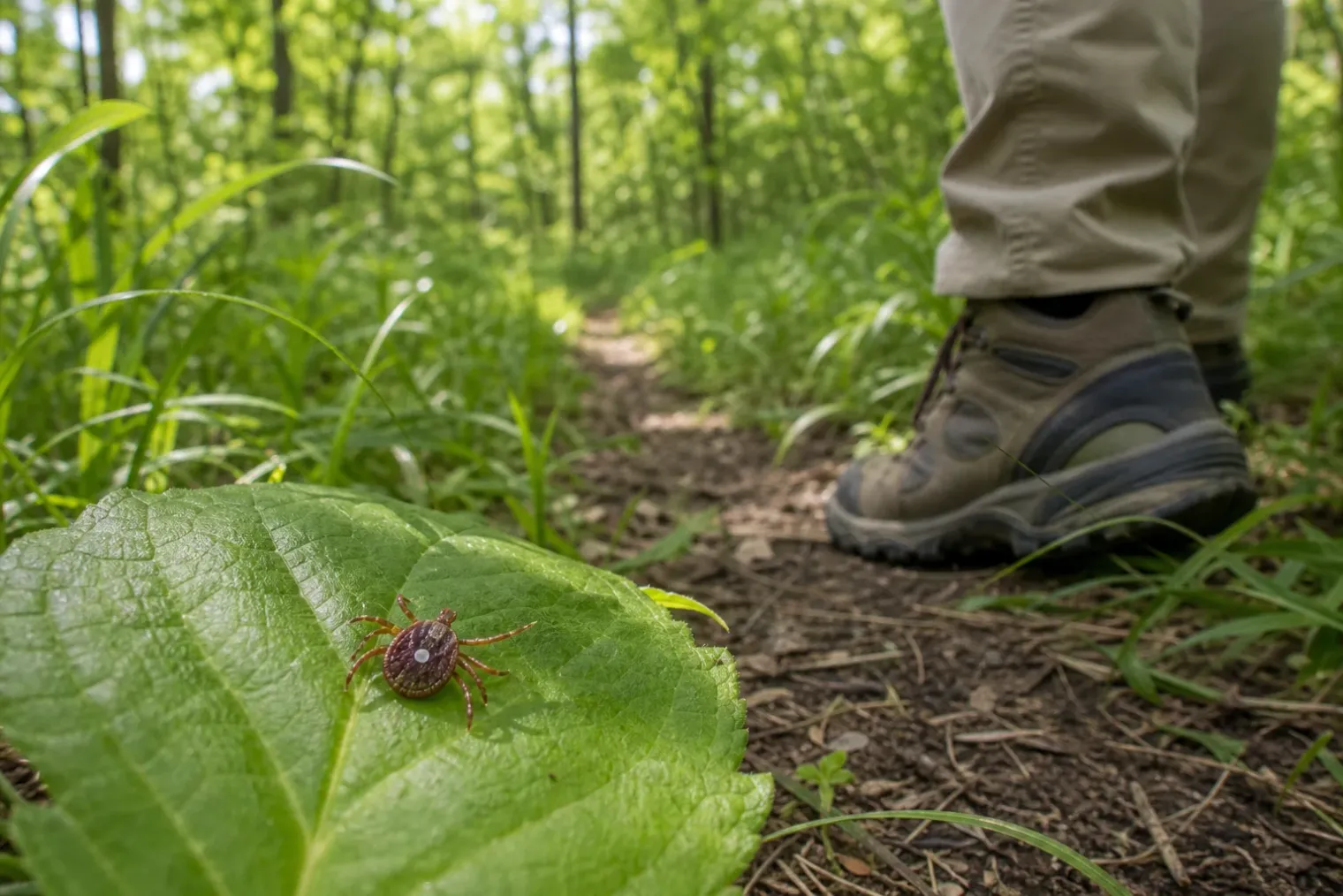
The viruses are biologically distinct, but they share an epidemiological pattern. Both are associated principally with the lone star tick, an aggressive human-biting species found widely across the South, Midwest and Northeast. The adult female has the characteristic white mark that gives the species its name, though nymphs and females are particularly relevant for human bites.
Why the map is changing
The lone star tick’s documented range has expanded and been more intensively mapped over recent decades. CDC surveillance data published in May 2026 describe the tick as widely distributed in the Northeast, South and Midwest. Deer are a key host, and the recovery and relocation of white-tailed deer populations have helped the tick repopulate parts of its historical range.
However, a changing tick map should not be interpreted too simply. A county newly labelled as having an established population may reflect new sampling rather than newly arrived ticks. Similarly, wider testing for Heartland and Bourbon viruses will inevitably discover infections that were previously unmeasured. The current pattern is likely a combination of genuine ecological change, better surveillance and heightened scientific attention.
Research in Missouri, New York and elsewhere has already shown that the viruses can circulate in areas beyond the locations of recognised human disease. In a 2023 study, researchers found Heartland and Bourbon viral RNA in pools of lone star ticks gathered near St Louis. Earlier surveillance in Suffolk County, New York, identified evidence of transmission in ticks and white-tailed deer. The Nebraska detection extends that picture towards the western edge of the tick’s known distribution.
A difficult diagnosis
Early illness caused by either virus can resemble several other tick-borne diseases. Fever, fatigue, headache, body aches, nausea, diarrhoea and rash may occur. Blood tests can show low white-cell and platelet counts, and some patients have abnormal liver-enzyme results.
This overlap creates a practical clinical problem. Doctors may initially suspect bacterial illnesses such as ehrlichiosis, which can require prompt antibiotic treatment. But antibiotics do not treat viruses. CDC guidance says clinicians should consider Heartland or Bourbon testing in patients with compatible symptoms and tick exposure when other diagnoses are not confirmed, particularly when illness does not improve as expected with doxycycline.
There is no licensed vaccine or antiviral medicine specifically approved for either infection. Care is supportive and may include fluids, treatment for fever or pain, and hospital care for severe disease. Older people and those with underlying health conditions appear to be overrepresented among severe Heartland cases, but the limited number of confirmed infections means that precise individual risk remains difficult to quantify.
Laboratory capacity is another constraint. No commercially available test exists for Heartland infection in the United States, and Bourbon diagnosis can require specialised testing and paired blood samples. These barriers mean the recognised case counts are likely lower than the true number of infections.
Prevention remains the practical response
For the public, the expansion of surveillance does not change the core advice: preventing tick bites is the most reliable protection. People spending time in brushy, grassy or wooded settings should use an EPA-registered tick repellent as directed, consider clothing and gear treated with 0.5% permethrin, and keep to the centre of trails where possible.
After outdoor activity, checking clothing, gear, pets and skin for ticks is important, including after time in gardens and neighbourhood yards. Showering soon after coming indoors and removing attached ticks promptly can further reduce exposure.
Anyone who develops fever, rash or flu-like symptoms in the days or weeks after a tick bite or time outdoors should seek medical advice and mention the possible exposure. The message from the latest findings is not that Heartland and Bourbon viruses are suddenly widespread human diseases. It is that public-health maps based only on diagnosed patients are incomplete, and that testing ticks, wildlife and people will be essential to understand where the real risks lie.
Sources
- Two emerging tick viruses that can be deadly are spreading in the US — New Scientist
- Data and Maps for Heartland — Centers for Disease Control and Prevention
- Lone Star Tick Surveillance — Centers for Disease Control and Prevention
- Detection and Genomic Characterization of Heartland and Bourbon Viruses in Amblyomma americanum Ticks from Nebraska — medRxiv
- Evidence of Human Bourbon Virus Infections, North Carolina, USA — Emerging Infectious Diseases


