
A local record with national consequences
Reports that parts of the UK had endured a month without rain describe a striking local meteorological result, rather than a rain-free country as a whole. Rainfall is highly uneven, especially during summer: showers and thunderstorms can affect one town while leaving nearby places dry. Yet the absence of measurable rain at some locations is meaningful because it occurred during a broader period of prolonged heat and exceptionally low rainfall across much of England and Wales.
By late July, the Met Office said that the UK’s daily rainfall series had recorded only 21.3 millimetres between 1 and 26 July, compared with 90.4 millimetres in June. The driest stretch was from 8 to 23 July, when only 1.9 millimetres fell nationally in that series. The figures do not mean every area was dry: northern and western regions received showers and rain at times. They do show how a pattern of high pressure, sunshine and light winds reduced the chance of widespread, sustained rainfall where it was most needed.
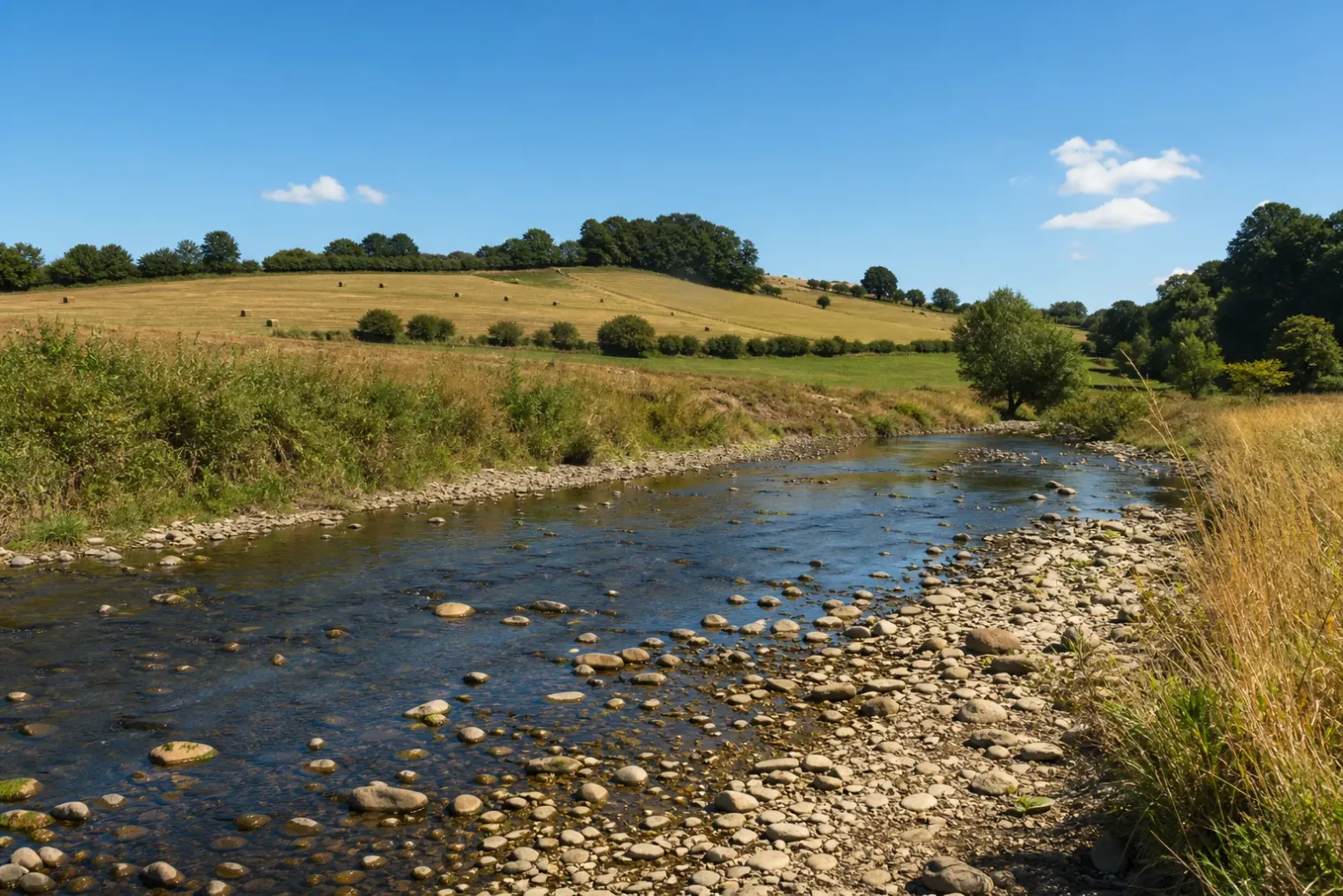
For places that registered no rain over the month, the immediate effect was visible in browned grass, dry soils and falling stream levels. The more important issue is that the dry spell followed a difficult seasonal water balance. Winter and spring rainfall can replenish reservoirs, aquifers and soils, but hot weather rapidly increases evaporation from land and water and raises demand from households, agriculture and industry. A shortfall in summer rain therefore matters most where these stores were already under pressure.
Drought is more than a rainfall total
Drought is not declared simply because a rain gauge records little or no rainfall. Water authorities assess several linked indicators: rainfall deficits, soil moisture, river flows, groundwater levels, reservoir storage and the environmental and social consequences of dry conditions. This distinction is important. A brief dry spell may be inconvenient but manageable; a hydrological drought develops when the deficit reaches the systems that sustain rivers, wetlands, crops and water supplies.
England’s late-July assessment showed how quickly these impacts had accumulated. The Environment Agency reported that 84 per cent of river flows were below normal or lower, with soil moisture deficits at record levels for the time of year across several English regions. Reservoir storage for England was 75.3 per cent, about 7.4 percentage points below the long-term average for that point in July. Almost 40 per cent of England’s population was then covered by temporary water-use restrictions.
The situation was also serious in Wales. Natural Resources Wales declared drought in North Wales and the Upper Severn on 23 July after exceptionally low river flows, declining groundwater and widening impacts on land and ecosystems. The affected catchments had received less than 20 per cent of their expected July rainfall, with some of the driest areas receiving less than 2 per cent. Other Welsh catchments were placed in prolonged dry weather status.
These classifications show why the phrase “a month without rain” should not be treated as a novelty alone. It is one visible marker within a larger assessment of how much water is available and how rapidly it is being depleted.
Rivers and wildlife respond first
Low flows concentrate pollutants, reduce oxygen levels and leave fish and other aquatic species vulnerable when water temperatures rise. Small streams can fragment into isolated pools, restricting movement and making wildlife more exposed to heat and predation. In Wales, river temperatures of 20°C or higher were recorded in several catchments during July, while authorities reported concern for fisheries, wetlands and habitats dependent on reliable flows.
Dry soils create a different set of risks. Grass growth can slow sharply, forcing livestock farmers to use winter feed earlier than planned. Crops may ripen prematurely, while irrigation demand rises just as rivers and on-farm reservoirs decline. In England, the Environment Agency reported early cereal harvesting, concerns about lower yields and increasing restrictions on water abstraction. Dry vegetation and stressed peatlands also increase the likelihood and potential severity of wildfires.
The effects do not end when showers return. A heavy downpour after prolonged dryness may run off hardened ground rather than soaking in. It can offer temporary relief to gardens, surface water and some rivers, but may do little to restore groundwater or reservoir stocks. Meaningful recovery often requires sustained rainfall over a wider area, particularly during the cooler months when evaporation and plant water use are lower.
Why a wetter country can still face scarcity
The UK’s reputation for rain can obscure its exposure to summer drought. Annual totals are only part of the picture. What matters for water management is where rain falls, when it falls, whether it replenishes storage, and how demand changes during hot periods. Southern and eastern England are relatively dry by UK standards and contain large populations, intensive agriculture and water-demanding infrastructure.
Climate change adds pressure without making every individual dry spell easy to attribute. The Met Office notes that future UK summer conditions are expected to include more dry days, alongside heavier rainfall events. That combination creates a water-management challenge: intense rain can raise flood risk without reliably rebuilding the slowly replenished stores needed to withstand a long dry period.
The practical response is therefore broader than asking households to use less water, although conservation can reduce immediate strain. Water companies and regulators must manage leakage, improve network resilience, expand storage and transfers where appropriate, protect environmental flows and plan for overlapping heat, drought and wildfire risks. Farmers face parallel choices around soil management, crop selection, irrigation efficiency and water storage.
A first rainless month at particular sites is an arresting record. The deeper lesson is that water scarcity can emerge in a country associated with wet weather when rainfall arrives in the wrong pattern and prolonged heat accelerates losses. The critical question for the remainder of the summer is not merely whether rain falls, but whether it is widespread and sustained enough to reverse the deficit already evident in soils, rivers and water stores.
Sources
- Parts of the UK endure first ever month without any rain — New Scientist
- How close is the UK to another heatwave – and where has the rain gone? — Met Office
- Dry weather and drought in England: 17 to 23 July 2026 — Environment Agency
- Wildfires and record dry conditions trigger drought declaration for North Wales and Upper Severn — Natural Resources Wales
- UK and Global extreme events – Drought — Met Office


